
Review · BARCELONA TAPAS TOURS
Barcelona: Paella Cooking Class with Sangria & Cava Tasting
This Barcelona class puts you at the stove, not just at a table watching someone else cook. You’ll work through several paella styles, including seafood, black rice, meat, and vegetarian versions, then sit down to eat what the group has prepared.
I like the Cava tasting with Jamón and sheep cheese, which gives the evening a proper Spanish opening. I also like that the class includes both red-wine Sangria and Cava Sangria, plus recipes to take home. The main catch is important: the activity is marked as unsuitable for vegans, vegetarians, and people with food allergies, even though a vegetarian paella may be prepared.
Key points at a glance
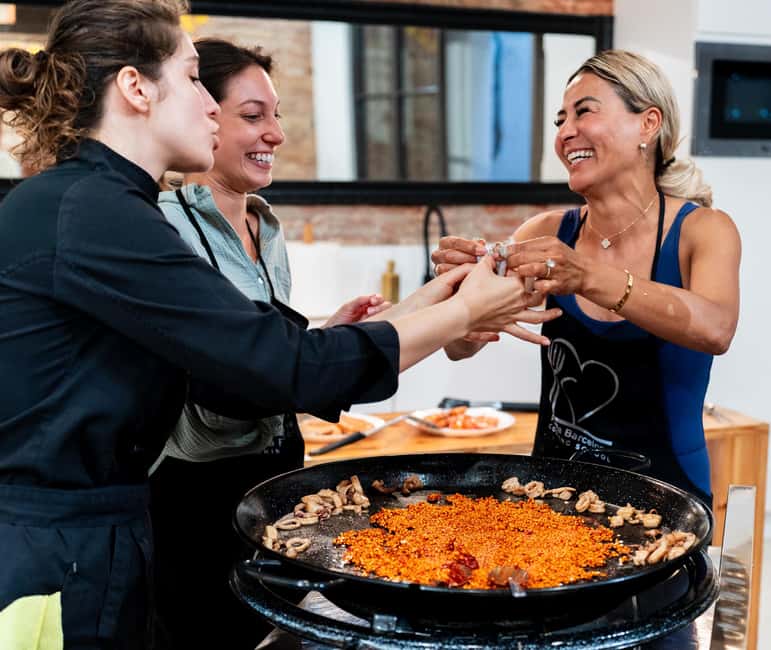
- Hands-on paella cooking: You do more than stir. The class includes practical cooking work with several possible paella styles.
- Two kinds of Sangria: You’ll prepare traditional red-wine Sangria and a sparkling Cava version.
- Spanish tasting plate: Cava comes with Pan con Tomate, Jamón, other dry meats, and traditional sheep cheese.
- Dinner is part of the class: You share the paella, extra dishes, Spanish wine, and seasonal dessert at the end.
- Small class size: The group is limited to 10 people, which suits anyone who wants a more active role.
- Recipes included: You leave with instructions for all the dishes made during the class.
A three-hour Spanish cooking evening
Paella Barcelona Cooking School keeps this to a focused three-hour session. That is long enough to cook, eat, and enjoy a few drinks without turning the evening into an all-day commitment.
The format is social, but it is not simply a demonstration. You work alongside the other participants, then share the results around a set table. This matters if you enjoy cooking and want to understand the process rather than only take a few photos and taste a finished dish.
The class is limited to 10 people. That is a useful size for a cooking lesson because you should have a better chance to take part in the preparation. The exact balance of instruction and hands-on work can depend on how many people are in the group, but the class is designed around participation.
Instruction is available in English and Spanish. The meeting point is marked by a big glass door, and the activity ends back there. You should wear comfortable clothes and bring a camera if you want to record the food and the evening.
More Paella Cooking Classes in Barcelona
- Barcelona: Paella Cooking Experience & Boqueria Market Tour
★ 4.8 · 3,661 reviews - Barcelona Paella Cooking Class with Market Visit, Tapas & Sangria
★ 5.0 · 2,531 reviews - Barcelona Food Tour: Tapas, Paella, Sangria & 8+ Local Tastings
★ 5.0 · 1,275 reviews
Cava, Jamón, and a proper Catalan welcome
The first part of the class begins with a Cava tasting. Cava is Spain’s sparkling wine, and it gives the evening a local feel from the start rather than opening with a generic drink.
The tasting is served with Pan con Tomate, Jamón, other traditional Spanish dry meats, and sheep cheese. Pan con Tomate is simple food, bread rubbed or topped with tomato, but it is one of the most recognizable tastes of Catalonia. With the meat and cheese, it works as both a snack and a small introduction to the flavors used across the region.
I like this opening because it gives you something to eat while the class gets organized. You are not waiting through a long talk on an empty stomach. It also lets you sample several Spanish staples before the main cooking begins.
Still, anyone who dislikes cured meats or sheep cheese should keep the menu in mind. The stated food restrictions are strict, and the class is not suitable for people with allergies. You should not assume that ingredients can be changed simply because you have a preference.
Mixing red Sangria and Cava Sangria
The Sangria workshop covers two drinks. First comes traditional Sangria made with red wine. Then you prepare Cava Sangria, which uses sparkling white wine.
This is a useful part of the evening because Sangria is easy to associate with Spain but less often explained in a practical way. Here you learn how both versions are made, then drink them as part of the meal. The two styles also give the class a nice contrast: one is based on red wine, while the other uses the freshness and fizz of Cava.
The description does not promise a formal lesson in Spanish wine regions or a detailed tasting lecture. Think of this as a practical workshop built around making and drinking the drinks, not as a specialist wine course.
You should also remember that the class includes free-flowing Spanish wine later. That makes the evening generous for drinkers, but it may not suit anyone looking for a dry, alcohol-light cooking lesson. Non-drinking options are not listed, so ask before booking if that matters to you.
Choosing your paella style
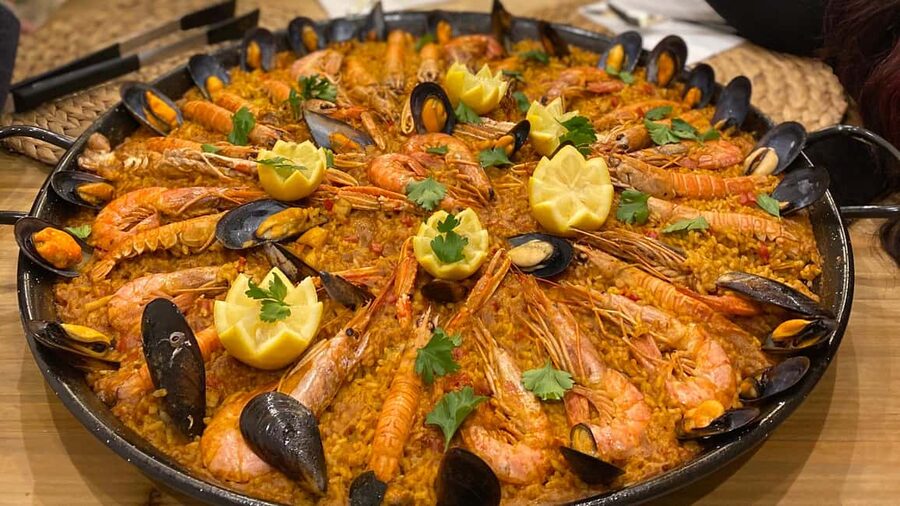
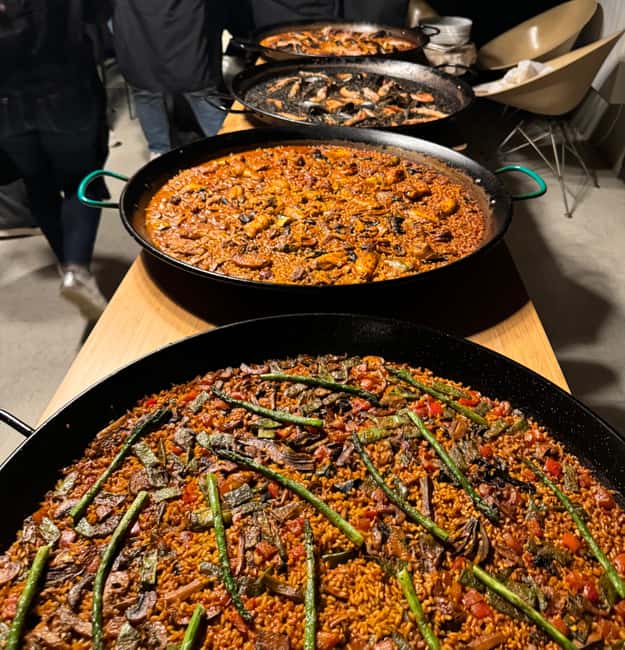
The central workshop focuses on paella. Depending on the class size, the group may prepare several versions, including seafood paella, paella Valenciana with meat and vegetables, vegetarian paella, and black rice paella.
Seafood paella is the version many people picture first, with the rice taking on flavor from the seafood. Paella Valenciana brings meat and vegetables into the pan, giving you a different idea of what traditional paella can be. The vegetarian version keeps the rice at the center, while black rice offers a darker, more unusual result.
The key phrase is depending on the size of the class. You may not personally cook every listed version, and the whole group may divide the work among different paellas. If one particular type matters to you, ask the school ahead of time rather than assuming all four will be prepared at every sitting.
The strongest point here is the amount of actual cooking. This is not presented as a class where you only watch a chef stir rice. You take part in the work, and the practical nature suits anyone who already enjoys cooking or wants a useful introduction to paella technique.
The class also gives you a chance to compare methods and ingredients across several styles. Even if your group prepares only some of the options, you leave with recipes for all the dishes made together. Those recipes turn the evening into something you can repeat at home.
More Sangria and Tapas Tours in Barcelona
- Barcelona Gothic Quarter’s Deepest Secrets & Sangria
★ 5.0 · 230 reviews - Barcelona: Rooftop Salsa Class with Bottomless Sangria
★ 4.7 · 157 reviews - Barcelona: Seafood Paella ★Maestro★ & Tapas & Sangria
★ 4.8 · 144 reviews - Barcelona: Paella & Tapas Cooking Class with Sangria
★ 4.9 · 122 reviews
Eating what you prepared
After the workshop, everyone sits around a beautifully set table to share the food. The meal includes the paellas, additional entrees, Spanish wine, and a homemade seasonal dessert.
This is where the class shifts from lesson to dinner. You are not packing up your dish and leaving. You eat the result with the people who cooked beside you, which makes the evening feel more like a communal meal than a standard restaurant booking.
The dinner also gives you time to judge the value of the class. For $130 per person, you are paying for instruction, ingredients, several tastings, a full meal, wine, dessert, and recipes. That is a substantial price, but it covers much more than a single plate of paella.
I would see the value in this booking if you want one organized evening that combines food, drinks, and social time. If your main goal is simply to eat an inexpensive paella, a cooking class is the wrong format. You are paying for the participation and the teaching, not just the finished dish.
The homemade seasonal dessert finishes the meal, though no specific dessert is promised. That is worth noting if you need to plan around a particular ingredient or dietary restriction.
What the small group changes
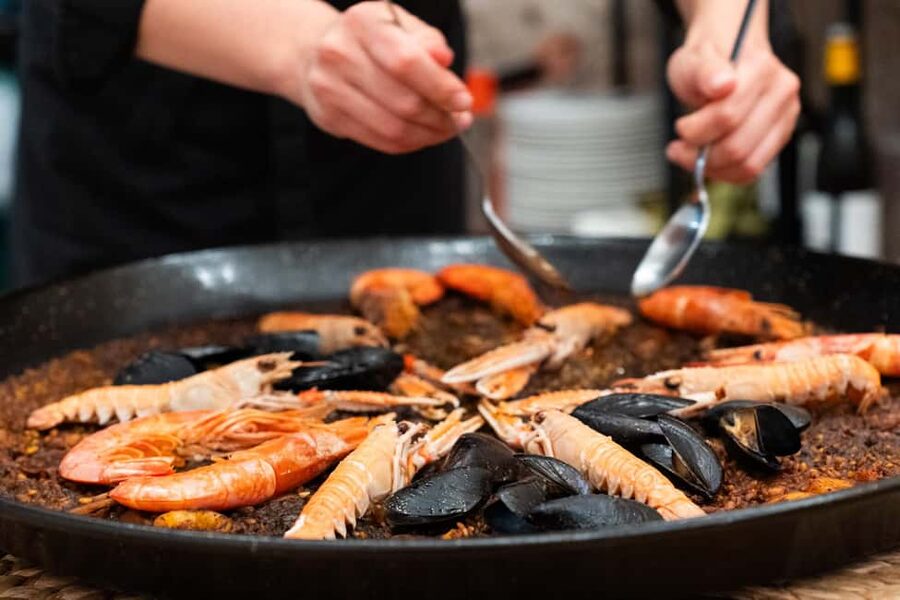
With a maximum of 10 participants, the class has a more personal setup than a large cooking demonstration. A smaller group can make it easier to follow the instructions and ask questions in either English or Spanish.
It also gives the meal a friendly shape. You prepare food with the same people who later sit beside you, and the shared table is part of the plan rather than an afterthought.
The tradeoff is that the exact class dynamic depends on who attends. The activity has a relaxed, fun tone, but it is still a group class. If you prefer private instruction or complete control over the menu, this is not that kind of booking.
One particularly useful detail is that the class offers real cooking work. The focus is not limited to decorative tasks or a token turn at the pan. If you actually like to cook, that makes the price easier to justify.
Who should book this class
I would recommend this class to you if you meet several of these conditions:
- You want to learn a Spanish dish you can prepare again at home.
- You enjoy taking part in a group activity rather than eating alone.
- You like seafood, meat, cured foods, cheese, wine, and seasonal dessert.
- You want an evening activity that lasts about three hours.
- You appreciate having recipes to take home.
- You are comfortable with a menu that may include several paella styles.
It is especially well suited to couples, friends, and solo participants who like meeting people over food. The small group and shared table give solo bookers a natural social setting without requiring a separate social event.
I would not book it without checking first if you are vegetarian, vegan, or managing a food allergy. The menu includes a vegetarian paella option, but the activity is explicitly marked as unsuitable for vegetarians and people with food allergies. That may reflect the wider tasting menu, the shared preparation, or the school’s ability to handle special diets. Either way, do not rely on the vegetarian paella alone.
Practical details before you reserve
The price is $130 per person. Included are the Cava tasting, Pan con Tomate with Jamón, other dry meats, sheep cheese, both Sangria workshops, paella preparation, Spanish wine, homemade seasonal dessert, and recipes for all dishes prepared together.
The activity lasts three hours, but starting times vary. Check the available time before booking, especially if you are fitting it around dinner plans or an evening show.
The class is wheelchair accessible. Smoking is not allowed. The meeting point is easy to identify by the big glass door, and you return to that same point when the class ends.
Free cancellation is available up to 24 hours in advance for a full refund. You can also reserve now and pay later, which helps if your Barcelona schedule is still shifting.
The school has a top rating from the two reviews supplied for this activity, and the most useful praise is specific: the class provides a good amount of actual cooking and keeps the mood relaxed and fun. That is more meaningful than a vague promise of a memorable night. If you want a hands-on lesson rather than a demonstration, this is the detail to focus on.
Should you book the Barcelona paella class?
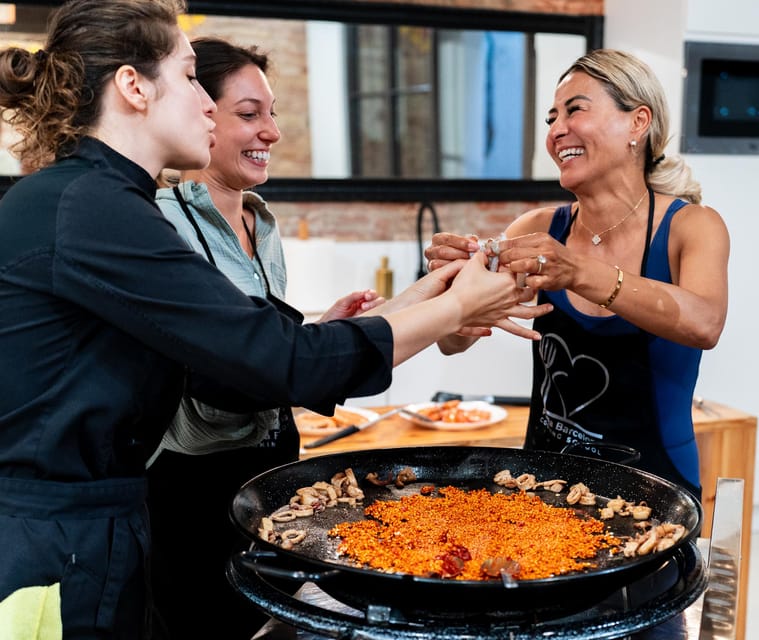
Book it if you want a complete food evening with real cooking, Spanish drinks, a shared dinner, and recipes you can use later. The combination of paella, two kinds of Sangria, Cava, cured meats, cheese, wine, and dessert gives you a lot within three hours.
Skip it if you only want a restaurant meal, avoid alcohol, or need firm control over ingredients. Vegetarians, vegans, and anyone with food allergies should contact the school before paying, since the listed restrictions do not match the presence of a vegetarian paella option.
For most food-loving visitors who enjoy group classes, the strongest reason to choose it is simple: you do actual work, then eat the results. That makes the evening more useful than a tasting alone and more relaxed than a formal culinary course.
FAQ
How much does the paella cooking class cost?
The class costs $130 per person.
How long does the activity last?
The activity lasts three hours. Starting times vary, so check availability for the schedule on your chosen date.
What types of paella may be prepared?
Depending on the class size, the group may prepare seafood paella, paella Valenciana with meat and vegetables, vegetarian paella, and black rice paella.
Does the class include Sangria?
Yes. You learn to make traditional red-wine Sangria and Cava Sangria made with sparkling white wine.
What food is included before the paella?
The class includes Cava with Pan con Tomate, Jamón, other Spanish dry meats, and traditional Spanish sheep cheese.
Is Spanish wine included with dinner?
Yes. Spanish wine is available on a free-flowing basis during the shared meal.
Are recipes provided?
Yes. You receive recipes for all the dishes prepared together during the class.
Is the class suitable for vegetarians or people with allergies?
The activity is marked as unsuitable for vegans, vegetarians, and people with food allergies. This applies even though a vegetarian paella may be prepared, so ask the school before booking if you have dietary restrictions.
Is the class wheelchair accessible, and where does it end?
The activity is wheelchair accessible. Look for the big glass door at the meeting point, and the class ends back at that same location.
More Tapas and Wine Tours in Barcelona
- Montserrat Half-Day Tour with Tapas and Gourmet Wines
★ 5.0 · 7,359 reviews - Montserrat & Cogwheel Train, Gourmet Wine Tasting & Tapas/Lunch
★ 5.0 · 6,290 reviews - Barcelona Tapas and Wine Experience Small-Group Walking Tour
★ 5.0 · 5,804 reviews - Montserrat with Black Madonna & Medieval Winery with Tapas/Lunch
★ 5.0 · 5,209 reviews
More Spanish Cooking Classes in Barcelona
- Barcelona Interactive Spanish Cooking Experience
★ 4.5 · 2,155 reviews - Barcelona: Paella Cooking Class with Market Visit and More
★ 4.9 · 711 reviews - Paella Cooking Class with Professional Chef: Four Course Dinner
★ 5.0 · 561 reviews - Half-Day Spanish Cooking Class & Boqueria Market Tour
★ 4.9 · 383 reviews
Just added around Barcelona
- Barcelona Sailing Experience: Spanish Tapas and Premium Open Bar★ 4.5 · 34 reviews
- Barcelona: Guided Rooftop Wine Tasting – Enjoy 6 Spanish Wines★ 4.5 · 61 reviews
- Vermouth in Catamaran A gastronomic experience in Barcelona★ 5.0 · 5 reviews
- Wine & Cava Penedes Tour: Wineries, Wine Tasting and Tapas★ 5.0 · 5 reviews
- Vermouth Tasting and Crafting in Barcelona★ 5.0 · 4 reviews
- Barcelona: Bike or eBike Tour, Top Sights & Local Insights★ 5.0 · 47 reviews
- Rooftop Paella Seafood Cooking Class Experience in Barcelona★ 5.0 · 59 reviews
- Tarragona Culinary Experience: Olive Oil & Iberian Ham Delight★ 5.0 · 8 reviews
Barcelona Tapas Tours, compared.

Montserrat Half-Day Tour with Tapas and Gourmet Wines
Read our review →
Montserrat & Cogwheel Train, Gourmet Wine Tasting & Tapas/Lunch
Read our review →
Barcelona Tapas and Wine Experience Small-Group Walking Tour
Read our review →
Montserrat with Black Madonna & Medieval Winery with Tapas/Lunch
Read our review →
Montserrat and Winery Tour with Tapas or Lunch
Read our review →
Tapas Walking Tour with Food, Wine, and History
Read our review →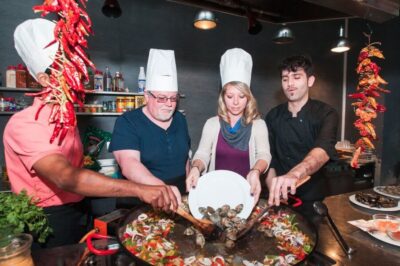
Paella Cooking Experience & Boqueria Market Tour
Read our review →
Barcelona Paella Cooking Class with Market Visit, Tapas & Sangria
Read our review →Browse the lists this tour appears in