
Review · BARCELONA TAPAS TOURS
Barcelona Side Streets Tapas & Wine Tour
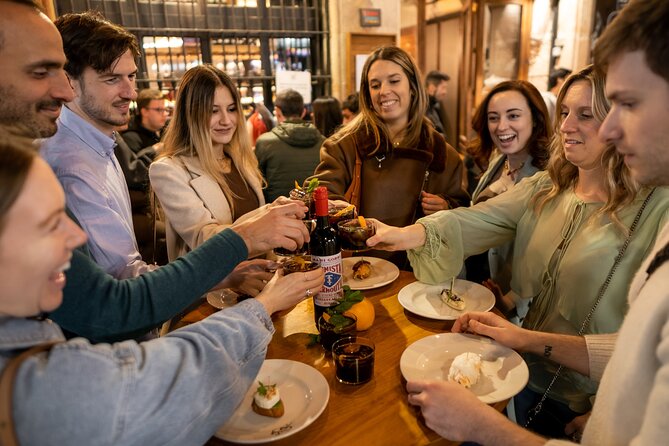
Barcelona Side Streets Tapas & Wine Tour gets to the point quickly: you eat your way through the Old Town and port while learning why Catalan food is more than generic Spanish tapas. The five food stops include Bomba de Barceloneta, Fideuà, aubergine dishes, tomato bread, and a traditional pastry, with cava, vermut, and wine from a porrón along the way.
I like the focus on local Catalan dishes and the way the route links food to places such as Santa Maria del Mar, Picasso’s former home, and a 2000-year-old wall. I also like the relaxed social touches, including family-run restaurants and a bar with a resident seabird. The main drawback is dietary flexibility: vegan visitors cannot join, and vegetarian choices may be limited.
Key points at a glance
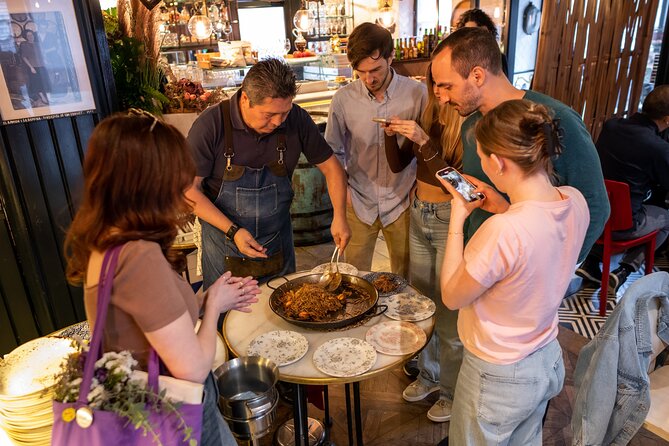
- Five food stops in 3.5 hours: Expect a steady tasting route rather than one long meal.
- Catalan flavors, not just standard tapas: Try Bomba de Barceloneta, Fideuà, aubergine tortilla, and tomato bread.
- Three local drinks: The tour includes vermut, cava, and white wine poured from a traditional porrón.
- Old Town and seaside scenery: Walk through El Born, visit Santa Maria del Mar, and continue toward Barceloneta.
- History between bites: The route includes a 2000-year-old wall and stories about Barcelona’s Roman, Moorish, and Latin influences.
- Useful practical limits: Comfortable shoes and weather-ready clothing matter, while vegans should choose another experience.
Why this Barcelona food tour feels different
Many food tours in Spain lean on familiar names such as patatas bravas, jamón, and tortilla. This one takes a more regional route. You still get the easy pleasure of small plates and drinks, but the food is aimed at Catalan identity, not a broad Spanish greatest-hits menu.
That distinction matters if you have already spent several days in Spain. Catalonia has its own food traditions, ingredients, and habits, and the tour gives you a chance to taste that difference in a compact afternoon. The guide explains Roman, Moorish, and Latin influences as you walk, so each stop has some context rather than arriving as an unexplained plate.
The experience is led in English by a local guide. Recent guide feedback names Lindsey, also spelled Lindsay in one account, so check the booking details if having a particular guide matters to you. The important point is the guide’s role: you are not simply being taken from bar to bar. The walking route connects the food with Barcelona’s streets, churches, waterfront, and long-running family businesses.
More Tapas and Wine Tours in Barcelona
- Montserrat Half-Day Tour with Tapas and Gourmet Wines
★ 5.0 · 7,359 reviews - Montserrat & Cogwheel Train, Gourmet Wine Tasting & Tapas/Lunch
★ 5.0 · 6,290 reviews - Barcelona Tapas and Wine Experience Small-Group Walking Tour
★ 5.0 · 5,804 reviews
Starting in El Born’s medieval lanes
El Born is a smart setting for the first part of the tour. Its narrow streets give you the old Barcelona experience without requiring a formal museum visit, and the route helps you notice how close the historic center is to the sea.
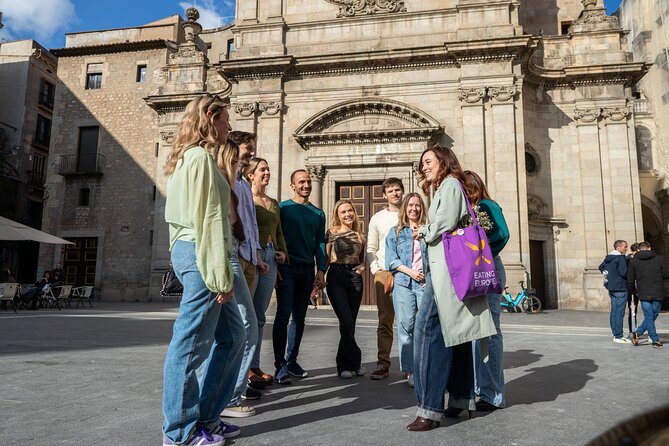
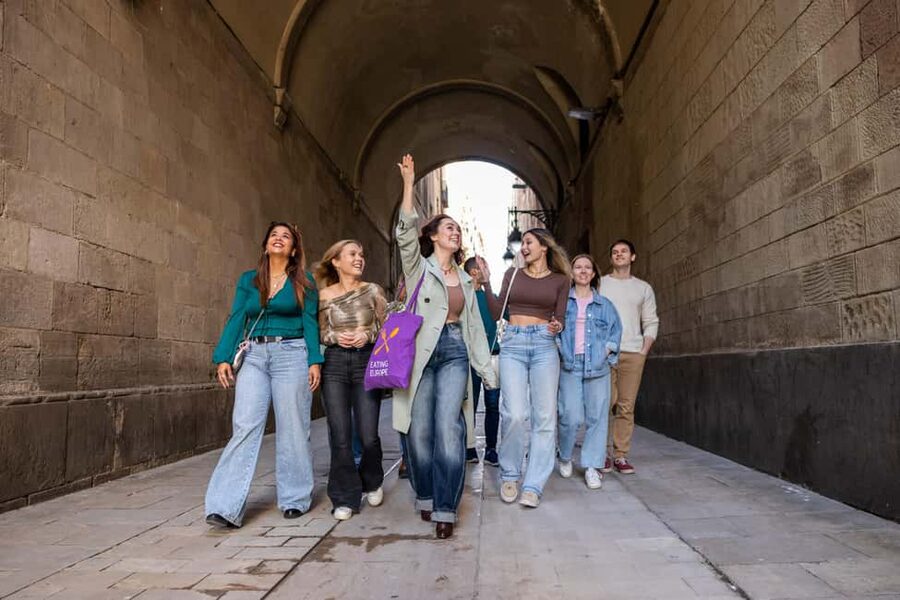
You meet your guide in the middle of the designated square, looking for the Eating Europe logo. Since there is no hotel pickup, plan to reach the meeting point on your own and arrive with enough time to find the guide. The precise square and starting time depend on the selected availability, so confirm those details before setting out.
The first walks through El Born are not just filler between meals. The guide uses the streets to explain Barcelona’s past and point out details you might miss while hurrying toward a major sight. You may hear how Roman, Moorish, and Latin influences helped shape local food and culture.
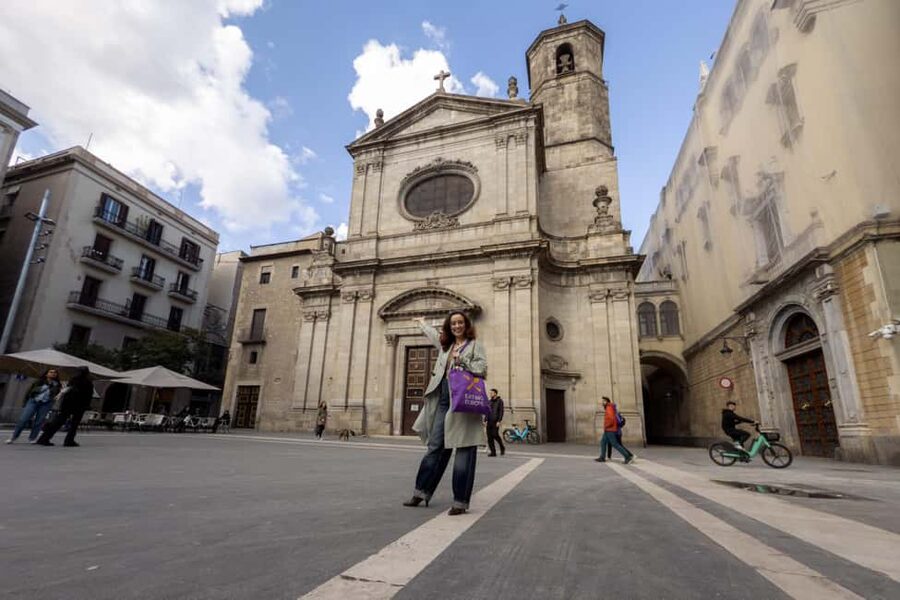
A highlight here is Santa Maria del Mar, the impressive Gothic church associated with the Born district. The tour is not presented as a full church visit or an architectural lecture, but seeing this landmark while moving between food stops gives the route a useful sense of place. You are tasting the neighborhood rather than treating it as a restaurant district with scenery attached.
Tomato bread and aubergine specialties
Catalan tomato bread is one of the simplest tastings on the route, but it is also one of the most useful for understanding the region’s everyday food. Bread, tomato, and seasoning create a dish that depends on good basic ingredients rather than elaborate preparation.
You also sample an aubergine tortilla or fried aubergine. This is a welcome change from the standard egg-and-potato tortilla that appears on menus across Spain. The aubergine offers a softer, earthier flavor and shows how vegetables can take a central role in Catalan small plates.
The exact order of the five food stops may vary, but you should expect a rhythm of walking, tasting, and explanation. This format works well if you prefer variety. You get several modest portions instead of committing to one large lunch, and the guide can place each dish in a wider regional context.
The tradeoff is that a tasting tour is not always a replacement for a full meal. Portions are designed to let you sample multiple foods, so arrive ready to eat but do not assume you are receiving a large restaurant dinner. The included drinks add substance, but anyone with a very large appetite may want a separate meal later.
Bomba de Barceloneta, the tour’s signature bite
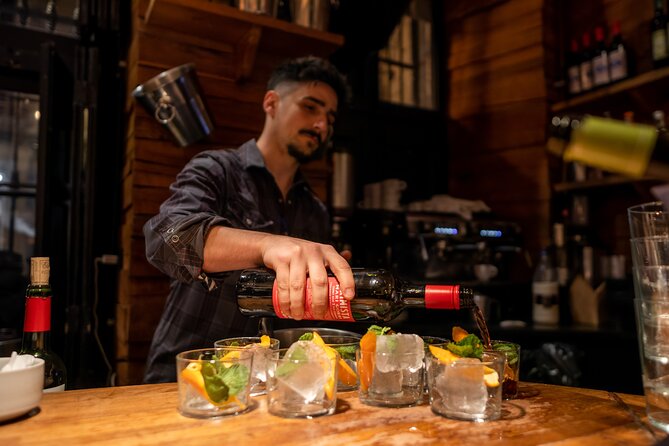
The Bomba de Barceloneta is one of the most memorable foods on this route. It is tied directly to the seaside neighborhood of Barceloneta, so tasting it later in the walk gives the dish a stronger connection to its home than ordering it anywhere in the city.
The name suggests something dramatic, and the dish is certainly more substantial than a delicate canapé. You can expect a hearty tapas experience that reflects Barceloneta’s working waterfront character. The tour treats it as an essential local bite, not just another item on a long menu.
This is also where the route’s geography becomes especially effective. You have started among medieval streets and historic buildings, then move toward the sea and the neighborhood that gives the Bomba its name. Food becomes a way to track Barcelona’s changing districts.
If you prefer mild, light snacks, this may be one of the heavier tastes of the day. That is not a flaw, but it is worth knowing when pacing yourself. The experience includes several foods, so take the smaller bites seriously and save room for later stops.
More Tapas and Wine Tours in Spain
- Montserrat with Black Madonna & Medieval Winery with Tapas/Lunch
★ 5.0 · 5,209 reviews - Barcelona: Montserrat and Winery Tour with Tapas or Lunch
★ 4.8 · 4,695 reviews - Barcelona: Tapas Walking Tour with Food, Wine, and History
★ 4.8 · 4,261 reviews - Barcelona: Food Walking Tour with Tapas and Wine
★ 4.9 · 2,180 reviews
Fideuà and Catalonia’s seafood tradition
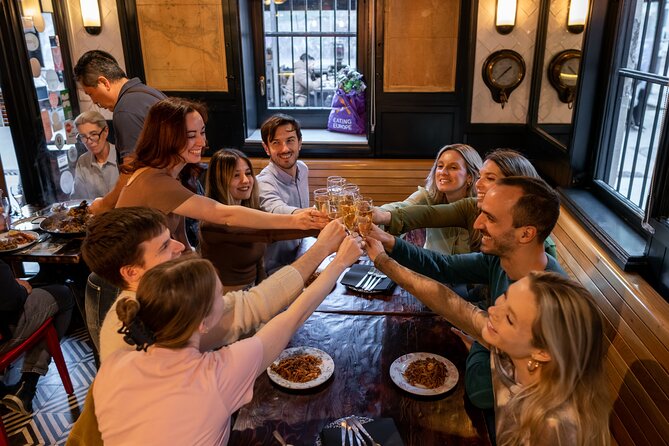
The tour also includes Fideuà, described here as Catalan paella. It is a key regional dish and gives the food lineup a different texture from bread, tortillas, and fried tapas.
For you, the value of this stop is variety. The route does not repeat the same formula five times. You move from simple bread to vegetable dishes, then to a more filling preparation associated with Catalan cooking and the coast.
Fideuà is especially well placed in a tour that ends around Barceloneta and the port. The seaside setting helps explain why seafood-centered dishes have such a strong place in local food culture. The guide can connect the dish to the broader history of Barcelona’s port and its exchange with other Mediterranean cultures.
Keep in mind that the food is selected for the group, not ordered à la carte. If you have strong preferences about seafood, ask the provider about the current menu before booking. The stated vegetarian choices may be limited, and vegans are not suitable for this experience.
Vermut, cava, and the traditional porrón
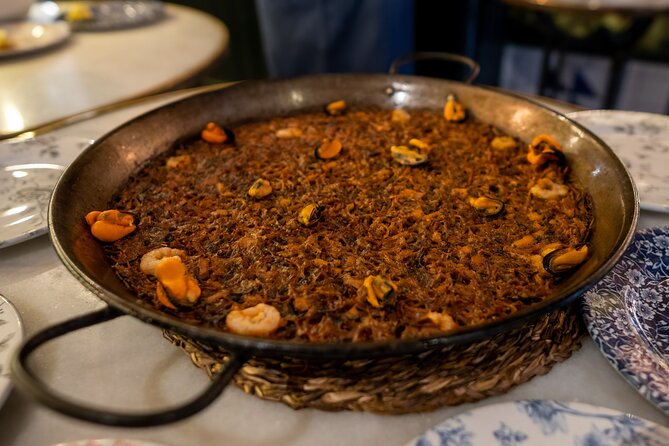
The drinks are not an afterthought. You receive three local beverages: a Basque vermut cocktail, cava, and white wine served from a porrón.
Vermut gives the tour a distinctly social Barcelona feel. It is commonly associated with relaxed pre-meal drinking, and the guide uses it to introduce a local habit rather than simply handing you a glass of wine. You may find the vermut cocktail more approachable than a straight spirit, but it still adds alcohol early in a walking tour.
Cava brings Catalonia’s sparkling wine into the lineup. It provides a crisp contrast to the richer food, especially the Bomba and Fideuà. The tour does not promise a formal winery lesson, so think of this as a regional tasting that supports the food experience.
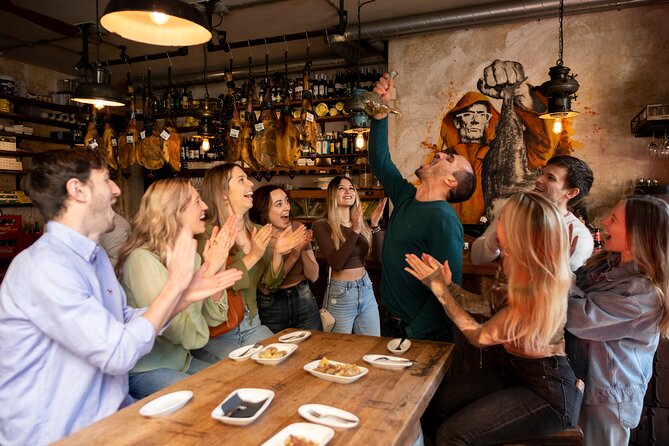
Then comes the white wine from a porrón, a traditional glass vessel with a long spout. Drinking from one takes a little practice and is part of the fun. It is a memorable social detail, though you should pace yourself carefully because three drinks over 3.5 hours can add up while walking.
Water is not listed among the inclusions, so bring a bottle. That is particularly useful in warm weather, and it helps you enjoy the alcoholic tastings without rushing them.
From the Gothic church to the 2000-year-old wall
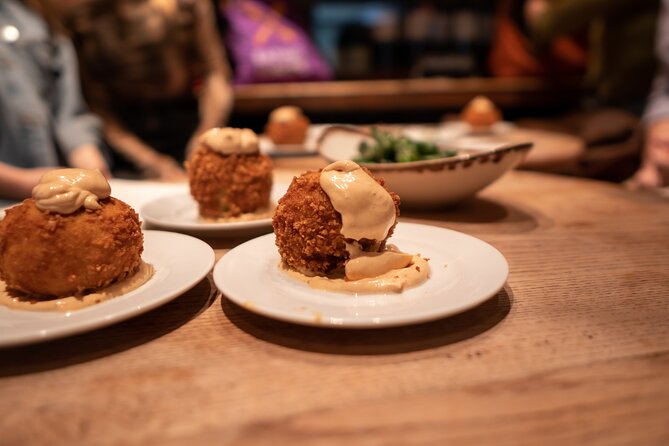
The sightseeing is modest but well chosen. Santa Maria del Mar gives you a strong Gothic landmark, while the 2000-year-old wall adds a much older layer to the route.
You are not spending the whole afternoon inside major attractions. Instead, the guide uses the streets and visible remains to show how Barcelona developed over time. That makes the experience a good companion to a separate museum or cathedral visit, not a replacement for one.
The reference to Picasso’s home adds another cultural marker. You see how the route moves through places tied to different periods of the city, from Roman remains to medieval religious architecture and modern artistic life.
I like this balance because the history does not require you to stop eating for long stretches. If you want a detailed archaeological tour, this will feel light. If you want food, drinks, and enough history to make the neighborhoods more meaningful, the mix is better suited.
Family-run restaurants and local character
The tour includes family-run restaurants with generations of history. That detail matters because it shifts the mood away from a simple list of tourist restaurants. You get a sense of places that have served local communities over time, even though the precise businesses and menu order can vary.
The small human details are part of the experience too. One stop includes a bar with a resident seabird, an amusing local character that gives the route a little personality. It is not a major attraction, but it is the sort of odd detail you are more likely to remember than another photograph of a famous façade.
The guide also fills the spaces between bites with fun facts about Barcelona and Catalan culture. One recent account specifically praised Lindsey for bringing interesting stories and facts into the walk, while another highlighted the emphasis on local Catalan dishes rather than generic Spanish food.
That guide-led storytelling is a key part of the price. Without it, you could order many of these foods on your own for less. The tour’s value comes from knowing what to try, where the foods fit, and how to connect the plate with the neighborhood.
The final pastry and the right pace for 3.5 hours
The tour ends with a traditional Catalan pastry. This is a sensible finish after several savory dishes and drinks, and it gives you one last taste of the region beyond tapas and seafood.
Because the experience lasts 3.5 hours, the pace should feel like a long meal combined with a neighborhood walk. You will need comfortable walking shoes, and you should be prepared for sun, wind, or rain. A camera is useful for the streets, church, waterfront, food, and the playful local details along the way.
The walk is wheelchair accessible, which makes the route possible for many visitors with mobility needs. Still, the experience involves moving between food stops and historic streets, so confirm the current route and access details if you have specific requirements.
Private groups are available. That option may suit families, friends, or anyone who wants more control over the pace and conversation. A shared tour is likely the better value for solo visitors or couples who enjoy meeting others, while a private group can make the $112 price easier to justify for a special occasion.
Is $112 a fair price?
At $112 per person, this is not the cheapest way to eat tapas in Barcelona. You could spend less by choosing a few bars yourself, especially if you skip the guide and order only one or two dishes.
The price becomes more reasonable when you count what is bundled together: five food stops, three local drinks, an English-speaking guide, a walking route through El Born and Barceloneta, and historical context along the way. You are paying for direction, selection, and a structured introduction to Catalan food.
I see the strongest value for a first visit to Barcelona or for anyone who wants to understand the difference between Catalan cooking and broad Spanish cuisine. It is also useful near the beginning of a stay, since the guide may give you ideas for dishes and neighborhoods to explore afterward.
The value is weaker if you already know Barcelona’s food scene well, dislike walking, avoid alcohol, or want full-sized portions. Vegans should not book, and vegetarians need to ask about current alternatives because choices may be limited.
Who should book this experience?
I would choose this tour if you want food and history in equal measure, with a guide to handle the route and explain what is on the plate. It suits couples, friends, solo visitors, and private groups who enjoy trying several regional dishes rather than settling into one restaurant.
It is especially good for curious eaters who want Bomba de Barceloneta, Fideuà, aubergine specialties, tomato bread, cava, vermut, and the porrón experience in one afternoon. The mix also works well for first-time visitors who want an introduction to El Born, the Gothic church, the port, and Barceloneta without booking separate tours.
I would skip it if you are vegan, need a highly controlled diet, or want a quiet sit-down meal. Vegetarian visitors should check the available menu before paying. If you book, wear good shoes, bring water, prepare for changing weather, and arrive at the square with the Eating Europe logo.
The tour allows free cancellation up to 24 hours before the start and offers reserve-now, pay-later booking. That gives you some useful flexibility, especially when Barcelona plans are still shifting.
FAQ
How long is the Barcelona Side Streets Tapas & Wine Tour?
The tour lasts 3.5 hours, including the food tastings, drinks, walking, and guide commentary.
How many food stops and drinks are included?
The experience includes five food stops and three local drinks. The drinks are vermut, cava, and white wine served from a traditional porrón.
What food will I taste?
The listed specialties include Bomba de Barceloneta, Fideuà, Catalan tomato bread, aubergine tortilla or fried aubergine, and a traditional Catalan pastry.
Is the tour suitable for vegans or vegetarians?
The tour is not suitable for vegans. Vegetarian options may be limited, so vegetarian visitors should check the available choices before booking.
Where does the tour meet?
Meet the guide in the middle of the designated square, looking for the Eating Europe logo. Hotel pickup and drop-off are not included.
Is the tour wheelchair accessible?
Yes, the activity is listed as wheelchair accessible. Private groups are also available, and the tour is conducted in English.
Just added around Barcelona
- Barcelona: Guided Rooftop Wine Tasting – Enjoy 6 Spanish Wines★ 4.5 · 61 reviews
- Barcelona Sailing Experience: Spanish Tapas and Premium Open Bar★ 4.5 · 34 reviews
- Vermouth in Catamaran A gastronomic experience in Barcelona★ 5.0 · 5 reviews
- Wine & Cava Penedes Tour: Wineries, Wine Tasting and Tapas★ 5.0 · 5 reviews
- Vermouth Tasting and Crafting in Barcelona★ 5.0 · 4 reviews
- Barcelona: Bike or eBike Tour, Top Sights & Local Insights★ 5.0 · 47 reviews
- Rooftop Paella Seafood Cooking Class Experience in Barcelona★ 5.0 · 59 reviews
- Tarragona Culinary Experience: Olive Oil & Iberian Ham Delight★ 5.0 · 8 reviews
Barcelona Tapas Tours, compared.

Montserrat Half-Day Tour with Tapas and Gourmet Wines
Read our review →
Montserrat & Cogwheel Train, Gourmet Wine Tasting & Tapas/Lunch
Read our review →
Barcelona Tapas and Wine Experience Small-Group Walking Tour
Read our review →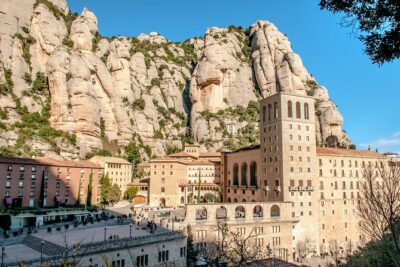
Montserrat with Black Madonna & Medieval Winery with Tapas/Lunch
Read our review →
Montserrat and Winery Tour with Tapas or Lunch
Read our review →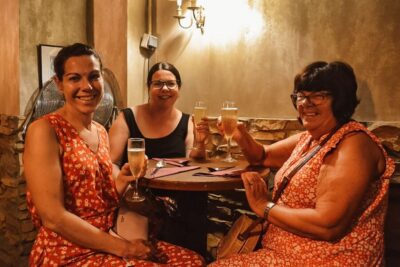
Tapas Walking Tour with Food, Wine, and History
Read our review →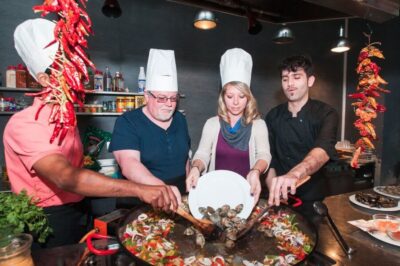
Paella Cooking Experience & Boqueria Market Tour
Read our review →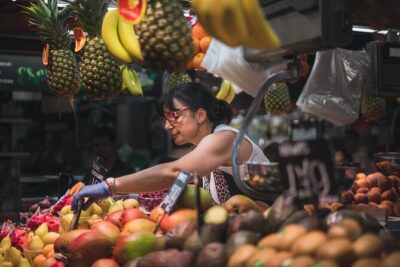
Barcelona Paella Cooking Class with Market Visit, Tapas & Sangria
Read our review →Browse the lists this tour appears in