

Review · LISBON TAPAS TOURS
Lisbon: Fado Vadio Tour with Portuguese Tapas
Lisbon’s Fado is best understood close to the musicians, not from a distant theater seat. This 3.5-hour evening pairs a walk through Chiado, Bica, and Bairro Alto with a small traditional Fado house, where songs, stories, food, and conversation share the same room. Some guides, including Cristiana and Ana, are also connected to Fado as performers, which can add a personal touch.
I like the small groups of up to 10 and the way the guide stays with you at the venue instead of dropping you at the door. I also like the front-row access and the chance to hear Fado in an intimate local setting, with codfish cakes, cheese, bread, sausage, soup, and a drink.
The main caution is the food. It is a tasting-style Portuguese meal, not a large dinner, and one evening was not enough for a hungry diner. Eat a light snack first if you expect to be hungry between 7 and 10:30 p.m.
Key points at a glance

- Fado in a small local house: Hear several singers and musicians in a close setting rather than a large stage show.
- A walking introduction: Explore central Lisbon districts tied to Fado, including Chiado, Bica, and Bairro Alto.
- Guides with real passion: Cristiana, Ana, Diogo, João, and other guides have been praised for their stories, humor, and personal connection to Fado.
- Tapas and a drink included: Expect cheese, bread, codfish cakes, flaming sausage, and caldo verde soup.
- Limited group size: With no more than 10 people, questions and conversation are easier.
- A possible musical surprise: Several guides have ended the evening with an unexpected Fado performance or another small treat.
Lisbon’s Fado story begins on foot
The evening starts at Café A Brasileira in Baixa Chiado. Look for a guide wearing yellow. From here, the experience moves through some of Lisbon’s best-known central neighborhoods, with the guide explaining how the city and Fado grew together.
This opening walk matters because Fado is not simply background music for a Portuguese meal. It is tied to Lisbon’s streets, taverns, working districts, performers, and changing social life. Walking through Chiado, Bica, and Bairro Alto gives you a physical sense of the places connected with the music.
You may see important sights along the route and hear about notable characters from Fado’s past and present. Some outings have also included a stop at the world’s oldest bookstore and a walk through Alfama, although the stated route centers on Chiado, Bica, and Bairro Alto. The exact path can depend on the guide and evening.
I like this start because it gives you something to listen for later. Once you know a little about the music’s setting and the people who shaped it, a singer’s delivery feels less like a polished tourist performance and more like part of Lisbon’s living culture.
The walk is not a major sightseeing circuit. You are not visiting every landmark in central Lisbon, and the tour’s main event is still the Fado house. Think of this portion as a well-chosen introduction rather than a full city tour.
Wear comfortable shoes. Lisbon’s central districts are hilly, and a night of walking followed by several hours seated in a small venue calls for practical footwear.
More Portuguese Tapas Tours in Lisbon:
- A True Taste of Lisbon: Portuguese Tapas, Wine & Surprise Drink
★ 4.5 · 110 reviews - Food Tour: Portuguese wine & Tapas with Ginjinha Tasting
★ 3.8 · 67 reviews - Private Tuktuk Tour with Portuguese Tapas and Wine
★ 5.0 · 33 reviews
What makes the small group useful
The group limit is 10 people. That sounds like a small detail, but it changes the tone of the night.
A guide can answer questions without holding up a large crowd. You can ask about a singer, a song, a neighborhood, or the meaning of Fado without shouting over a group of 30 people. The guide can also keep an eye on the group during the walk and help explain what is happening once you reach the venue.
Several outings have had only three or four people, creating something close to a private evening. That is a benefit if you want conversation and personal attention. It can also make the experience feel less formal, especially when the guide remains at the table during the music.
The small size has one possible downside. If you prefer to disappear into a crowd and listen quietly, a personal tour may feel more social than expected. The idea here is proximity between audience and musicians, not passive listening.
The guides are a major part of that design. Cristiana has been praised for explaining Fado’s history, musical structure, and important performers. Ana is often described as warm, funny, and deeply connected to the subject. Diogo has led both the neighborhood walk and the evening at the Fado house, adding context between sets. João and other guides have also received strong praise for their handling of the night.
Guide assignments can change, so you should not book on the assumption that one named guide will lead your date. Still, the repeated pattern is clear: this experience depends heavily on a guide who treats Fado as a personal passion rather than a script to recite.
Entering the traditional Fado house
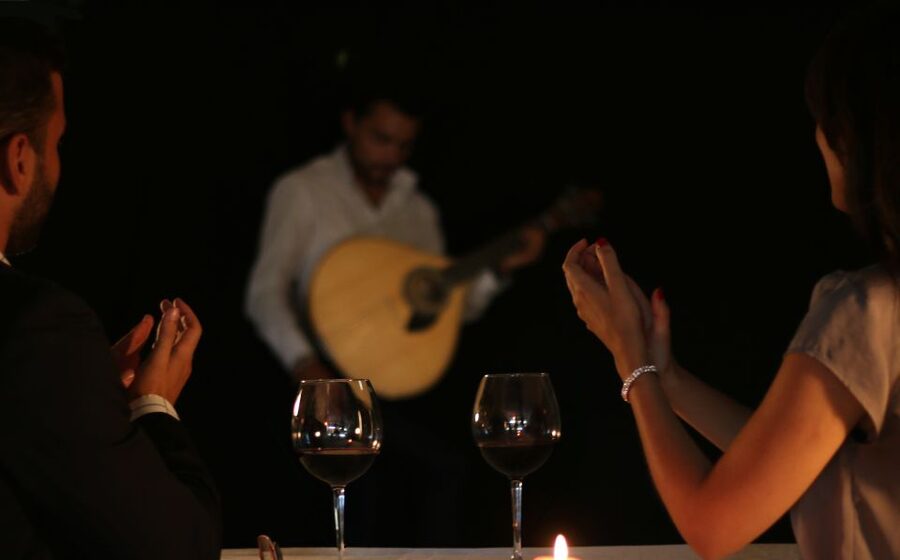
After the walk, you settle into a small Fado venue. The setting is part of the appeal. The room may be compact, the tables close together, and the performers near the audience. Several evenings have included seats near the front, giving you a clear view of the singers and musicians.
That intimacy is important. Fado works through voice, pause, expression, and the connection between singer and room. A large concert hall can offer excellent sound, but a small house lets you see the faces and reactions that give the music its force.
The performances usually unfold in several sets. One evening included three sets, with food and conversation continuing between songs. Your guide may explain the venue, performers, or Fado customs during the breaks. The result is a night that moves between listening and learning rather than one uninterrupted concert.
You should expect a traditional atmosphere, not a flashy stage production. The appeal is the musicianship and the setting. Some songs may feel sorrowful or serious, while others can be more lively. If you know nothing about Fado, the guide’s explanations help you follow the mood and place the songs in context.
One practical point: the experience does not promise that the guide will sing. Several guides have done so, including Cristiana and Ana, and those moments have been memorable. Treat that as a possible bonus, not as the main product. The scheduled performance is the Fado show by the resident artists.
There may also be a surprise near the end. More than one evening has included an unexpected musical moment or small gift. The details are intentionally not given in advance, so I would not count on a specific surprise. It is better to let the evening unfold.
Portuguese tapas, soup, and a drink
The included food is designed for sharing and sampling. You can expect Portuguese cheese and bread, codfish cakes, flaming sausage, and caldo verde soup, along with a drink.
These dishes give you a useful first taste of familiar Portuguese flavors. Codfish cakes are a classic snack, caldo verde is a comforting soup, and the sausage brings a smoky, savory note to the table. Food is served as part of the Fado evening, not as a separate restaurant meal.
That distinction matters. The tour description calls it Portuguese tapas, while the timing runs through the normal dinner hours. One diner found the portions too small for a full dinner, even though the food itself was enjoyable. I would follow that advice and eat something light beforehand if you have a large appetite.
The guide can also help put the food into context. You are not just being handed a plate between songs. The meal gives you another way into Portuguese culture, with simple dishes suited to a social table and a long evening of music.
A drink is included, but the supplied details do not specify a fixed beverage menu. Some evenings have included wine or sangria. If you want more drinks, you should expect those to cost extra, and your guide can help with ordering at the venue.
The food is not the strongest reason to book. The music, guide, and atmosphere carry the experience. But the tapas are a useful addition, and they keep the night from being only a lecture followed by a show.
A few more tapas tours around Lisbon worth a look
- Lisbon: Tapas & Drinks with Fado Live Performance
★ 4.6 · 749 reviews - Lisbon: Premium Wine and Tapas Tasting Session
★ 4.8 · 116 reviews - Private Lisbon Walking Tour with Premium Port Wine and Tapas Tasting
★ 5.0 · 61 reviews - Lisbon: Premium Port Wine Tasting & Tapas
★ 5.0 · 54 reviews
Learning Fado without turning it into a lecture
The tour’s central promise is not just to hear Fado but to understand how it fits Lisbon. The guide may explain major figures, the city’s older neighborhoods, the structure of the music, and the way Fado has changed over time.
That context is especially useful if this is your first Fado evening. Without it, you might hear beautiful singing but miss the links between the music and the streets outside. With it, the short walk and live sets form one connected experience.
The best guides appear to keep the tone informal. Ana has been described as bringing humor and an easy sense of companionship. Cristiana has been praised for her passion and for sharing lesser-known details. Diogo has been noted for explaining how local sights connect to Fado.
You may hear about current performers as well as older figures. The experience is not presented as a museum piece frozen in the past. Its aim is to show Fado as a living part of Lisbon, with musicians and singers still shaping its place in the city.
The guide also helps you avoid a common mistake: treating Fado as decorative dinner music. Here, the meal supports the evening, but the performers come first. One host reportedly made that point plainly, saying the main reason to come is the artists, with food second. That is a fair way to set your expectations.
How the evening feels in practice
The full duration is 3.5 hours. The pace is spread across a walking introduction, the move to the Fado house, food, drinks, explanations, and several musical sets.
That length works well for a night in Lisbon. You get enough time to understand the setting without giving up the entire evening. It is also a good choice if you have only one night in the city and want one organized cultural plan rather than trying to find a Fado venue on your own.
The evening is social. You may sit with other members of the group, share food, talk with the guide, and order another drink. If you want a silent concert with no interaction, this format may not be ideal.
It is also not a fast-paced sightseeing tour. The central neighborhoods are explored at a relaxed pace, and the Fado house portion takes priority. You will see important areas of Lisbon, but you will not cover every major sight in the city.
The meeting point is easy to identify: Café A Brasileira in Baixa Chiado, with the guide wearing yellow. Confirm the starting time when booking because several departure times may be available. Cancellation is free up to 24 hours in advance, and the reserve-now, pay-later option can help if your plans are still shifting.
Is $70 a fair price?
At $70 per person, the price is higher than simply walking into a Fado bar for a drink. You are paying for more than admission.
The fee includes the private English-speaking guide, the neighborhood walk, entry to the show, reserved access, the tapas, and a drink. The guide also stays involved during the performance, which can make ordering and understanding the evening easier.
The value is strongest if you want structure. You do not need to choose a venue, work out local Fado etiquette, or spend time guessing which place offers a serious performance. You also get an explanation of what you are hearing and why the neighborhoods matter.
The price is less compelling if your main goal is only to hear music at the lowest possible cost. You could seek out a Fado house independently and pay separately for food and drinks. You would, however, give up the walking tour, the guide’s background, and the ease of front-row or reserved seating.
For a first night of Fado, $70 is reasonable if you value personal guidance and a small group. The included meal is modest, so do not judge the price as if you were buying a full restaurant dinner.
Who will enjoy this most
I would recommend this experience to first-time Lisbon visitors who want a clear introduction to Fado and the districts tied to it. It also suits solo visitors, couples, and small groups who like asking questions and meeting other people during an evening out.
It is a strong fit if you have only one night in Lisbon. The walk, food, live music, and local explanation give you a compact introduction to several parts of the city.
Music lovers should also consider it, especially if you want to hear several performers in a close setting. The guide’s personal connection to Fado can add another layer, and there is a chance of an unexpected live performance from the guide.
I would be more cautious if you need a large meal, dislike hills, or prefer a quiet concert without conversation. Eat before you go if dinner portions matter to you, wear comfortable shoes, and approach the night as a cultural outing rather than a standard restaurant reservation.
Should you book the Fado Vadio Tour?

Book it if you want Fado with context, not just Fado as background sound. The combination of Lisbon’s central neighborhoods, a small local venue, live performers, Portuguese tapas, and an involved guide gives the night a clear sense of place.
The strongest reasons to go are the small group, the quality of the guides, the close seating, and the chance to hear music in a traditional setting. The main limitation is the light meal, so plan around that.
At $70, this is good value for someone who wants the evening organized and explained. If you already know Lisbon well and only want a cheap seat at a Fado show, book independently. For most first-time visitors, this offers an easier and more meaningful way into one of Lisbon’s defining arts.
FAQ
Where does the Fado tour meet?
Meet your English-speaking guide at Café A Brasileira in Baixa Chiado. The guide will be wearing yellow.
How long does the experience last?
The experience lasts 3.5 hours. Starting times vary, so check availability for your date.
What neighborhoods are included?
The experience highlights Chiado, Bica, and Bairro Alto, three central Lisbon areas linked with the city’s bohemian character and Fado culture.
Is the Fado show included?
Yes. Entry to the Fado show and the required tickets are included in the price.
What food is included?
The Portuguese tapas include cheese, bread, codfish cakes, flaming sausage, and caldo verde soup. One drink is also included.
How large is the group?
The group is limited to 10 participants, making it easier to ask questions and stay close to the guide.
Is cancellation available?
You can cancel up to 24 hours in advance for a full refund. You can also reserve now and pay later.
Just added around Lisbon
- Private tapas tuk tuk tour through Lisbon★ 5.0 · 12 reviews
- Tapas And Tascas: Private Food Tasting Experience In Lisbon★ 3.5 · 7 reviews
- Sangria Bike Tour★ 3.5 · 5 reviews
- Sintra Cascais (Wine and Tapas) 4X4 Land Rover Panoramic Private Tour★ 5.0 · 36 reviews
- Private Tuktuk Tour with Portuguese Tapas and Wine★ 5.0 · 33 reviews
- Urban winery tour, premium tasting flight & tapas★ 5.0 · 4 reviews
- Sangria Bike Lisbon Experience★ 4.5 · 42 reviews
- Premium Lisbon Port Wine and Tapas Tasting★ 5.0 · 12 reviews
Lisbon Tapas Tours, compared.

Lisbon Food Tour with 10+ Tastings of Local Delicacies & Wines
Read our review →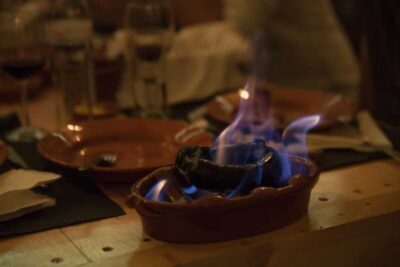

1-Hour Beer Bike Tour with Draft Beer & Sangria Ride
Read our review →

1-Hour Beer, Sangria or Wine Bike Sightseeing Tour
Read our review →
A True Taste of Lisbon: Portuguese Tapas, Wine & Surprise Drink
Read our review →
Food Tour: Portuguese wine & Tapas with Ginjinha Tasting
Read our review →
Private Lisbon Walking Tour with Premium Port Wine and Tapas Tasting
Read our review →Browse the lists this tour appears in