
Review · BARCELONA TAPAS TOURS
Barcelona Side Streets Tapas & Wine Tour
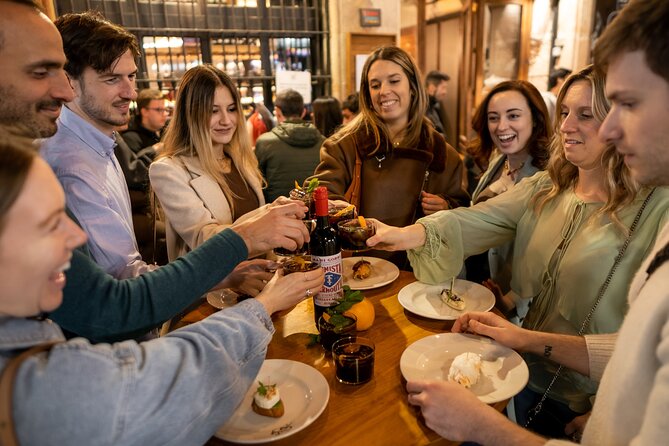
Barcelona’s best food stories often unfold in old neighborhood bars, not polished dining rooms. This 3.5-hour walk links the Gothic Quarter, El Born, and Barceloneta with stops for Catalan tapas, Basque pintxos, Fideuà, wine, Cava, and pastry. Along the way, guides such as Sky and Lindsay add context about local customs, buildings, and dishes.
I like the small maximum of 12 people, which gives you room to ask questions and keeps the meal stops personal. I also like the mix of food and place: you are not simply eating your way through town, you are walking past Santa Maria del Mar, the old Barceloneta waterfront, and a 2,000-year-old Roman wall.
The main caution is value. At $114.93 per person, the tour is not cheap, and the portions may feel modest if you arrive hungry. You will also walk quite a bit, so wear comfortable shoes and think of this as a moving meal rather than a long dinner at one table.
Key points to know before booking
- Four food stops cover both savory and sweet tastes: Expect Catalan dishes, a Basque pintxo, Fideuà, and a traditional pastry.
- The group is capped at 12 people: That is a useful size for questions and conversation without turning the walk into a crowd.
- Three drinks are included: You will sample white wine from a porrón, a Basque-style Vermut cocktail, and Cava.
- The route connects three historic districts: The Gothic Quarter, El Born, and Barceloneta each add a different side of the city.
- The food is traditional rather than fancy: This is a good fit if you want everyday regional cooking and cultural background, not a tasting menu.
- Vegetarian and gluten-free diets can be accommodated: Vegan diets cannot be accommodated.
A food walk through Barcelona’s old quarters
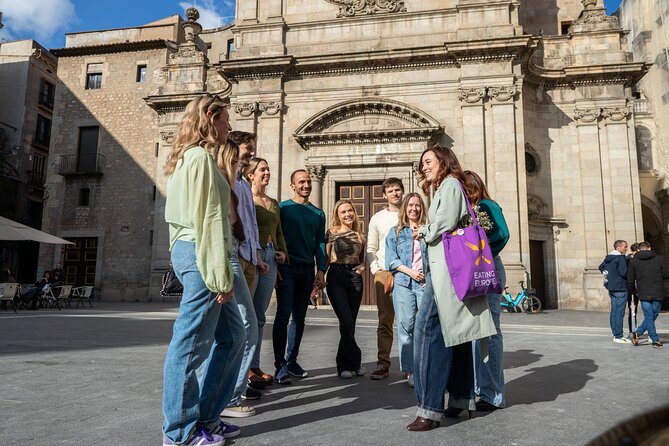
The tour begins at Plaça de la Mercè, near the Basilica de la Mercè in Ciutat Vella. This is a sensible starting point because you are already in Barcelona’s oldest central districts, with narrow lanes and centuries of built-up city around you.
From here, the route moves through El Born and toward Barceloneta. You will pass Passeig del Born, Santa Maria del Mar, the former site of the Barceloneta market, Marina Port Vell, and the small carved face known as La Carassa. These sights give the meal its setting. You are not being driven between restaurants, so the spaces between tastings matter.
The walk also includes a medieval Gothic church built by local people over 60 years, with bricks carried by hand from Montjuïc. That detail helps explain the old neighborhood in human terms. Barcelona’s monuments can feel grand and distant, but a guide can connect them to the people who built and used them.
The pace is part of the tradeoff. You get a useful orientation to several districts, but you should not expect to linger at every church or square. If you want a full guided tour of Barcelona’s architecture, book a separate sightseeing walk. Here, the history supports the food.
More Tapas and Wine Tours in Barcelona
- Montserrat Half-Day Tour with Tapas and Gourmet Wines
★ 5.0 · 7,359 reviews - Montserrat & Cogwheel Train, Gourmet Wine Tasting & Tapas/Lunch
★ 5.0 · 6,290 reviews - Barcelona Tapas and Wine Experience Small-Group Walking Tour
★ 5.0 · 5,804 reviews
First stop: Catalan bites and wine from a porrón
The opening tasting takes place at Perikete, described as either an intimate bodega beside Barcelona’s ancient wall or a lively portside bar with some outdoor seating. The exact venue may vary, so the atmosphere is not fully fixed. That flexibility may appeal to you if you like local bars more than formal restaurants.
The food is firmly Catalan. You might receive aubergine tortilla with pa amb tomàquet, or crispy fried aubergine and mushrooms. Pa amb tomàquet is one of the simplest regional staples: bread rubbed or topped with tomato, usually treated as a basic part of the meal rather than a showpiece.
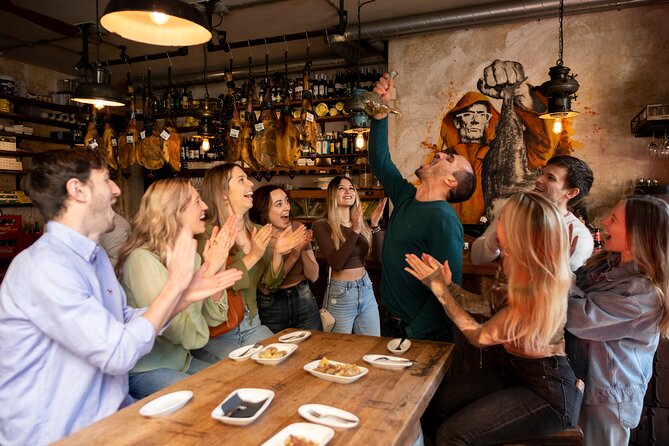
The wine is served from a traditional porrón. This glass vessel lets you pour wine directly toward your mouth, though you can also use a glass if you prefer. It is a playful custom, but it also shows how food tours can explain local habits that a guidebook may only mention in passing.
This first stop sets the tone: familiar ingredients, old dining customs, and food with working-class roots. If you are hoping for rare ingredients or elaborate plating, you may find it too plain. If you want to understand what people actually eat in Catalonia, it makes more sense.
El Born brings Basque pintxos to the table
At Euskal Etxea Taberna, you choose one pintxo from a display in a Basque-style restaurant and bar. Pintxos are related to tapas, but they are often arranged as small bites on bread or held together with a toothpick. The point is not just the portion size. It is the social habit of choosing, sharing, and moving from one small bite to the next.
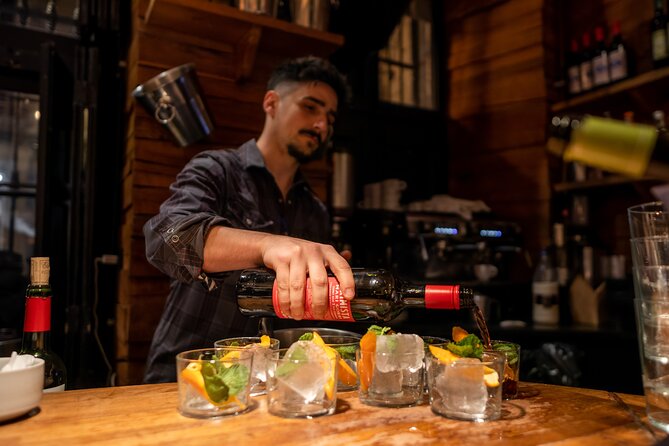
Your pintxo comes with a Basque-style Vermut cocktail. Vermouth is an important part of pre-meal drinking in Spain, and this stop gives you a chance to taste a local bar ritual rather than simply ordering another glass of wine.
The setting in El Born adds to the stop. This district is known for medieval lanes, old churches, and a strong restaurant and bar culture. You will have a short amount of time here, around 20 minutes, so do not expect a leisurely drink. Instead, think of it as a focused introduction to pintxos and vermouth.
The tour is at its best when your guide explains why the food is served this way and how it relates to the neighborhood. Guide Sky, in particular, has been praised for connecting the dishes with Barcelona’s past and for offering practical suggestions for the rest of a city visit.
Can Ramonet and Barceloneta’s Fideuà
The most substantial savory stop is Restaurant Can Ramonet in Barceloneta. The restaurant occupies what is described as the oldest house in the neighborhood, dating to the 1700s, and it buys ingredients from the Barceloneta Market.
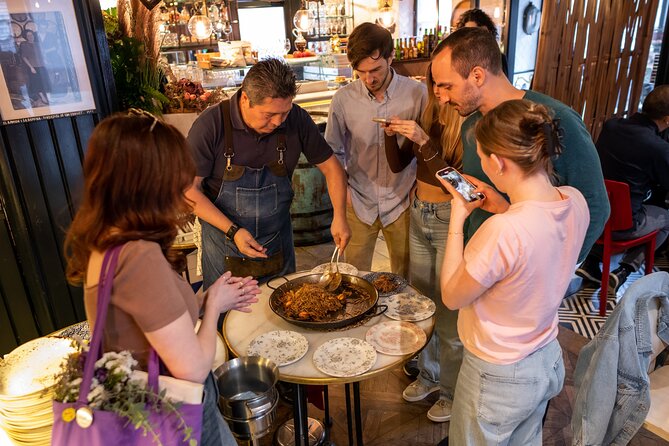
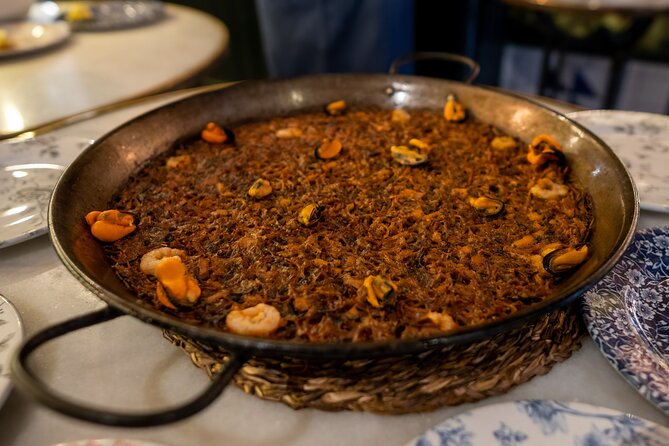
Here the featured dish is Fideuà, a Catalan cousin of paella made with noodles instead of rice. It is served with alioli and paired with a glass of Cava. If you already know paella, Fideuà gives you a useful comparison. The dish carries the same broad connection to seafood cooking and communal meals, but the noodles change the texture and make the dish feel distinctly its own.
This is also where the neighborhood context matters most. Barceloneta grew as a seaside district, and its food traditions remain tied to the port, the market, and the water. The nearby marina now includes luxury yachts and small local cruise boats, but the neighborhood still has a working food culture behind the waterfront views.
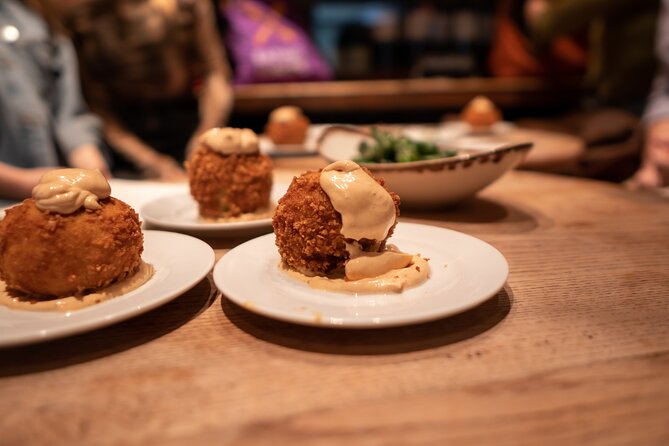
The included tasting also highlights the Bomba de Barceloneta, a fried potato dish associated with the district. The supplied details do not specify exactly which stop serves it, so do not plan your appetite around receiving a full portion of every advertised item. The tour is designed around samples, not restaurant-sized plates.
More Tapas and Wine Tours in Spain
- Montserrat with Black Madonna & Medieval Winery with Tapas/Lunch
★ 5.0 · 5,209 reviews - Barcelona: Montserrat and Winery Tour with Tapas or Lunch
★ 4.8 · 4,695 reviews - Barcelona: Tapas Walking Tour with Food, Wine, and History
★ 4.8 · 4,261 reviews - Barcelona: Food Walking Tour with Tapas and Wine
★ 4.9 · 2,180 reviews
A pastry stop finishes the route
The final food stop is Forn de pa Balboa or another well-loved neighborhood bakery. You will taste a traditional regional pastry, giving the tour a sweet finish after the salty tapas, pintxo, noodles, and drinks.
A bakery stop is a smart ending. It changes the pace and lets you sample a food that belongs to daily life rather than only to restaurants. The bakery is also described as supplying Catalan pastries to venues around the city, which gives the stop a wider connection to Barcelona’s food trade.
The dessert is a single regional pastry, not a full pastry tasting. If you have a serious sweet tooth, you may want to visit another bakery later. Still, it completes the menu neatly and prevents the tour from becoming a sequence of similar savory bites.
What the included drinks add
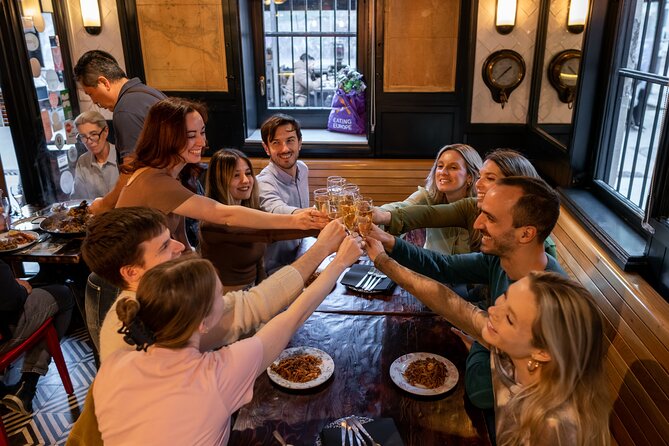
The tour includes white wine served from a porrón, a Vermut cocktail, and Cava with the Fideuà. These are not random drinks added to the meal. Each one points to a different local habit.
The porrón introduces a traditional way of sharing wine. Vermut connects to the social hour before lunch or dinner. Cava, produced in Catalonia, fits naturally with a seafood-based dish and gives you a taste of the region’s sparkling wine tradition.
Extra drinks are not included, though the tour information notes that you should have enough included beverages for the experience. That is useful for the price, but you should not assume an open bar. If you want more wine, another cocktail, or a drink after the tour, budget separately.
Because the tour lasts about three and a half hours, the drinks are spread across the route rather than served all at once. You will be walking between stops, so pace yourself and use the food as your guide.
How much food do you really get for $114.93?
The price is the tour’s biggest question. At $114.93, you are paying for more than the cost of several small dishes. The fee also covers the English-speaking guide, the route through three historic districts, the included drinks, and the work of arranging several stops in a small group.
That can be fair if you value context and city orientation. A good guide helps you understand why pa amb tomàquet is more than bread and tomato, how a porrón is used, why Fideuà differs from paella, and how Barceloneta’s market supports local cooking.
Still, this is not the best choice for a budget meal. Some of the food is simple, traditional cooking. One person may see that as the point of the tour, while another may feel the portions and ingredients do not match the price. The most useful way to judge it is to ask yourself what you are buying: a full dinner, or a guided food-and-history experience with dinner-sized snacks?
Several positive experiences with guides named Sky and Lindsay emphasize their warmth, city knowledge, good pace, and ability to connect food with history. That human element matters. The quality of the experience may depend as much on the guide and group as on the dishes.
Walking, group size, and practical details
The route begins at Plaça de la Mercè and ends at Plaça de la Barceloneta. There is no hotel pickup or drop-off, so you need to reach the starting point on your own and arrange your return afterward.
The tour is offered in English and accepts mobile tickets. It is near public transportation, and most people can take part. Service animals are allowed. Vegetarian and gluten-free diets can be handled, but vegan diets cannot.
The group limit is 12 people. That is small enough for direct conversation, but the tour is still social. You may share the meal with people who have different food interests and walking speeds.
Wear comfortable shoes. The route includes medieval lanes, neighborhood streets, the waterfront, and several stops close together. Reviews repeatedly praise the tour’s pace and guide but also point out that there is lots of walking. This is not a seated food crawl.
The experience is commonly booked well ahead, with an average booking lead time of about 50 days. If your schedule is fixed, reserve early rather than assuming a last-minute place will be available.
Free cancellation is available up to 24 hours before the start time. Changes or cancellations inside that window are not accepted for a refund. The tour also requires a minimum number of participants, so if it is canceled for that reason, you will be offered another date or a full refund.
Who will enjoy this tour most?
I would choose this tour early in a Barcelona visit. The route gives you a first look at the Gothic Quarter, El Born, and Barceloneta, while the guide can suggest places to return for later meals.
It suits you if you enjoy trying regional food without needing a formal restaurant setting. It is also a good match if you like to ask questions, meet other people over a meal, and learn why a dish matters.
Food-focused visitors should know that the menu is traditional and fairly simple. This is not a luxury tasting experience, and you should not expect large portions. If your main goal is to eat as much as possible for $114.93, you can likely do better on your own.
The tour is also a strong fit for first-time visitors who want a manageable introduction to Barcelona’s old center. The guide helps turn a series of small tastings into a readable story about neighborhoods, markets, churches, and coastal life.
Should you book the Barcelona Side Streets Tapas & Wine Tour?
Book it if you want a guided introduction to Barcelona through ordinary regional food, with enough sightseeing to give each bite a sense of place. The small group, included drinks, and guides such as Sky and Lindsay are real strengths.
Skip it if you want a long, luxurious dinner or generous portions for the price. You will walk a lot, and the dishes are more about tradition and context than culinary showmanship.
For the right person, this is a useful first-night tour: eat a little, learn a lot, and finish in Barceloneta with the city’s old streets and waterfront already familiar.
FAQ
How long is the Barcelona Side Streets Tapas & Wine Tour?
The tour lasts approximately 3 hours and 30 minutes.
What is the tour price?
The listed price is $114.93 per person.
Where does the tour begin?
The meeting point is Plaça de la Mercè, Ciutat Vella, 08002 Barcelona, Spain.
Where does the tour end?
The tour ends at Plaça de la Barceloneta, Ciutat Vella, 08003 Barcelona, Spain.
What food is included?
Included tastings feature Catalan tapas such as aubergine tortilla, pa amb tomàquet or fried aubergine, the Bomba de Barceloneta, Fideuà with alioli, and a traditional Catalan pastry.
What drinks are included?
You receive white wine served from a traditional porrón, a Basque-style Vermut cocktail, and a glass of Cava with the Fideuà.
Can the tour accommodate dietary restrictions?
Vegetarian and gluten-free diets can be accommodated. Vegan diets cannot be accommodated.
How many people are in the group?
The tour has a maximum of 12 participants.
Just added around Barcelona
- Barcelona Sailing Experience: Spanish Tapas and Premium Open Bar★ 4.5 · 34 reviews
- Barcelona: Guided Rooftop Wine Tasting – Enjoy 6 Spanish Wines★ 4.5 · 61 reviews
- Vermouth in Catamaran A gastronomic experience in Barcelona★ 5.0 · 5 reviews
- Wine & Cava Penedes Tour: Wineries, Wine Tasting and Tapas★ 5.0 · 5 reviews
- Vermouth Tasting and Crafting in Barcelona★ 5.0 · 4 reviews
- Rooftop Paella Seafood Cooking Class Experience in Barcelona★ 5.0 · 59 reviews
- Barcelona: Bike or eBike Tour, Top Sights & Local Insights★ 5.0 · 47 reviews
- Tarragona Culinary Experience: Olive Oil & Iberian Ham Delight★ 5.0 · 8 reviews
Barcelona Tapas Tours, compared.

Montserrat Half-Day Tour with Tapas and Gourmet Wines
Read our review →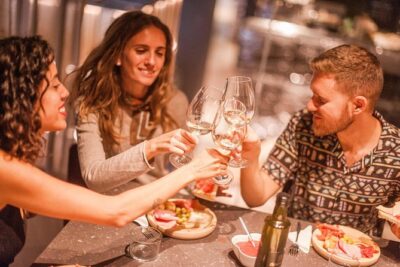
Montserrat & Cogwheel Train, Gourmet Wine Tasting & Tapas/Lunch
Read our review →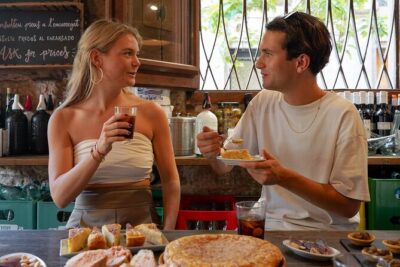
Barcelona Tapas and Wine Experience Small-Group Walking Tour
Read our review →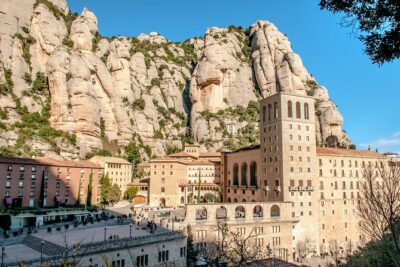
Montserrat with Black Madonna & Medieval Winery with Tapas/Lunch
Read our review →
Montserrat and Winery Tour with Tapas or Lunch
Read our review →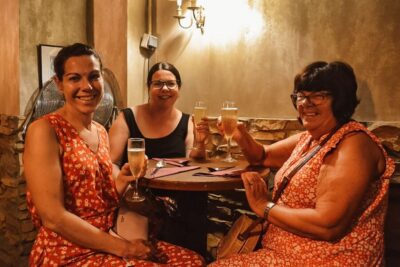
Tapas Walking Tour with Food, Wine, and History
Read our review →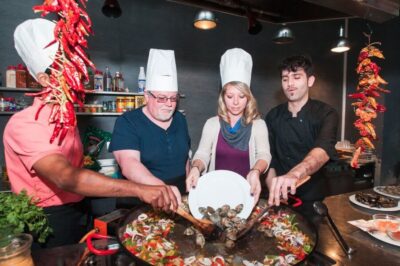
Paella Cooking Experience & Boqueria Market Tour
Read our review →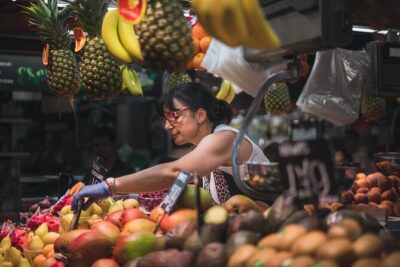
Barcelona Paella Cooking Class with Market Visit, Tapas & Sangria
Read our review →Browse the lists this tour appears in