
Review · BARCELONA TAPAS TOURS
Barcelona: Vegan Paella and traditional rice dishes
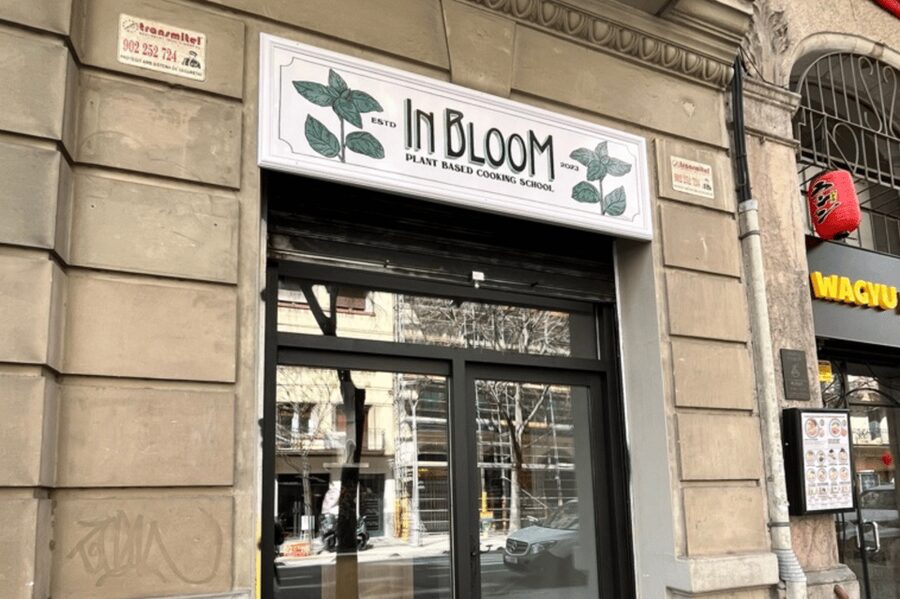
Barcelona gives vegan cooks a fine challenge: recreate Spain’s famous rice dishes without meat, seafood, or animal stock. At In Bloom Cooking School, you prepare paella Valenciana, oven-baked arroz al forn, black rice, and fideuà, then sit down to taste the full spread.
I like the four-hour pace, which gives the dishes room to cook properly, and I like the shared buffet because you can compare several styles of Spanish rice in one sitting. The small-group format begins with four participants, but the total recipe count depends on the final group size.
The main consideration is the price, $93 per person. It is a serious cooking-class expense, and extra drinks cost more after the included welcome drink. Still, the number of dishes and the meal at the end give the price more weight than a simple demonstration.
Key points to know before booking
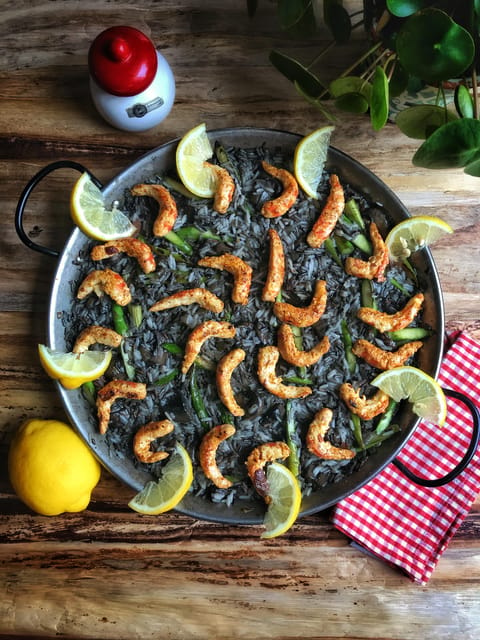
- Four Spanish rice dishes: Prepare paella Valenciana, arroz al forn, arroz negre, and fideuà.
- 100 percent vegan cooking school: Every recipe uses plant-based ingredients and substitutes.
- Shared buffet at the end: Everyone tastes all the dishes prepared during the class.
- Near Plaza España: The school is behind Arenas mall, making the meeting point easy to pair with sightseeing in the area.
- Bring a Tupperware container: Leftovers can go home with you.
- Four-hour class: The length allows time for cooking, tasting, and a relaxed group meal.
A plant-based take on Spain’s rice tradition
This is not a class built around one basic paella. You work through several Spanish rice and pasta preparations, each with a different cooking style and flavor profile.
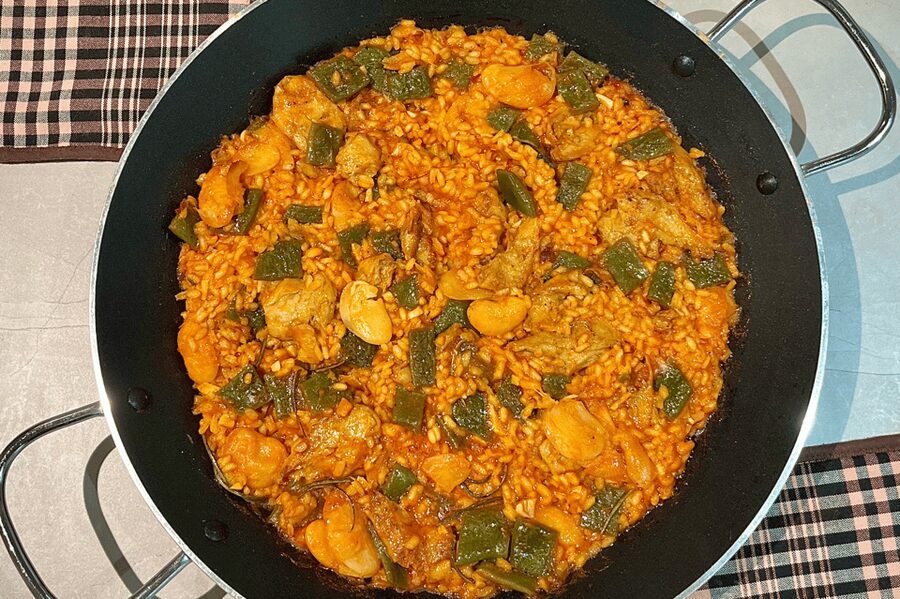
The menu includes paella Valenciana with Bomba rice, green beans, and garrafó, the large Valencian fava beans used in traditional versions. Marinated and grilled Heura, a plant-based chicken-style ingredient, takes the place of meat.
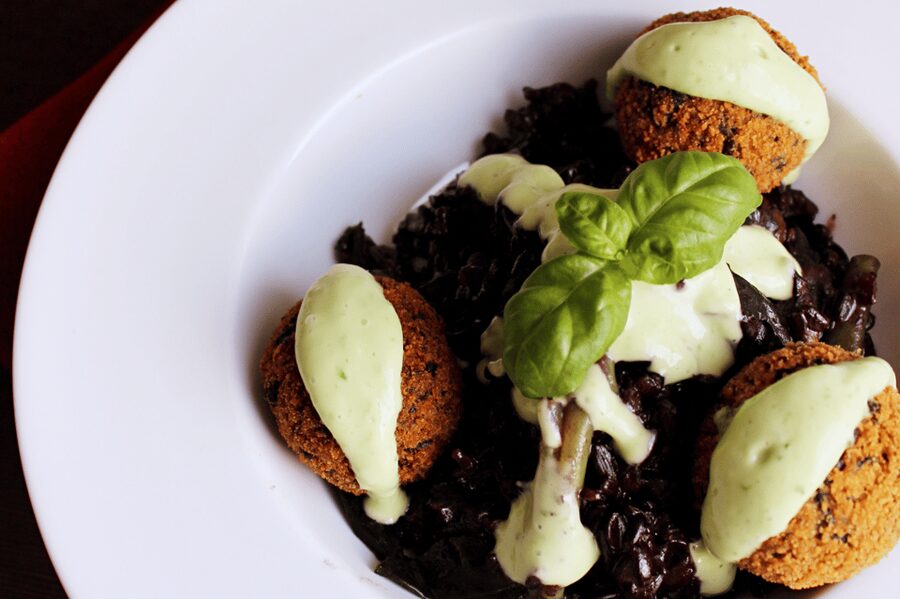
You also prepare arroz al forn, or oven rice. This version combines Bomba rice with tomatoes, potatoes, chickpeas, and vegetable broth. Vegan sausage made from black beans and marinated mushrooms in a bacon-style preparation add the smoky, savory elements usually supplied by meat.
The third dish is arroz negre, or black rice. It uses black rice, seaweed, peas, green and red peppers, and a seaweed broth. Grilled vegan prawns made from konjac take the place of seafood, with allioli served as the garlic sauce.
Finally, you make fideuà. Think of it as a paella-style dish made with fine pasta rather than rice. This version includes aubergine, red pepper, white wine, seaweed broth, and marinated, grilled vegan squid made from konjac.
That range matters. You are not simply learning how to season rice. You are seeing how Spanish cooking handles rice, pasta, baked dishes, vegetables, broths, and sauces, then seeing how those methods adapt to a fully plant-based kitchen.
More Paella Cooking Classes in Barcelona
- Barcelona: Paella Cooking Experience & Boqueria Market Tour
★ 4.8 · 3,661 reviews - Barcelona Paella Cooking Class with Market Visit, Tapas & Sangria
★ 5.0 · 2,531 reviews - Barcelona Food Tour: Tapas, Paella, Sangria & 8+ Local Tastings
★ 5.0 · 1,275 reviews
What the four-hour class feels like
The class begins with a welcome drink, included in the price. After that, you can order more drinks at the school and settle the bill at the end.
The supplied details do not name the individual instructor, but the teaching is offered in Catalan, English, German, and Spanish. That makes the class practical for an international audience, though you should select the language you need when booking or confirm it before arrival.
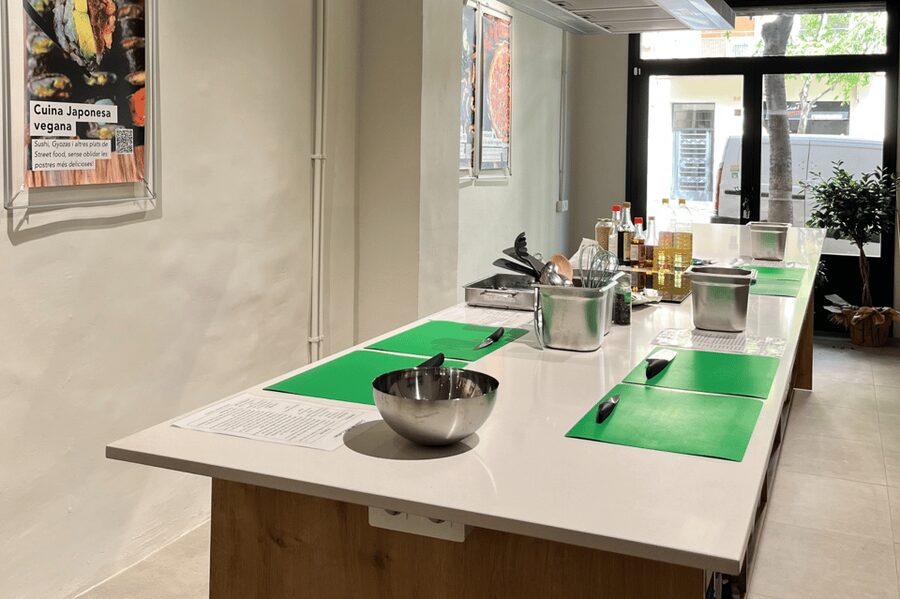
The format is hands-on. The recipes are prepared and tasted by the participants rather than simply presented from the front of the room. Since the class starts with a group size of four, the experience has a small-group feel at its minimum size. The number of recipes prepared depends on how many people attend, so the exact working rhythm can vary.
I would expect the class to move between preparation, cooking, and shared tasting rather than follow a rigid restaurant-style schedule. Rice dishes need time, and the four-hour duration gives the group space to work through several recipes without turning the event into a rushed race.
One practical point: the recipes are made for the whole group. You are not promised a separate full serving of every dish to prepare alone. That is part of the social design, but it also means you should be comfortable cooking as a team and sharing tasks.
Paella Valenciana: the classic starting point
Paella Valenciana is the clearest introduction to the class. The base is Bomba rice, a Spanish short-grain rice valued for its ability to absorb broth while keeping its shape.
The traditional vegetable elements are green beans and garrafó. The plant-based Heura addition is marinated and grilled, giving the dish a chicken-style component without using meat.
This dish is useful for learning how a few ingredients can define a regional preparation. It is not overloaded with toppings. The rice, vegetable broth, beans, and grilled substitute do the work.
For you, the key value is comparison. Once you taste this version, you can judge how it differs from the baked rice and the seaweed-based black rice later in the meal. The drawback is that anyone expecting a seafood paella will not find one here. This is a vegan interpretation of the Valencian style, not a conventional restaurant paella.
Arroz al forn: baked rice with hearty additions
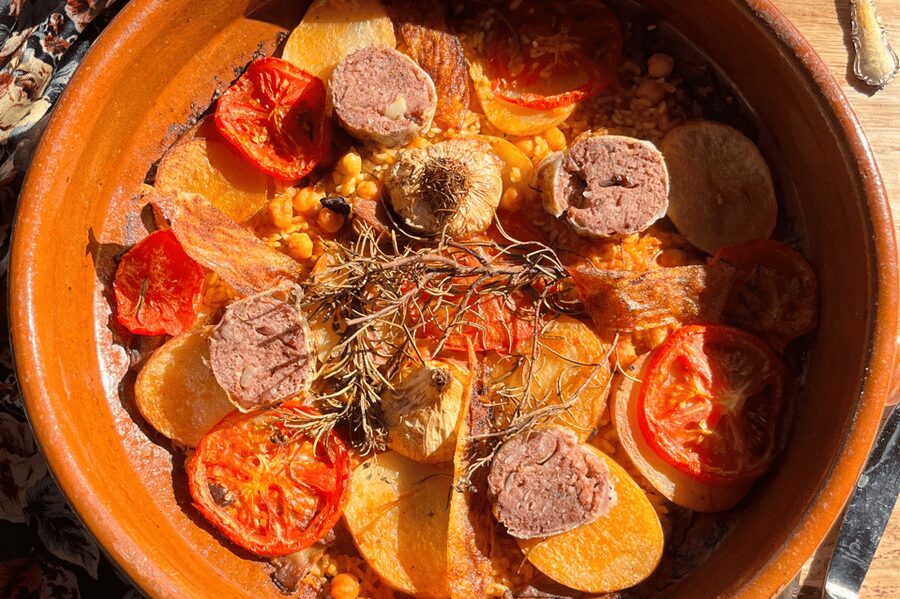
Arroz al forn offers a different texture and cooking method. Instead of focusing only on a pan of rice, you work with an oven-baked preparation containing tomatoes, potatoes, chickpeas, and Bomba rice.
The toppings bring a more substantial feel. Black-bean vegan sausage replaces the usual meat element, while marinated mushrooms provide a bacon-style note.
I like this dish for anyone who wants to understand the range of Spanish home cooking. It shows that the country’s rice tradition is not limited to the paella pan. The chickpeas and potatoes also make this likely to be one of the more filling dishes in the meal.
Because each recipe depends on timing, this is one reason the class needs four hours. Baked rice cannot be treated like a quick stir-fry. You will have to give the ingredients time to develop, and the group will need to coordinate the work.
Same city, a different plate:
- Montserrat Half-Day Tour with Tapas and Gourmet Wines
★ 5.0 · 7,359 reviews - Montserrat & Cogwheel Train, Gourmet Wine Tasting & Tapas/Lunch
★ 5.0 · 6,290 reviews - Barcelona Tapas and Wine Experience Small-Group Walking Tour
★ 5.0 · 5,804 reviews - Montserrat with Black Madonna & Medieval Winery with Tapas/Lunch
★ 5.0 · 5,209 reviews
Arroz negre: seaweed, black rice, and vegan prawns
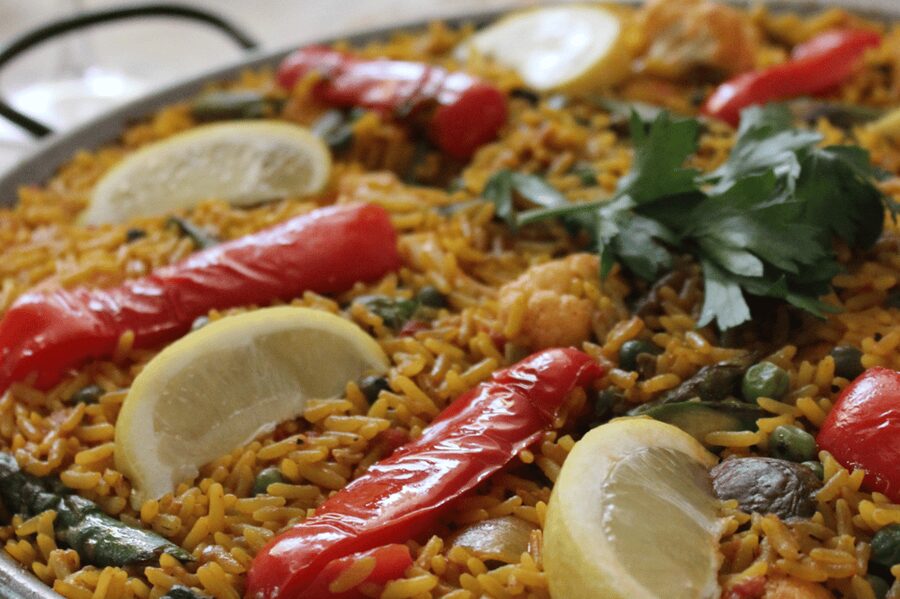
Arroz negre brings the strongest connection to the sea, but without fish or shellfish. Black rice, seaweed, peas, and green and red peppers form the base, while seaweed broth supplies the marine flavor.
The grilled vegan prawns are made from konjac. The dish is served with allioli, a garlic sauce that adds richness and sharpness.
This is probably the most distinctive recipe in the class. The dark rice and seaweed broth create a look and taste unlike the vegetable paella. If you want to explore how plant-based cooking can reproduce familiar coastal flavors, this is the dish to watch closely.
The honest limitation is that konjac prawns will not have the same texture as actual prawns. The point is not a perfect copy. It is learning how seaweed, garlic, grilling, and seasoning can create a convincing seafood-style direction using plants and alternative ingredients.
Fideuà: paella’s fine-pasta cousin
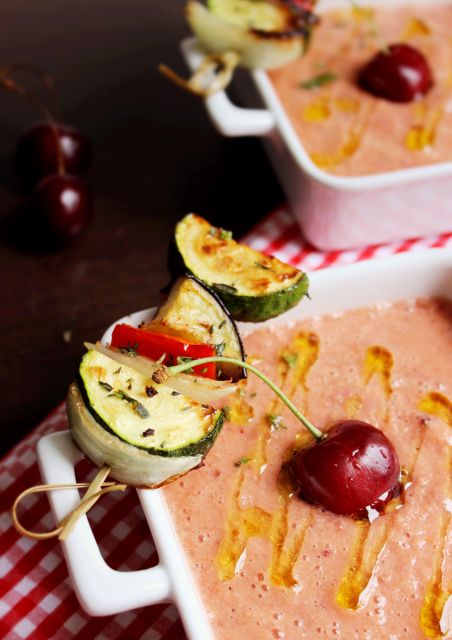
Fideuà swaps rice for pasta. In this class, fine pasta cooks with aubergine, red pepper, white wine, and seaweed broth.
Konjac squid, marinated and grilled, takes the place of the seafood often associated with fideuà. The dish gives you another useful lesson: Spanish cooking traditions can often be identified by technique and format, not just by one fixed list of ingredients.
If you have eaten paella repeatedly in Barcelona, fideuà makes this class more worthwhile because it broadens the menu beyond the familiar rice pan. It also adds a pasta texture to the final buffet, so the meal does not become four versions of the same thing.
As with the vegan prawns, the konjac squid is an alternative rather than an exact seafood replica. I would book this class for its cooking methods and flavors, not for a promise that every substitute will fool a seafood eater.
The shared buffet is part of the lesson
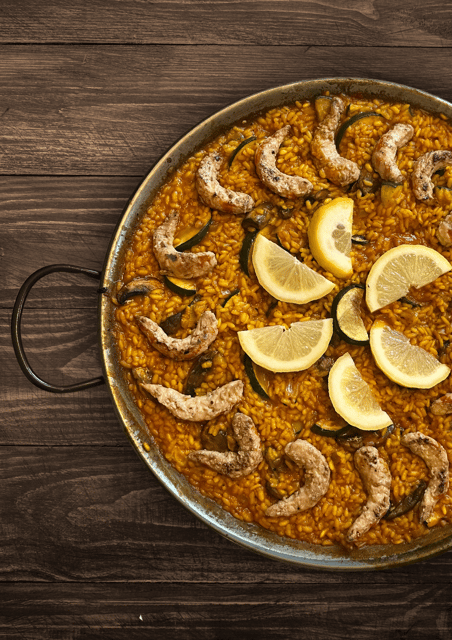
After the cooking, the full group eats together as a buffet. Everyone gets to taste the dishes prepared during the class.
That setup is one of the best parts of the format. A single paella class gives you one main result. Here, you can compare four preparations side by side: pan-cooked rice, baked rice, black rice, and fine-pasta fideuà.
The buffet also helps you judge which techniques suit your own kitchen. You might prefer the hearty arroz al forn, the classic paella Valenciana, the seaweed character of arroz negre, or the pasta-based fideuà. You leave with a better sense of what you would actually cook again.
Bring a Tupperware container. Leftovers can be taken home, which is a useful perk after a four-hour session and a practical reason not to arrive without one. The supplied information does not guarantee a particular quantity of leftovers, but the request is clear: come prepared to pack some food if there is extra.
The mood is designed to be social. Food and atmosphere were singled out as strong points, and the instructor was described as interesting and fun. That suggests this works best when you want conversation and shared cooking rather than a quiet, private lesson.
Is $93 a fair price?
At $93 per person, this is not a budget meal. You can eat vegan food in Barcelona for much less, and a standard restaurant paella will usually take less than four hours.
The value comes from what is bundled into the session. You receive a four-hour class, hands-on preparation of several dishes, a welcome drink, instruction in a vegan cooking school, and a shared buffet with everything the group makes.
You also get more variety than in a typical single-dish workshop. The menu covers four substantial preparations and includes specialty ingredients such as Bomba rice, garrafó, seaweed broth, Heura, konjac prawns, and konjac squid.
Extra drinks are not included. You pay for them at the end, so keep that in mind when working out the final cost. If you want a simple meal, the price is high. If you want a cooking lesson that doubles as a generous tasting session, the value is easier to justify.
Who will get the most from this class
I would recommend it most strongly to vegan and vegetarian cooks, people curious about plant-based substitutions, and visitors who want a food activity with more substance than a quick tasting.
It also suits anyone who wants to learn several Spanish rice traditions in one sitting. The menu is broad enough to keep experienced cooks interested, while the shared preparation gives beginners a clear way into the dishes.
Children under 10 are not suitable for this activity. Older children may fit the age requirement, but the four-hour length and group cooking format are still worth considering before booking.
The school is wheelchair accessible. Its location behind Arenas mall and near Plaza España is convenient if you are already visiting that part of Barcelona.
Booking details that matter
You can cancel up to 24 hours before the activity for a full refund. You can also reserve now and pay later, which helps if your Barcelona schedule is still shifting.
The duration is four hours, and starting times depend on availability. Languages offered are Catalan, English, German, and Spanish.
There is no individual guide name provided for this class, so do not book it expecting a named chef-led session. The important detail is the instructor’s role in guiding a group through several recipes and keeping the cooking social and organized.
Should you book Barcelona’s vegan paella class?
Book it if you want to cook, not just eat. The strongest reasons are the four different Spanish preparations, the fully vegan menu, the shared buffet, and the chance to taste your work immediately.
Skip it if you want a quick, inexpensive meal, a private lesson, or a traditional seafood paella. At $93, this needs to be a planned food experience rather than an impulse lunch.
For plant-based cooks, it is a particularly sensible choice. You learn how Spanish rice traditions can be rebuilt with vegetables, legumes, seaweed, vegan sausage, Heura, and konjac substitutes, then take home leftovers if the group makes enough. Bring a Tupperware, arrive ready to share the work, and allow the full four hours.
FAQ
Where does the cooking class take place?
It takes place at In Bloom Cooking School in Catalonia, behind Arenas mall and near Plaza España in Barcelona.
How long is the experience?
The class lasts four hours.
How much does it cost?
The listed price is $93 per person.
What dishes will be prepared?
The recipes include paella Valenciana, arroz al forn with vegan sausage, arroz negre with grilled vegan prawns, and fideuà with vegan konjac squid.
Is the class fully vegan?
Yes. In Bloom Cooking School is a 100 percent vegan cooking school, and the recipes use plant-based ingredients.
Is a drink included?
One drink is included in the price. Additional drinks can be purchased at the school and paid for at the end.
Do participants eat the food they prepare?
Yes. After cooking, the whole group enjoys the dishes together as a buffet, allowing everyone to taste all the recipes prepared.
Can I take leftovers home?
You should bring a Tupperware container to take home leftover food.
Is the class suitable for children and wheelchair users?
Children under 10 are not suitable for the activity. The location is wheelchair accessible.
More Food Tours in Barcelona
- Barcelona: Tapas Walking Tour with Food, Wine, and History
★ 4.8 · 4,261 reviews - Barcelona: Food Walking Tour with Tapas and Wine
★ 4.9 · 2,180 reviews - Barcelona Tapas Walking Tour: Food, Wine & History
★ 4.5 · 1,928 reviews - Barcelona Gothic Quarter Tapas & Taverns Food & Wine Tour
★ 5.0 · 1,470 reviews
More Vegan & Vegetarian in Barcelona
- Barcelona Vegetarian Tapas and Food Walking Tour in Gracia
★ 4.5 · 3 reviews - Madrid: Paella & Sangria Classes- Seafood, Chicken & Vegan option
★ 5.0 · 265 reviews - Madrid: Paella & Sangria Classes – Seafood, Chicken or Vegan
★ 4.9 · 201 reviews - Seville Vegan Tapas Food and Market Walking Tour
★ 5.0 · 40 reviews
Just added around Barcelona
- Barcelona Sailing Experience: Spanish Tapas and Premium Open Bar★ 4.5 · 34 reviews
- Barcelona: Guided Rooftop Wine Tasting – Enjoy 6 Spanish Wines★ 4.5 · 61 reviews
- Vermouth in Catamaran A gastronomic experience in Barcelona★ 5.0 · 5 reviews
- Wine & Cava Penedes Tour: Wineries, Wine Tasting and Tapas★ 5.0 · 5 reviews
- Vermouth Tasting and Crafting in Barcelona★ 5.0 · 4 reviews
- Rooftop Paella Seafood Cooking Class Experience in Barcelona★ 5.0 · 59 reviews
- Barcelona: Bike or eBike Tour, Top Sights & Local Insights★ 5.0 · 47 reviews
- Tarragona Culinary Experience: Olive Oil & Iberian Ham Delight★ 5.0 · 8 reviews
Barcelona Tapas Tours, compared.

Montserrat Half-Day Tour with Tapas and Gourmet Wines
Read our review →
Montserrat & Cogwheel Train, Gourmet Wine Tasting & Tapas/Lunch
Read our review →
Barcelona Tapas and Wine Experience Small-Group Walking Tour
Read our review →
Montserrat with Black Madonna & Medieval Winery with Tapas/Lunch
Read our review →
Montserrat and Winery Tour with Tapas or Lunch
Read our review →
Tapas Walking Tour with Food, Wine, and History
Read our review →
Paella Cooking Experience & Boqueria Market Tour
Read our review →
Barcelona Paella Cooking Class with Market Visit, Tapas & Sangria
Read our review →Browse the lists this tour appears in