Review · MALAGA TAPAS TOURS
Malaga: Authentic Paella Cooking Class with Sangría
The best part of this Malaga experience is that you do not simply sit down to eat paella. You shop for local ingredients on the Atarazanas Market visit, taste Spanish olive oils, then prepare the meal yourself in a modern Soho kitchen. I like the market-to-table flow, and I like that each person takes an active role instead of watching a chef do all the work. The one thing to consider is timing: evening, Sunday, and holiday sessions skip the market because it is closed.
I also like the generous food and drink program. Along with paella, you can expect homemade gazpacho or salmorejo, sangria, regional wine, beer, or soft drinks, with some sessions also featuring churros or a simple salad. The class runs for 210 minutes, so it is a real half-day activity rather than a quick demonstration.
Key things to know before booking
- Atarazanas Market adds a local shopping lesson: Morning classes from Monday through Saturday begin with a short visit to Malaga’s main food market.
- You cook your own paella: The chef gives practical instructions and makes sure participants have something to do.
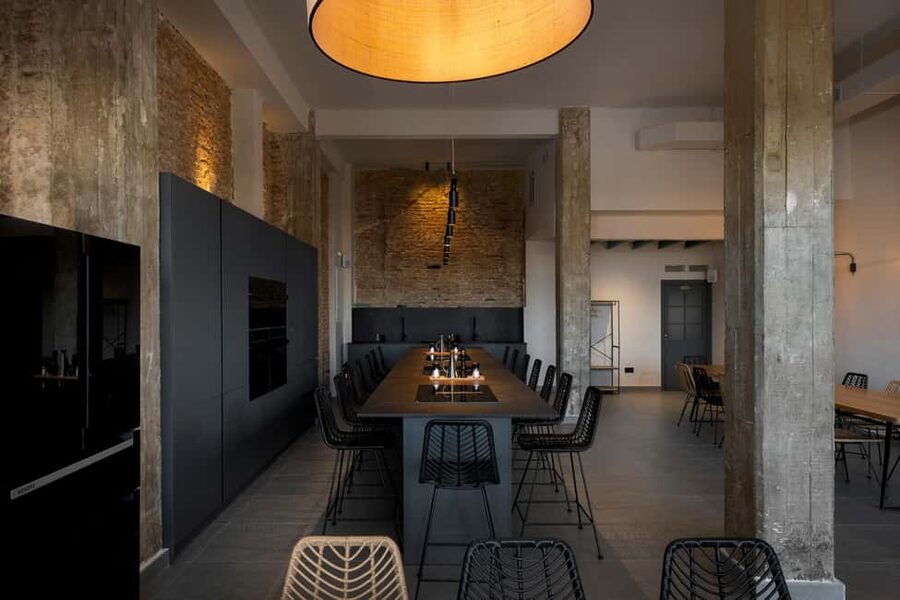
- The Soho kitchen is clean and modern: It is close to the market and port, with underground parking opposite.
- The menu goes beyond paella: Olive oil, gazpacho or salmorejo, sangria, wine, and sometimes churros or salad are part of the food experience.
- English instruction is provided: Guides and chefs named in past sessions include Alba, Alma, Pepo, Javi, Elise, Anais, and others.
- You leave with an apron: The Kulinarea apron is included as a useful souvenir, not just another paper recipe card.
From Atarazanas Market to the Soho kitchen
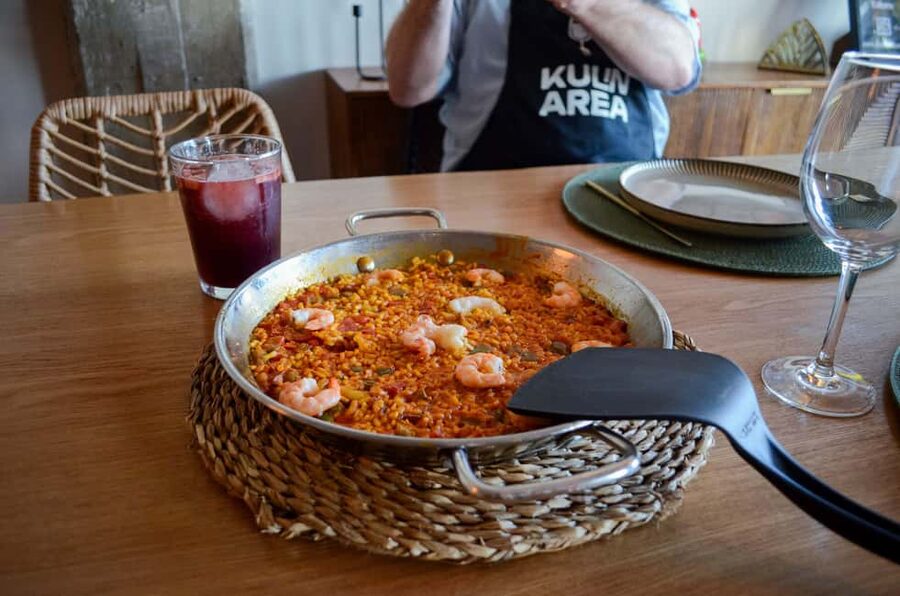
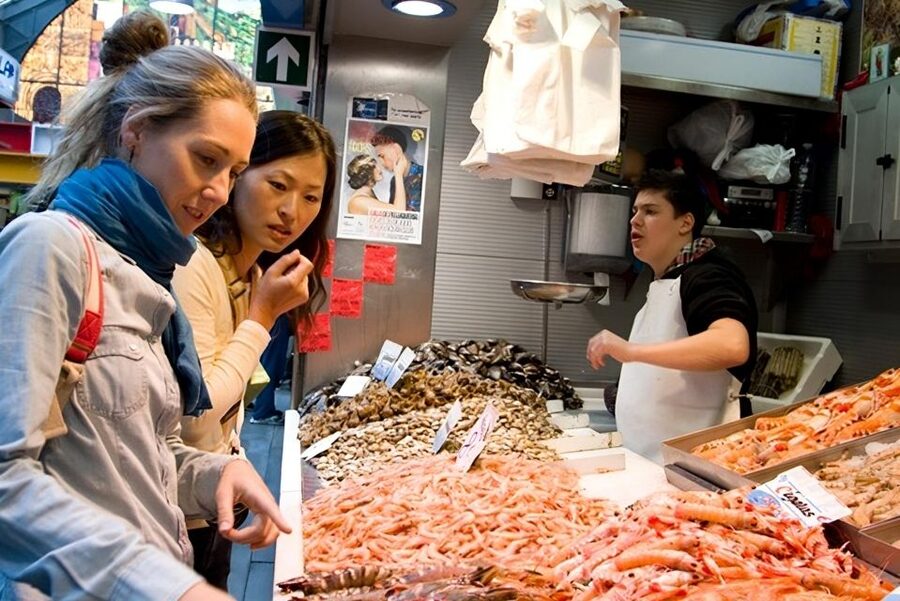
The day begins at Kulinarea’s kitchen at Av Manuel Agustín Heredia 24. For morning classes from Monday through Saturday, you first walk to the nearby Atarazanas Market. The walk is short, but it gives the guide a chance to point out local details before the cooking starts.
The market stop is more than a place to collect ingredients. Guides such as Elise, Javi, and José have explained the market building, the changing shape of the city, local produce, and Malaga food traditions. You may taste olives and almonds, learn how to choose ingredients, and see the kinds of produce used in Andalusian cooking.
I find this useful because it gives the meal a sense of place. Paella is not just a dish you order in Spain. It depends on rice, stock, vegetables, seafood or other ingredients, and the way these pieces are handled. Seeing the food before cooking helps you understand what ends up in the pan.
The market visit is available only in daytime sessions from Monday through Saturday. On Sundays, listed holidays, and evening classes, the market is closed, so you go directly to the kitchen. The holiday list includes January 1, January 6, February 28, selected Holy Week days, May 1, August 15, August 19, September 8, October 12, November 1, December 6, December 8, and December 25.
That difference matters if the market is a major reason for booking. An evening class still includes the cooking, tastings, and meal, but it does not offer the market walk. If you want both parts, choose an eligible morning date and check the starting time when booking.
More Paella Cooking Classes in Malaga
- Málaga: Spanish Cooking Workshop with Paella and Sangria
★ 4.9 · 613 reviews - Malaga: Sailing Catamaran with Swimming and Paella Lunch
★ 4.1 · 578 reviews - Paella Cooking Class in Malaga
★ 5.0 · 209 reviews
A modern kitchen with room to participate
Kulinarea’s kitchen is in Malaga’s artistic Soho District, a short walk from the market and close to the port. The setting is modern, clean, and designed for group cooking rather than a passive cooking show.
That setup affects the experience. You are not squeezed around a restaurant table trying to see one pan from a distance. The chef can move around the work area, explain each step, and give people jobs. In past sessions, participants prepared fruit for sangria, chopped vegetables, worked on the paella ingredients, and helped with churros or salad.
The teaching style seems to be relaxed and practical. Alba is often praised for patience and clear instruction, while Alma, Pepo, and other chefs have also guided groups through the recipes. You do not need to arrive as a confident cook. One useful feature is that the chef keeps the whole group involved, including people who may not normally cook at home.
The class is taught in English. Specific guides vary by date, but named hosts have included Carmen, Anais, Elise, Javi, José, and Felipe. Some guides also offer tips about Malaga restaurants and places to visit, which can be handy early in your stay.
One small practical point: a participant suggested name tags for the group and hosts. That is not a serious flaw, but you may be meeting several new people while moving between market, kitchen, and dining table. A quick introduction at the start helps.
Olive oil tasting before the cooking begins
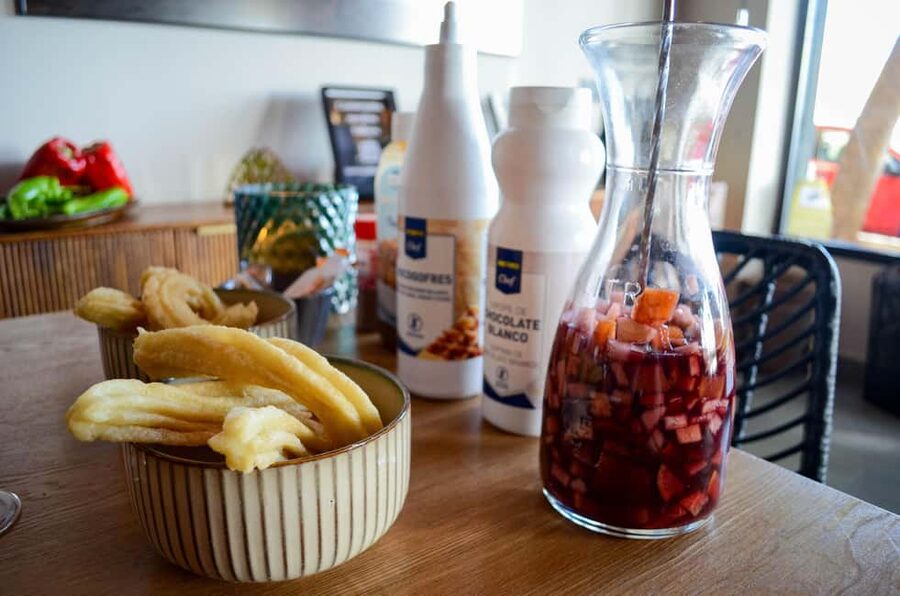
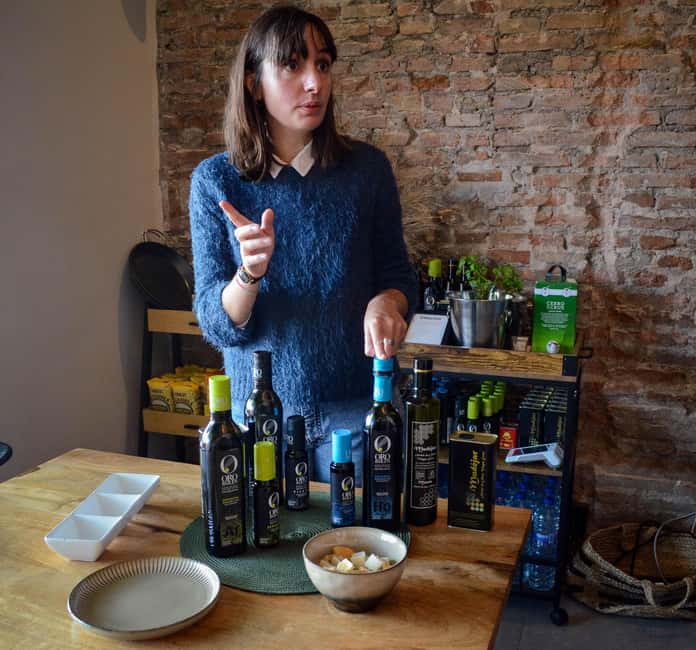
Before the main preparation, you taste extra virgin olive oils with traditional snacks. This is a brief part of the class, but it earns its place.
Spanish olive oil is not one uniform product. Oils can taste mild, grassy, peppery, or slightly bitter, depending on the olives and production methods. Tasting several varieties side by side helps you notice those differences instead of treating olive oil as an invisible cooking ingredient.
The tasting also prepares you for the food that follows. Olive oil appears in the gazpacho or salmorejo, salads, vegetables, and likely many of the cooking steps. The point is not to turn you into an oil expert. It is to help you pay attention to a basic ingredient that is central to Andalusian food.
This is especially worthwhile for visitors who plan to buy olive oil in Spain. You can use what you learn to compare bottles with more confidence, although the activity does not promise a shopping stop or a bottle to take home.
Making sangria, gazpacho, and paella
The main part of the experience is hands-on. Under the chef’s direction, you prepare a classic Spanish paella and homemade gazpacho or salmorejo. Sangria is also made during the class, and regional wine, beer, or soft drinks are available.
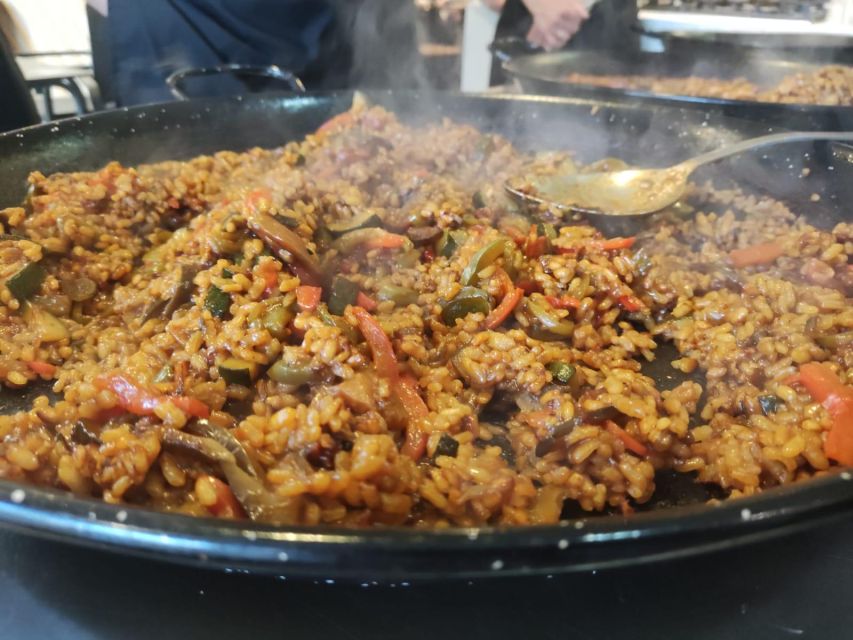
The order can vary, but the rhythm is usually easy to follow. You begin with preparation, then move into cooking as the kitchen fills with the smell of onions, peppers, vegetables, stock, rice, and other paella ingredients. The chef explains techniques and watches the pans so that the group can learn without feeling abandoned.
A strong point is that each participant has a role. You might help prepare the vegetables, season the mixture, stir at a key stage, or work on the drink and dessert. The goal is not to produce identical restaurant portions through a single demonstration. You are learning the process and then sitting down to eat what your group has made.
The paella may not come out exactly the same for every person. That is part of the lesson. Heat, timing, ingredient distribution, and attention all affect the result. If your pan is not perfect, you still learn something useful about why paella can be tricky.
Dietary needs should be sent in advance. The company specifically warns that restrictions cannot be handled on the day of class. One pescatarian participant was accommodated by having a paella without meat apart from seafood, and another participant received care with allergies, but you should not rely on a last-minute adjustment.
The menu has a little flexibility. The core description names gazpacho or salmorejo, paella, sangria, olive oil, and regional drinks. Past sessions have also included roasted pepper salad, fresh vegetable salad, and churros. Churros appear to be a popular finish, but you should treat them as a possible addition rather than a guaranteed part of every advertised session.
More Spanish Cooking Classes in Malaga
- Paella Cooking Class with English Guide in Malaga
★ 5.0 · 149 reviews - Malaga Tapas Cooking Class
★ 5.0 · 99 reviews - Málaga: Paella and Sangria Cooking Class with Market Visit
★ 4.9 · 26 reviews - Tapas Cooking Workshop & Market Visit
★ 4.8 · 10 reviews
The meal is part of the lesson
Once the cooking is finished, you sit down with the group to eat. This shared meal is where the class becomes social rather than merely instructional.
You can expect a generous amount of food and drink. Sangria is included, and regional wine, beer, or soft drinks are available while the meal is prepared and served. Some people particularly enjoy cava sangria, while others prefer the wine pairing.
The shared table works well for couples, families, and solo visitors who do not mind meeting new people. Several sessions have brought together families, couples, and small groups, with the cooking giving everyone an easy subject to talk about. It can be a pleasant way to add a social evening to a Malaga itinerary without committing to a formal restaurant meal.
Families should note the age limits. Children under four are not accepted, and babies under one are not suitable for the activity. Older children and teenagers can take part, and the format may appeal to them more than a standard food tour because they have real jobs to do.
The meal also gives you a chance to compare results. Different paellas may taste slightly different even when the ingredients are similar. That makes the class feel more like home cooking than a polished restaurant production.
Is $77 a fair price?
At $77 per person, this is not the cheapest way to eat paella in Malaga. It is also not simply a restaurant meal. You are paying for about three and a half hours of instruction, a possible market walk, olive oil tasting, several dishes, drinks, kitchen use, an English-speaking guide and chef, and a Kulinarea apron.
The value is strongest if you want an activity as well as lunch or dinner. Food, wine, sangria, and dessert can add up quickly in Malaga, and the class gives you a meal plus practical skills. The included market visit makes the morning version more appealing because it adds local context without a separate food tour fee.
The price is less compelling if you only want to taste paella or if you dislike group cooking. You will spend time chopping, preparing, and waiting for the food to cook. This is not a quick tasting menu and not a private chef lesson.
The 210-minute length is worth considering. It takes a solid portion of your day, so avoid placing it immediately before a tightly timed museum visit or departure. On the other hand, the long format gives the chef room to explain the process and lets you eat without rushing.
Location, transport, and timing
The meeting point is Kulinarea, Av Manuel Agustín Heredia 24. An underground car park called Parking de La Marina is opposite the kitchen, which is useful if you are driving into central Malaga.
No hotel pickup or drop-off is included. You need to make your own way to the kitchen and return from there. The location is close to the port and nightlife, so an evening class can fit neatly before or after a walk in that part of town.
Morning sessions that include Atarazanas Market are the best choice if you want the full food story. Evening sessions are more convenient for people who have sightseeing plans during the day, but they begin with the kitchen rather than the market.
The activity is conducted in English. Guide names and the exact food sequence can change, so check the available starting time and date before paying. You can reserve now and pay later, and cancellation is free up to 24 hours before the activity for a full refund.
Who will enjoy this class most
I would choose this for you if you like food, enjoy meeting people, and want to learn by doing. It suits couples, families with older children, groups of friends, and solo visitors who are comfortable joining a shared table.
It is also a good first-day or second-day activity in Malaga. The market guide can point out local foods, and guides have offered restaurant suggestions and general tips for exploring the city. You gain both a meal and a few ideas for the rest of your stay.
You may want a different activity if you need a private experience, have strict dietary restrictions that were not arranged in advance, or prefer a quiet tasting with no kitchen work. The class is social and participatory, with a fair amount of standing, chopping, and group interaction.
The market version is best for food-focused visitors who want context. The evening version works for people who want the cooking and meal after a day of sightseeing. Both versions offer the modern kitchen, chef instruction, tastings, drinks, and apron.
Should you book the Kulinarea paella class?
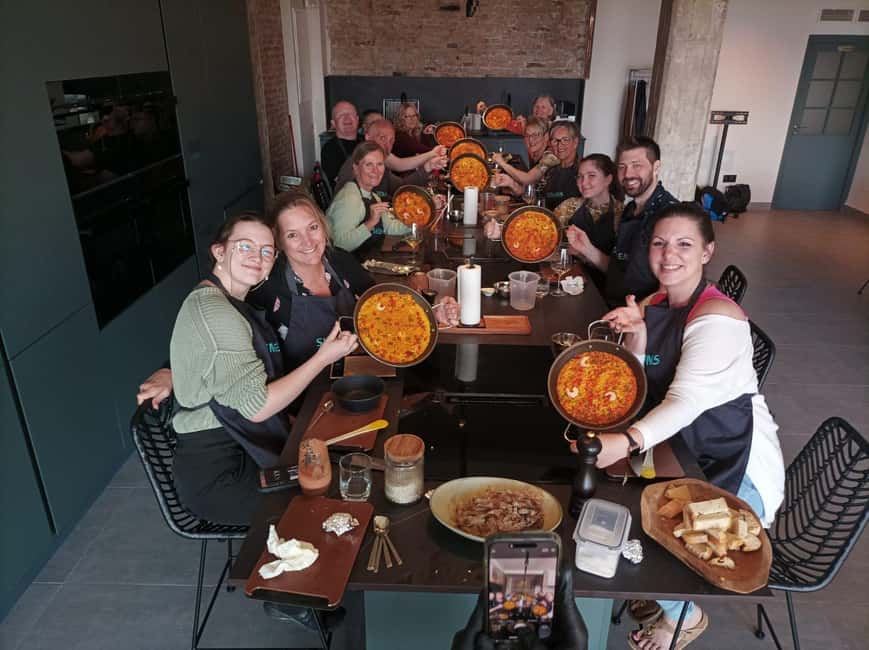
Yes, if you want more than a plate of paella. The strongest reasons to book are the market connection, patient chef instruction, clean kitchen, generous food and drink, and the chance to make the meal yourself. The take-home apron is a nice practical extra.
Choose a morning Monday-to-Saturday session if the Atarazanas Market matters to you. Tell Kulinarea about allergies or dietary restrictions before the class, and allow the full 210 minutes in your schedule.
At $77, I see this as good value for a half-day food experience, especially when you count the meal, drinks, market visit, and instruction. Just remember that the experience is a group cooking class, not a private lesson or a simple restaurant booking.
FAQ
Where does the Malaga paella class meet?
The meeting point is Kulinarea at Av Manuel Agustín Heredia 24 in Malaga.
How long does the experience last?
The class lasts 210 minutes, or three and a half hours.
What language is the class taught in?
The activity is conducted in English.
Is the Atarazanas Market visit included?
Yes, the market visit is included in daytime sessions from Monday through Saturday. The market is closed during evening classes, Sundays, and the listed national holidays.
What food and drinks are included?
The experience includes paella, homemade gazpacho or salmorejo, sangria, an olive oil tasting, and regional wine, beer, or soft drinks. Some sessions may also include items such as churros or salad.
Do I cook my own paella?
Yes. The chef guides you through preparing and cooking the paella, with participants taking part in the preparation.
Is hotel pickup or drop-off included?
No. You need to make your own way to and from the Kulinarea kitchen.
Can children join the class?
Children under four years old cannot participate, and babies under one year are not suitable for the activity.
Can dietary restrictions and allergies be accommodated?
You must tell Kulinarea about dietary restrictions before the class. Restrictions cannot be arranged on the day itself.
What is the cancellation policy?
You can cancel up to 24 hours in advance for a full refund. You can also reserve now and pay later.
More Workshops in Malaga
- The Ultimate Tapas Workshop in Malaga
★ 5.0 · 119 reviews - Malaga: The Ultimate Tapas Workshop with Market Visit
★ 4.9 · 108 reviews - Spanish Food Lessons: Paella and More
★ 5.0 · 8 reviews - Paella class
★ 5.0 · 3 reviews
More Sangria and Tapas Tours in Malaga
- Paella and Sangria Workshop in Malaga
★ 5.0 · 108 reviews - Tapas Class! Authentic Spanish tapas and Sangría!
★ 5.0 · 5 reviews - Barcelona Paella Cooking Class with Market Visit, Tapas & Sangria
★ 5.0 · 2,531 reviews - Spanish Cooking Class Paella Tapas and Sangria in Madrid
★ 5.0 · 1,340 reviews
Just added around Malaga
- Wine & Tapas tour by electric bike (e-bike) including Ronda pickup (half day)★ 5.0 · 33 reviews
- Wine and Tapas walking Tour in Malaga★ 5.0 · 70 reviews
- Wine, Tapas & Lake Zahara by e-bike incl Ronda pickup (full day)★ 5.0 · 4 reviews
- Wine & Tapas tour by electric bike (e-bike) including Ronda pickup (full day)★ 5.0 · 34 reviews
- Sun and Wine Route – Small group, wine tasting and tapas included★ 5.0 · 87 reviews
- The Málaga Market & Tapas Tour By Food Lover Tour★ 5.0 · 23 reviews
- Malaga: The Ultimate Flamenco & Tapas Tour★ 5.0 · 18 reviews
- Spanish Food Lessons: Paella and More★ 5.0 · 8 reviews
Malaga Tapas Tours, compared.

Caminito del Rey & White Village Tour with Tapas from Málaga
Read our review →
Taste of Malaga Tour : Tapas, History and Local Customs
Read our review →
Spanish Cooking Workshop with Paella and Sangria
Read our review →
Sailing Catamaran with Swimming and Paella Lunch
Read our review →