
Review · ZARAGOZA TAPAS TOURS
Zaragoza: Wine Tasting and Tapas
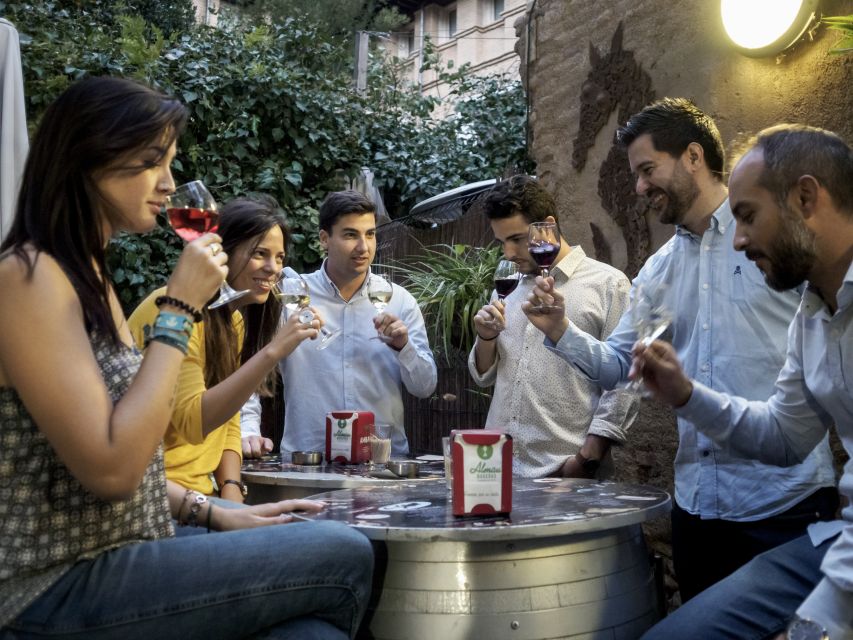
Zaragoza’s best introduction may come in four small glasses. This three-hour walk links the city’s old center with wines from Somontano, Cariñena, Campo de Borja, and Calatayud, pairing each pour with a local tapa. You also get panoramic views from an observation deck and a guide who can explain how the Ebro basin shapes the food on your plate.
I like the route’s small group size, capped at 10 people, and I like that it visits four separate gourmet shops and bars instead of placing the whole tasting in one room. The unusual pairings can be a real treat, including anchovy with dark chocolate and Gewürztraminer.
The main consideration is price. At $112 per person, this is not a cheap bar crawl, although four wines, four tapas, a walking tour, and a live guide are included. Three hours also gives you a good introduction, not a full meal or a winery visit outside the city.
Key points at a glance
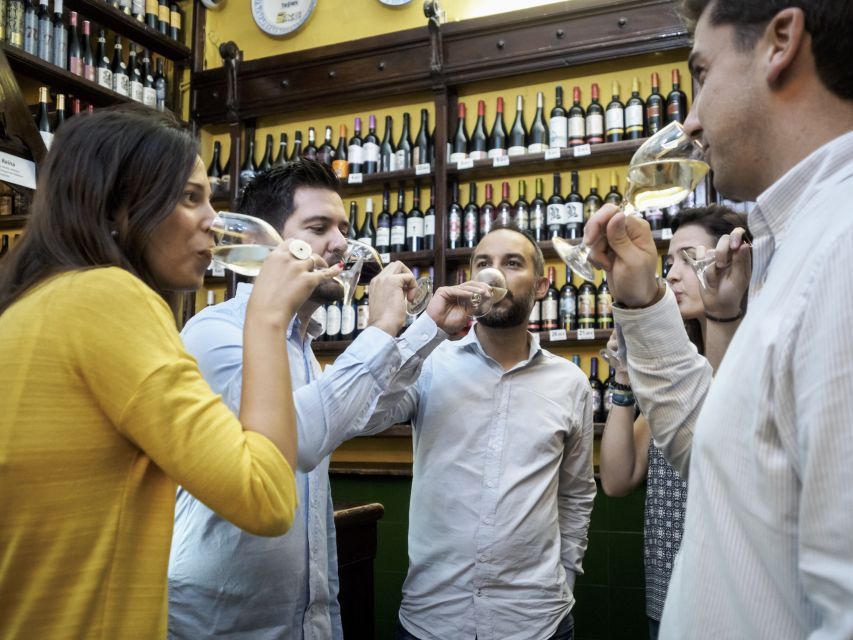
- Four wine regions in one evening: Compare Somontano, Cariñena, Campo de Borja, and Calatayud without leaving Zaragoza.
- Tapas matched to the wine: Four local bites are served with the tasting, including meat, vegetarian, and seafood-friendly options.
- El Tubo on foot: The route introduces Zaragoza’s famous tapas quarter through several food stops.
- A useful first-day activity: Your guide can suggest places for later lunches, dinners, and sightseeing.
- Personal guiding matters: Marta, Jorge, and Roberto have each led this experience, with the strongest praise focused on their city knowledge, warmth, and pairing skills.
- Small and flexible: Groups are limited to 10, and cancellation is free up to 24 hours before the start.
Why wine is a smart way to meet Zaragoza
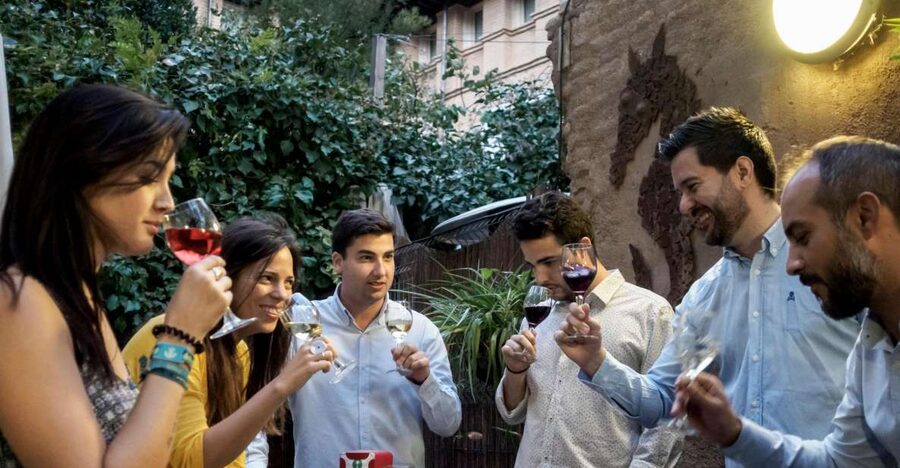
Zaragoza sits in Aragon, where food reflects both the surrounding countryside and Spain’s wider Mediterranean traditions. The Ebro basin supplies excellent fruit and vegetables, while the city’s cooking also draws on meat, fish, preserved foods, and simple bar snacks.
That context makes this more than four glasses of Spanish wine. You get a practical look at how people eat and socialize in Zaragoza. The guide can explain the local lifestyle while you taste, so the food has a place in the city rather than appearing as a random list of samples.
I especially like the regional spread. Somontano, Cariñena, Campo de Borja, and Calatayud are not interchangeable labels. Tasting one wine from each gives you a basic comparison of Aragon’s wine areas. You may not become a wine expert in three hours, but you will leave with a better sense of the variety produced around Zaragoza.
The wines are served with four tapas. That pairing is important because Spanish wine is usually part of a meal or social stop, not an isolated tasting exercise. You can pay attention to the way the food changes the wine, and the way the wine sets up the next bite.
More Tapas and Wine Tours in Spain
- Montserrat Half-Day Tour with Tapas and Gourmet Wines
★ 5.0 · 7,359 reviews - Montserrat & Cogwheel Train, Gourmet Wine Tasting & Tapas/Lunch
★ 5.0 · 6,290 reviews - Barcelona Tapas and Wine Experience Small-Group Walking Tour
★ 5.0 · 5,804 reviews
Starting at the Cesar Augusto Monument
The meeting point is the Cesar Augusto Monument, a clear starting place in Zaragoza’s historic center. From there, you head out on a guided walk through the old city before settling into the food and wine stops.
The historical introduction is brief, according to the shape of the experience, but it gives you a useful frame for the evening. Guides such as Marta, Jorge, and Roberto have added city history and Spanish cultural context while answering questions about life in Zaragoza.
This is one reason I would book the tour early in your stay. You get more than a single meal. The guide can point you toward ideas for the rest of your visit, and the tasting helps you notice the city’s food districts when you return on your own.
Do not expect a long archaeological tour or a formal lecture. The historical center is the setting for the evening, not a separate museum program. The value comes from moving through the city and connecting what you see with what you eat.
The observation deck and old-city views
The experience includes panoramic views of the old Zaragoza city from an observation deck. This gives the walking tour a visual pause and helps you place the historic center within the wider city.
The exact observation point is not specified, so you should not book this expecting a particular tower or monument interior. Think of it as a city-view stop built into the route. It is a nice counterpoint to the close-up work of tasting, where your attention shifts to small plates and wine aromas.
For photography, this is likely one of the better moments of the tour. It also helps if you are still getting your bearings in Zaragoza. You can look across the old center, then return to street level for the bars and shops.
The route is on foot, so wear comfortable shoes. Large bags and luggage are not allowed, and pets are not allowed either. Keep your belongings light so you can move easily between stops.
Four wine regions, four different lessons
The central tasting covers one wine from each of four areas around Zaragoza. Each region gives the guide a chance to discuss how Spanish wine is organized and why place matters.
Same city, a different plate:
- Montserrat with Black Madonna & Medieval Winery with Tapas/Lunch
★ 5.0 · 5,209 reviews - Barcelona: Montserrat and Winery Tour with Tapas or Lunch
★ 4.8 · 4,695 reviews - Barcelona: Tapas Walking Tour with Food, Wine, and History
★ 4.8 · 4,261 reviews - Barcelona: Paella Cooking Experience & Boqueria Market Tour
★ 4.8 · 3,661 reviews
Somontano
Somontano is one of the four regional stops. You will taste a wine from the area and hear how it fits into the broader picture of Aragonese wine. The supplied details do not identify the grape varieties or individual bottles, so you should expect an introduction rather than a technical tasting sheet.
Cariñena
Cariñena is particularly useful for understanding the connection between a wine region and its name. The area is part of the local wine identity, and tasting its wine alongside the other three makes comparison possible.
Campo de Borja
Campo de Borja adds another point of reference from around Zaragoza. The guide can discuss the wine in relation to the tapa on your plate, which is more useful than memorizing isolated facts about production.
Calatayud
Calatayud completes the regional set. By the final glass, you have tasted four wines from nearby areas and can start identifying your own preferences. That is the practical payoff: you can later recognize the regions on a wine list or ask for a local bottle with more confidence.
The wines are not presented as a collector’s seminar. The experience is meant to connect wine with food, place, and conversation. If you want detailed vintages, vineyard visits, or a formal lesson in winemaking, this is not the right format.
Four tapas, with pairings that keep things interesting
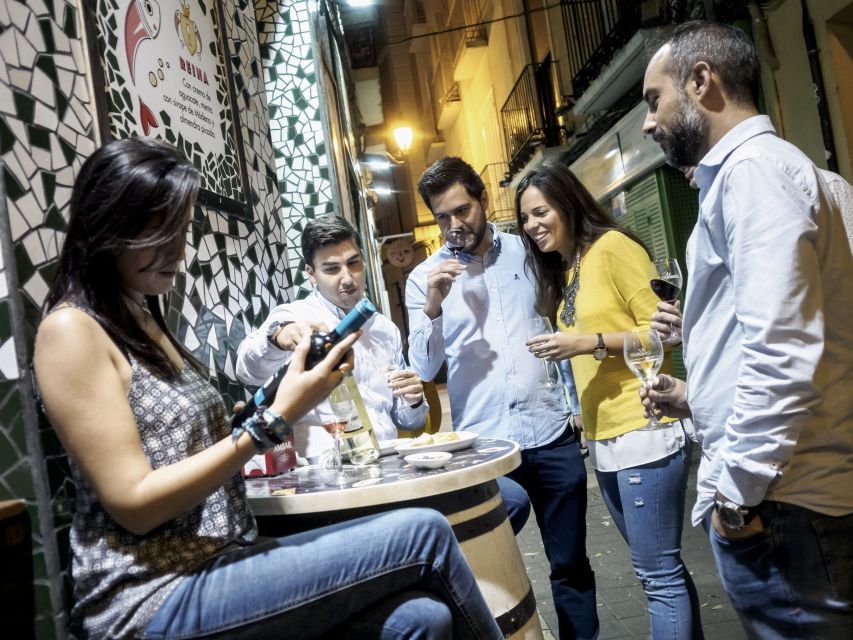
The food is one of the tour’s strongest features. You receive four local tapas, with the wine selected to work alongside each one. The exact menu can vary, and no fixed list is provided, but the experience has included meaty and vegetarian choices, mushrooms, fish, and other local flavors.
One especially memorable pairing is anchovy and dark chocolate with a Gewürztraminer. It sounds strange until you taste the contrast. Salty fish, bitter-sweet chocolate, and an aromatic white wine create the kind of combination you are unlikely to order by accident.
That is where a guide adds real value. You do not have to guess which bite belongs with which glass, and you can ask why the pairing works. The experience also makes room for different preferences. Fish substitutions have been handled without trouble, and vegetarian options have appeared among the tapas.
Still, keep your expectations clear. Four tapas may be enough for a satisfying tasting, but the tour is not advertised as a full dinner. If you normally eat early or need a substantial evening meal, plan to continue eating afterward.
The food also gives you a useful introduction to Zaragoza’s tapas style. Instead of treating tapas as a generic Spanish category, the guide can explain how local produce and regional habits shape what you are served.
Four gourmet shops and bars in El Tubo
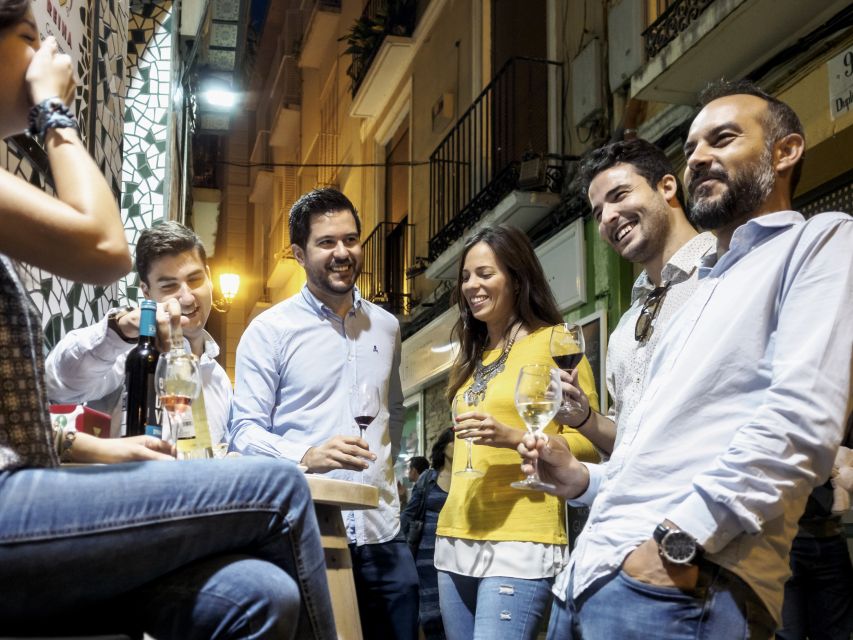
The tasting takes place across four gourmet shops and bars. This is better than sitting at one table for the entire three hours because you see how Zaragoza’s food culture works in real places.
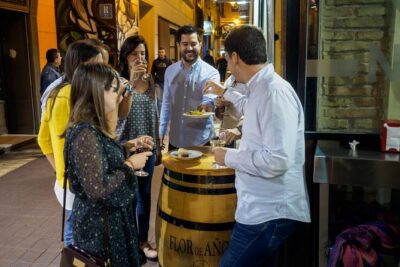
El Tubo, the old city’s tapas quarter, is a major part of the route. You move from stop to stop, tasting, talking, and seeing the district as an active part of the city rather than as a staged food venue.
The route’s social side matters too. A group limited to 10 people is small enough for questions and conversation, but large enough to meet other people. Several of the strongest experiences came from the easy social atmosphere, including making connections with fellow participants.
The tradeoff is that bar and shop stops can feel less controlled than a dedicated tasting room. You may encounter normal city noise or a busy setting. That is also part of the appeal: you are tasting in Zaragoza’s food district, not in a classroom.
The guide can make or break the evening
The guide is a major part of the value. Marta has received particularly strong praise for pairing the tapas with the wines, explaining Spanish and local history, and offering candid thoughts about the country and its culture. She has also been described as approachable and easy to question, which matters in a small group.
Jorge has led the tour in English and has been praised for his city knowledge, historical context, and entertaining style. Roberto, a Zaragoza native, has explained the origins and development of the food samples, adding local perspective to the tasting.
The guide assigned to your date may differ. The experience is offered in English, German, or Spanish, so check the language when booking. If you have questions about Zaragoza, Spain, food, or local habits, bring them along. The format encourages conversation rather than keeping the guide to a fixed script.
This is also why I would avoid treating the tour as only a food purchase. Some of the value comes from the explanations and recommendations between tastings. If you want to eat quietly and independently, a restaurant reservation may suit you better.
Is $112 a fair price?
At $112 per person, the cost is high for four tapas and four glasses of wine if you judge it like a simple bar bill. The price makes more sense when you count the guided walk, the city views, the four separate venues, the regional explanation, and the help choosing places for later meals.
You are also paying for access to a structured comparison. Ordering four wines and four tapas on your own would not necessarily produce the same regional range or pairings. You would also need to find the bars, organize the route, and decide what to order.
The small group limit improves the value. Ten people is not private, but it allows the guide to answer questions and notice dietary preferences. It also keeps the evening more personal than a large coach-style food tour.
I would call the tour a good value for someone who enjoys guided food experiences and has limited time in Zaragoza. It is less compelling for a serious wine collector seeking rare bottles or for a budget visitor who simply wants inexpensive tapas.
Timing, comfort, and booking details
The activity lasts three hours, with starting times based on availability. Since the tour includes walking and several stops, allow enough energy for an evening on foot. You should arrive at the Cesar Augusto Monument with only what you need, because luggage and large bags are not allowed.
The tour runs with a live guide in English, German, or Spanish. Groups are limited to 10 participants. You can reserve now and pay later, which helps if your Zaragoza plans are still shifting.
Free cancellation is available up to 24 hours before the start for a full refund. That policy is useful for a short Spain itinerary, where train changes or weather can affect your plans.
No transport is listed, so plan on reaching the meeting point yourself. The supplied information does not promise wheelchair access, a fixed food menu, or specific wine brands. Ask before booking if any of those details are important to you.
Who will enjoy this Zaragoza tasting?
I would recommend this to a first-time visitor who wants local food, a bit of history, and an easy way to learn the city’s layout. It is especially useful during a one-night stay, when a guided introduction can save time and point you toward good places for the next day.
It also suits couples, solo visitors, and small groups who enjoy conversation. The limited group size creates a chance to meet other people without making the evening feel like a large organized outing.
Food-focused visitors should appreciate the range of tapas and the regional wines. Vegetarians may find suitable choices, but the fixed or changing menu is not fully described, so ask ahead if you have strict dietary needs.
I would skip it if you dislike walking, cannot drink alcohol, want a full dinner, or prefer a quiet private meal. Four wine tastings are the core of the experience, so this is not a good fit for anyone avoiding alcohol.
Should you book Zaragoza: Wine Tasting and Tapas?
Book it if you want a friendly, compact introduction to Zaragoza through four regional wines, four tapas, and the old city’s food quarter. The strongest reason to go is the combination of useful local guidance and unusual pairings, not simply the amount of food and drink.
I would schedule it near the start of your stay. Marta, Jorge, or Roberto can give you ideas for later meals and help you understand what you are seeing as you walk. At $112, it is a treat rather than a bargain, but the small group, four venues, city walk, and guide make the cost reasonable for the right kind of visitor.
If your priority is an inexpensive dinner, order tapas on your own. If you want context, conversation, and a well-planned introduction to Aragonese wine, this is a strong choice.
FAQ
How long does the Zaragoza wine and tapas experience last?
The experience lasts three hours.
Where does the tour begin?
You meet your guide at the Cesar Augusto Monument in Zaragoza.
How many wines and tapas are included?
The tour includes four Aragonese wines and four local tapas.
Which wine regions are represented?
The tasting includes wines from Somontano, Cariñena, Campo de Borja, and Calatayud.
What languages are available?
The live tour guide is available in English, German, or Spanish.
Can I cancel for a full refund?
Yes. You can cancel up to 24 hours in advance for a full refund.
More Food and Drink Tours in Spain
- Madrid Tapas & Wine Tasting Walking Tour – Small Group Local Bars
★ 5.0 · 3,644 reviews - Sevilla Food Tour: Tapas, Wine, History & Traditions
★ 5.0 · 3,468 reviews - Madrid Tapas & Taverns Small Group Food & History Tour
★ 5.0 · 2,664 reviews - Barcelona: Food Walking Tour with Tapas and Wine
★ 4.9 · 2,180 reviews
Just added around Spain
- Zaragoza: Midday Market and Tapas Tour★ 5.0 · 8 reviews
- Winery Visit and Tasting in Elche with wines and tapas from Alicante in Van★ 5.0 · 9 reviews
- Wine Tasting and local tapas delight in Cordoba★ 4.9 · 3 reviews
- Valencia: Wine Tasting and Tapas Experience★ 4.5 · 38 reviews
- Valencia: City Tour with Tapas Shore Excursion★ 5.0 · 9 reviews
- Valencia: Tapas and Sightseeing guided tour★ 4.9 · 9 reviews
- Valencia Old Town flavour walk: tapas & drinks by local★ 5.0 · 11 reviews
- Valencia: Paella Cooking Class with Tapas and Drinks★ 5.0 · 25 reviews
Zaragoza Tapas Tours, compared.
Wine Tasting and Tapas in the ancient Town of Zaragoza
Read our review →
Evening traditional tapas walking tour in old Zaragoza center
Read our review →

Discover Zaragoza: Complete tour + wine and tapas
Read our review →Browse the lists this tour appears in