Review · MADRID TAPAS TOURS
Spanish Cooking Class Paella Tapas and Sangria in Madrid
Madrid’s best cooking classes do more than put a knife in your hand and a plate in front of you. This one begins with a choice: morning paella and market shopping or an evening tapas class with several small dishes. You cook in pairs, eat the results, and talk with the chef about Spanish food and daily life.
I like the small maximum of 12 people, which keeps the class social without turning it into a crowd. I also like that you do the actual cooking instead of watching a chef perform every task. The main catch is easy to miss: the morning class focuses on paella, while the evening class focuses on tapas and may not include paella.
Key points at a glance
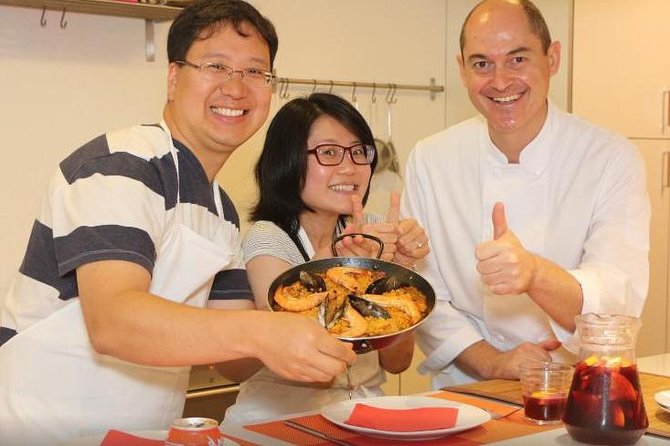
- Morning market visit: Shop for fresh ingredients with the chef before preparing paella, gazpacho, and sangria.
- Two distinct menus: Pick paella in the morning or a tapas spread in the evening, and check the menu before booking.
- Real hands-on cooking: Work in pairs and prepare the dishes with guidance from an English-speaking local chef.
- Small class size: The group is limited to 12 people, with solo participants matched with a cooking partner.
- A full meal included: Sit down with the class to eat the food you prepared, with drinks included.
- Useful take-home gift: A recipe booklet helps you recreate the dishes after returning home.
Choosing between paella in the morning and tapas at night
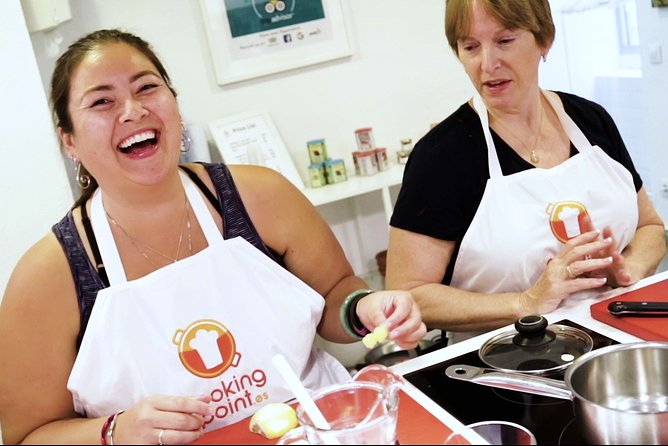
The first decision shapes the whole experience. The morning class is built around paella. It also includes a visit to a local market, where the chef explains ingredients and helps the group choose what to buy. Afterward, you return to the kitchen to prepare paella, gazpacho, and sangria before sitting down for lunch.
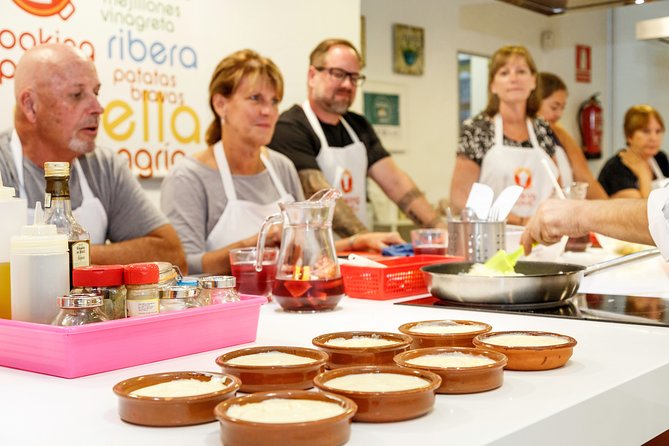
The evening class is a tapas workshop. Its sample menu includes Spanish potato omelet, garlic shrimp, chorizo in cider, patatas bravas, tomato bread with ham, crema Catalana, and sangria. That is a generous spread, but it is not the same menu as the morning session.
Pay close attention when booking. The title may suggest paella, tapas, and sangria all belong to one class, but the listed menus separate them by time of day. One class participant expected to make paella during the tapas session and found the difference confusing. If paella is your main goal, choose the morning option.
The morning class is also the better pick if you enjoy markets and food shopping. The market walk gives the dishes some context before you start cooking. You hear about Spanish produce, seafood, meat, local eating habits, and the origins of the food. The evening class skips that market visit, but gives you a longer list of tapas to prepare and share.
More Paella Cooking Classes in Madrid
- Madrid: Paella and Sangria Workshop in the City Center
★ 4.9 · 1,264 reviews - Paella Cooking Class in Madrid with Bottomless Wine Pairing
★ 5.0 · 985 reviews - Paella Workshop with Bottomless Sangria in Central Madrid
★ 5.0 · 763 reviews
Meeting the chef at Cooking Point
The class starts at Cooking Point, at C. de Moratín, 11, in Madrid’s Centro district. The meeting point is near public transportation, and the activity ends at the same location. Hotel pickup and drop-off are not included, so you will need to make your own way there and back.
Several chefs lead these sessions, including Angel, Teresa, Elisa, and Eduardo. The most important common thread is the teaching style: clear instructions, patience, humor, and room for you to take part. Angel is described as engaging and witty, Teresa as upbeat and enthusiastic, Elisa as funny and kind, and Eduardo as calm and attentive in the kitchen and market.
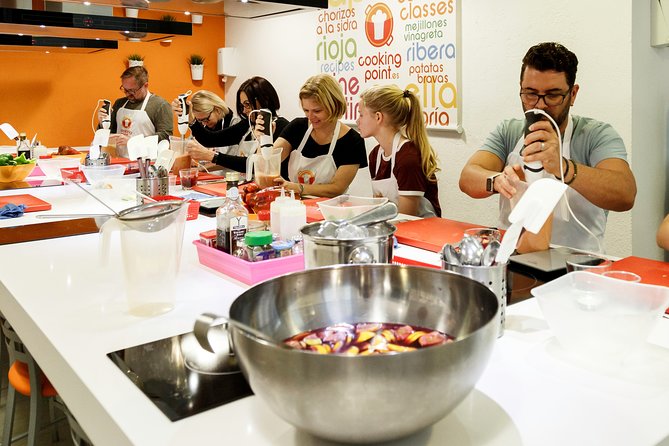
You are not expected to arrive as an experienced cook. The class is designed for beginners, but confident home cooks should still have enough to do. Ingredients are prepared in advance where useful, yet the work is left to you. You chop, stir, season, shape, and cook under supervision rather than watching a demonstration from the sidelines.
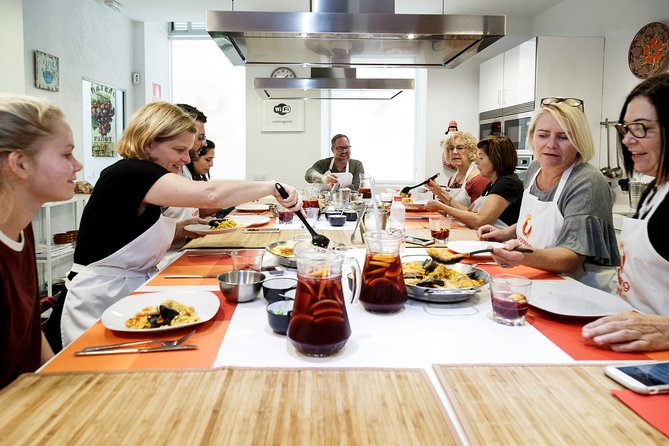
The class works in pairs. If you are alone, you are matched with another participant. That arrangement makes the work more manageable, though it also means the experience depends a little on how well you and your partner share the tasks.
The group limit is 12 people. That is small enough for the chef to move around the kitchen and answer questions, while still giving the meal a social feel. Families, couples, solo visitors, and groups of friends can all fit into the format. One six-year-old was able to enjoy the tapas class, but parents should still decide if a four-hour cooking session suits their child.
The morning market walk and paella menu
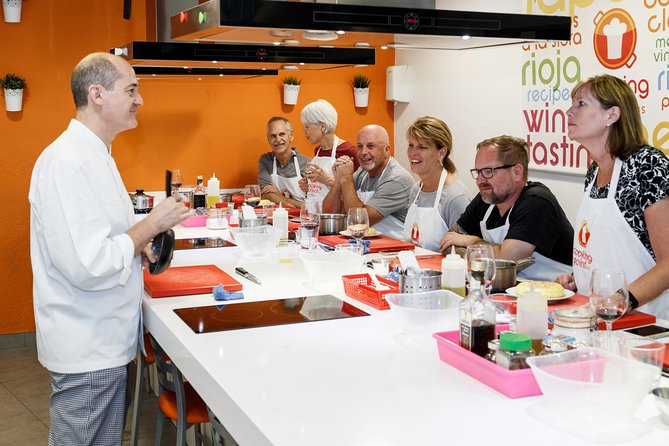
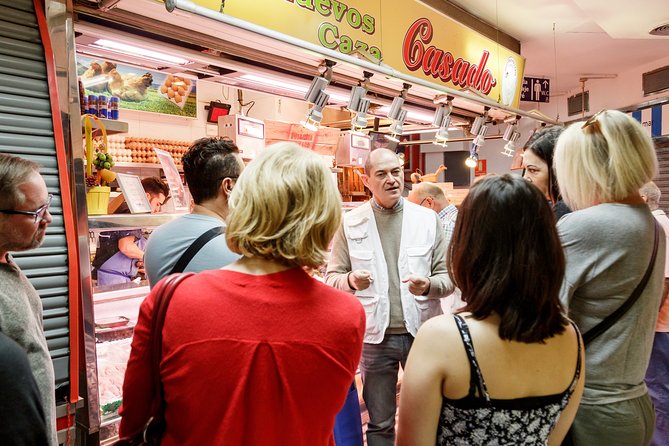
The morning option begins with a short walk to a local market. This is one of the most useful parts of the class because you see the ingredients before they become polished dishes. The chef explains what locals buy, how ingredients are sourced, and where seafood, meat, and produce fit into Spanish cooking.
The market is not just a shopping errand. It gives you a better sense of how Spanish food is built around fresh products and simple combinations. The chef can also help with choices for the paella, which makes the later cooking feel connected to the place rather than copied from a recipe card.
After shopping, the group returns to the kitchen. The exact paella ingredients can vary, but the class focuses on the method and the decisions behind the dish. You learn how the ingredients are combined, when to add them, and how the rice develops its final texture.
The other morning dishes are gazpacho and sangria. Gazpacho is a useful recipe to learn at home because it depends on straightforward ingredients and careful balance rather than complicated equipment. Sangria adds a relaxed social element, though drinking is part of the experience and the minimum drinking age is 18.
The meal is served after the cooking is complete. This timing matters. You are not eating a pre-cooked sample while the chef works. You sit down with the food your group prepared, which makes the lunch feel like the payoff for the morning’s work.
The evening tapas cooking session
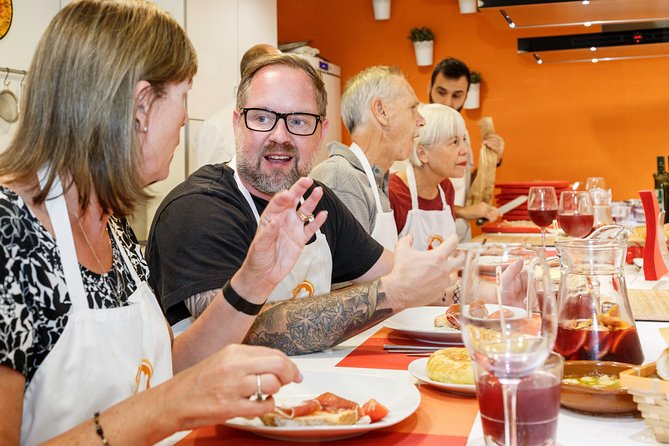
The evening menu is broader than the morning menu. You may prepare a Spanish potato omelet, garlic shrimp, chorizo in cider, patatas bravas, tomato bread with ham, crema Catalana, and sangria. These dishes cover several styles of Spanish cooking, from simple bread and tomato to seafood, sausage, potatoes, eggs, and custard.
This option suits you if you want a taste of several familiar Spanish dishes in one sitting. You also get a useful introduction to the way tapas work as a shared meal. Instead of focusing on one centerpiece dish, the class builds a table of small plates with different textures and flavors.
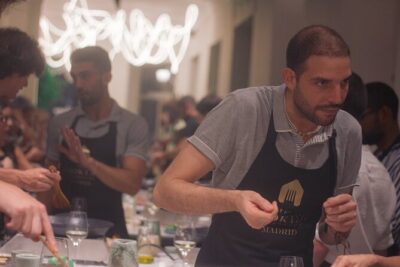
The class can include small technique lessons along the way. One cooking session included traditional cider pouring and custard preparation, giving the group more than a basic recipe demonstration. These details help explain how Spanish food is served and enjoyed, not just what goes into each dish.
The evening schedule works well after a day of sightseeing, but four hours is still a substantial block of time. You should not book it if you want a quick snack or a short evening activity. It is a full cooking, dining, and conversation session.
More Sangria and Tapas Tours in Madrid
- Madrid: Paella & Sangria Classes- Seafood, Chicken & Vegan option
★ 5.0 · 265 reviews - Madrid: Paella & Sangria Classes – Seafood, Chicken or Vegan
★ 4.9 · 201 reviews - Traditional Paella & Tortilla & Sangria
★ 5.0 · 164 reviews - 10 Tapas Cooking Class Experience in Madrid with Sangria
★ 5.0 · 137 reviews
What you actually do in the kitchen
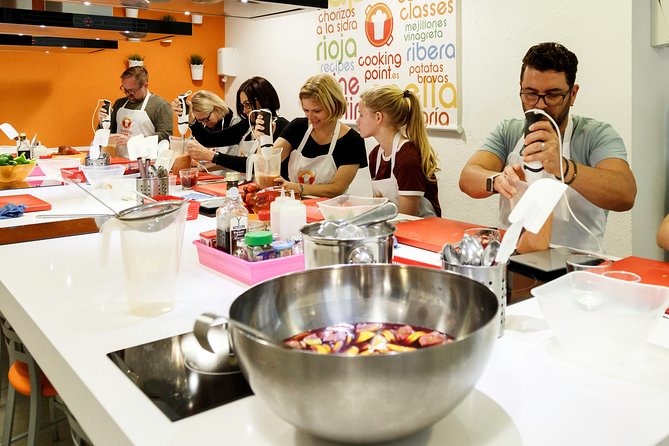
The strongest feature here is the hands-on format. You do not simply watch the chef assemble a dish while a helper handles the difficult parts. The food is prepared for you to cook, and the chef steps in with timing, suggestions, and corrections when needed.
That does not mean you are left to guess. The instructors explain each stage and keep the group organized. They also answer questions about Spanish ingredients, food customs, and the dishes being prepared. You can ask about anything that comes up, from local eating habits to how to reproduce a recipe at home.
This balance is important. A class that is too controlled can feel like a staged show. A class with too little guidance can leave you worried about ruining lunch. Here, the chef guides the work while giving you enough responsibility to feel that you made the food.
The class is also social by design. You eat with the other participants and share travel stories after cooking. For some people, that will be a highlight. If you prefer a quiet, private meal, the group format may feel less appealing.
Dietary needs, drinks, and family suitability
Dietary requirements should be provided at the time of booking. The class can accommodate all dietary needs, with the menu adjusted to your specific requirements. It is still wise to be precise about allergies and restrictions before you arrive, rather than hoping to sort them out at the table.
Drinks are included, and sangria is part of both the morning and evening sample menus. The minimum drinking age is 18. If you do not drink alcohol, state your needs when booking so the class can account for them.
The experience is family-friendly, but the cooking tasks and alcohol service mean families should consider the ages and interests of their children. A six-year-old enjoyed an evening class, and the hands-on setup can keep children involved. Still, the class lasts about four hours, so younger children may need patience and help.
The meal, recipe booklet, and value of the experience
The price is about $102.79 per person. That is more than the cost of ordering paella or tapas in a Madrid restaurant, but the comparison is not quite fair. You are paying for roughly four hours of instruction, a local food lesson, the ingredients, the meal, drinks, and a recipe booklet.
The market visit adds value to the morning option because it gives you an extra activity before the cooking begins. The evening class makes its case through the number of dishes prepared. Both options include the meal you cook, which can be plentiful enough to leave extra food to take away.
I would judge the price as fair if you want a substantial activity rather than a simple meal. It is less compelling if you mainly want to eat Spanish food and do not care about cooking. Madrid has plenty of restaurants where you can try these dishes with less time and effort.
The recipe booklet is a practical touch. It gives you a way to repeat the meal at home, including dishes such as paella, gazpacho, tapas, sangria, and crema Catalana, depending on the class you choose. The best souvenir here is not a trinket. It is a set of recipes linked to a meal you helped prepare.
Timing, location, and booking advice
Allow about four hours from start to finish. The class begins and ends at Cooking Point in central Madrid, with no hotel transportation. Since the location is near public transit, it should fit easily into a day based in the city center, but leave enough time to find the meeting point before the start.
This experience is often reserved well ahead, with an average booking lead time of about 37 days. That is a useful warning for peak travel dates, family trips, and visitors who need a specific morning or evening slot. Confirmation is normally received at booking, though reservations made within one day of the activity are confirmed as soon as possible and depend on availability.
Cancellation is free if you cancel at least 24 hours before the start time. Changes or cancellations inside that window are not accepted for a refund. Make your class choice carefully, especially if paella is the deciding factor.
Who should book this Madrid cooking class?
I would recommend it to you if food is one of the reasons you came to Spain, or if you like learning through activity rather than simply sightseeing. It is a strong match for couples, families with older children, solo visitors willing to cook with a partner, and friends looking for a shared Madrid experience.
Choose the morning session if the market visit and paella matter most. Choose the evening session if you want a wide range of tapas and a social dinner. For a first visit to Madrid, the morning class offers the fuller food-and-place connection, while the evening class gives you more variety on the plate.
You may want to skip it if your schedule is tight, you dislike group activities, or you expect a private chef lesson. This is a friendly class with up to 12 people, not a one-on-one culinary consultation.
Should you book it?
Yes, if you want to understand Spanish food by preparing it yourself. The market stop, hands-on cooking, generous meal, and recipe booklet make this more useful than a standard food tasting. The instructors, including Angel, Teresa, Elisa, and Eduardo, bring humor and practical guidance to the kitchen.
Just book the right session. Pick morning for paella, gazpacho, sangria, and the market visit. Pick evening for the tapas menu. That one choice determines whether the class matches what you came to Madrid hoping to cook.
FAQ
How long does the cooking class last?
The experience lasts about four hours.
Where does the class begin and end?
It begins at Cooking Point, C. de Moratín, 11, Centro, 28014 Madrid, Spain, and ends back at the same meeting point.
Is the class offered in English?
Yes. The class is offered in English and includes an English-speaking local chef.
What is the difference between the morning and evening classes?
The morning class focuses on paella and includes a local market visit. The evening class focuses on tapas, with dishes such as Spanish potato omelet, garlic shrimp, chorizo in cider, patatas bravas, tomato bread with ham, and crema Catalana.
Does the morning class include a market visit?
Yes. The morning class includes a visit to a local market to shop for fresh ingredients.
Is paella included in the evening tapas class?
The sample menu separates the two options. Paella is listed for the morning class, while the evening class is built around tapas. Check the exact session before booking if paella is important to you.
Can dietary restrictions be accommodated?
Yes. Dietary needs can be accommodated, but you should provide the details when booking.
Are drinks included?
Yes. Drinks are included, and sangria is part of the sample menu. The minimum drinking age is 18.
What is the cancellation policy?
You can cancel up to 24 hours before the start time for a full refund. Cancellations or changes made less than 24 hours before the activity are not accepted for a refund.
More Workshops in Madrid
- Tapas & Paella Cooking Class in Madrid with a Professional Chef
★ 5.0 · 177 reviews - Sangria Workshop and Tasting with Local Cheese
★ 5.0 · 86 reviews - Madrid: Tapas & Paella Cooking Class with Expert Chef
★ 4.9 · 61 reviews - Madrid: Paella & Tapas Cooking Class and Market Visit
★ 5.0 · 50 reviews
More Spanish Cooking Classes in Madrid
- Madrid Tapas & Paella Cooking Experience with Local Market Visit
★ 5.0 · 432 reviews - Taste of Spain: Tapas Cooking Class with Bottomless Wine Pairing
★ 5.0 · 414 reviews - Madrid: Half-Day Spanish Cooking Class
★ 5.0 · 345 reviews - Madrid: 10 Tapas 2.5-Hour Cooking Class
★ 4.7 · 222 reviews
Just added around Madrid
- Madrid Food Tour – Tapas Walking Tour★ 5.0 · 3 reviews
- Traditional Paella & Sangría Workshop & Spanish Meal in Madrid★ 4.0 · 5 reviews
- Private Wine & Gourmet Tapas Tour in Madrid with Sommelier★ 5.0 · 49 reviews
- Culinary tour “Tapas & Wines” in Madrid★ 5.0 · 3 reviews
- Madrid: Private Tapas & Wine Food Walking Tour in La Latina★ 5.0 · 4 reviews
- Tasting of 4 Spanish wines in Puerta del Sol Madrid★ 5.0 · 10 reviews
- Try Madrid Best Churros, Tapas & Market by FLT★ 5.0 · 37 reviews
- Tasty Tapas & Drinks Tour with a Rooftop Included★ 5.0 · 82 reviews
Madrid Tapas Tours, compared.
Madrid Tapas & Wine Tasting Walking Tour – Small Group Local Bars
Read our review →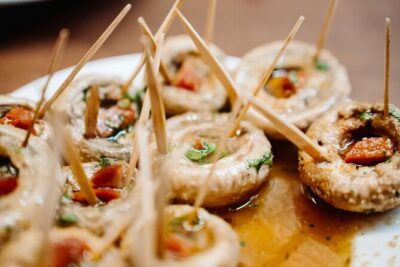
Madrid Tapas & Taverns Small Group Food & History Tour
Read our review →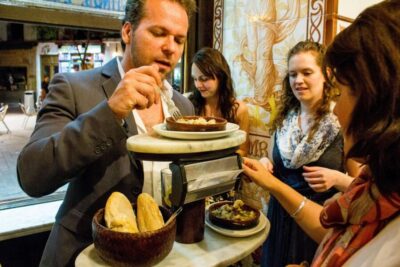
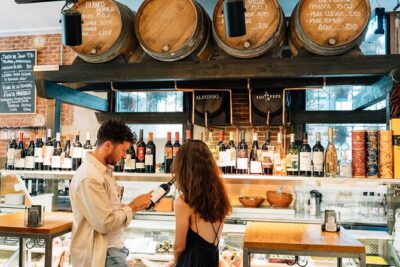
Madrid Tapas & Wine Tour with Rooftop Views and Local Guide
Read our review →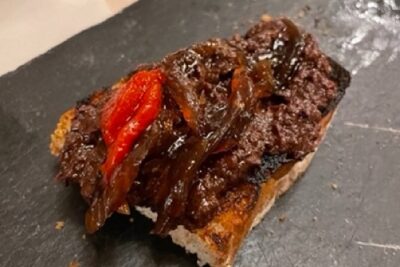
Madrid by Night Small Group Tour: Stories, Sights and Tapas Bites
Read our review →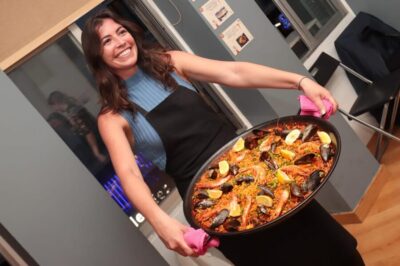
Paella and Sangria Workshop in the City Center
Read our review →