
Review · MADRID TAPAS TOURS
Madrid: Ultimate Food Tour of Local Markets & Tapas
Madrid’s best food lesson may begin with a churro, but it does not end there. This three-hour walk moves from a classic café to a family bakery, Mercado de Antón Martín, a historic deli, and a calamari bar near Plaza Mayor. I like the 15-plus tastings and the way the stops show everyday Madrid rather than only polished tourist restaurants. I also like the mix of food and place, especially shopping alongside locals in the market.
The main drawback is that this is a serious walking and eating session, not a sit-down meal. You need comfortable shoes and a good appetite. Morning tours include churros and chocolate, while the 5 pm departure swaps that stop for two tapas and a beer. Dietary choices are possible with advance notice, but this tour is not suitable for vegans or people with celiac disease.
Key points at a glance
- Eight family-run food stops: Cafés, bakeries, market stalls, delis, and bars give you a broad look at Madrid’s food culture.
- A proper market visit: Mercado de Antón Martín brings olives, cured meats, produce, olive oil, and vermouth into one useful stop.
- More than a snack: Fifteen or more tastes and one drink can add up to a full meal for many people.
- A different morning and evening route: Morning visitors get churros and chocolate, while the 5 pm tour includes tapas and beer instead.
- Food with local stories: Guides such as Flo, Liliana, Mitzi, David, and Jose are praised for explaining both the dishes and the city.
- A practical first-day choice: The route ends at Plaza Mayor and can help you decide where to eat during the rest of your stay.
Why this Madrid food walk works
Madrid can be hard to decode at the table. Menus often assume you know the difference between a tapa, a ración, a vermouth, and a breakfast pastry. This tour gives you a guided introduction, with enough samples to make the city’s food customs less mysterious.
I like that the route does not depend on one large restaurant meal. You step into several working neighborhood businesses, taste a little, then walk to the next stop. That keeps the pace moving and lets you see how different kinds of food fit into daily life.
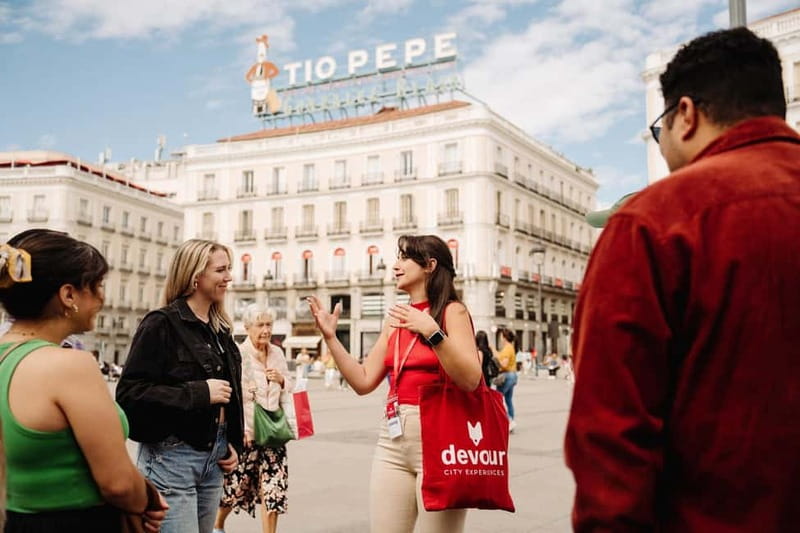
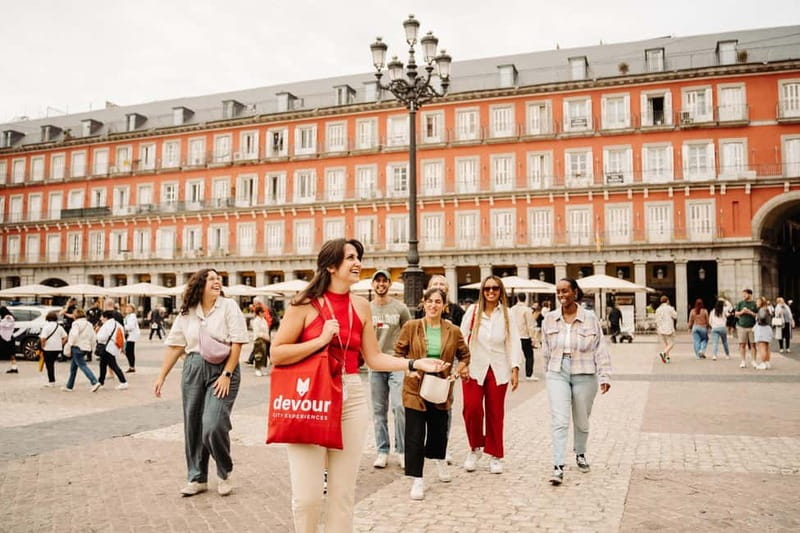
The route begins at Plaza Santa Ana, where your English-speaking guide waits by the statue of Calderón de la Barca, in front of the large white hotel. Look for a red Devour Tours tote bag or sign, and arrive 15 minutes early. The walk finishes at Plaza Mayor, so you are not returned to the starting point.
The experience has a 4.8 rating from 151 published ratings, and the strongest pattern is clear: guides make a major difference. Flo is repeatedly praised for her warmth and ability to include children. Liliana is noted for combining food with visual aids and city history. Mitzi gets credit for answering questions and helping people understand Spanish food from the perspective of someone living in Madrid. David, Jose, Marinos, Nicole, Montse, Arantxa, and Daniel are also singled out for friendly guiding and strong food knowledge.
More Market and Tapas Tours in Madrid:
- Madrid Tapas & Paella Cooking Experience with Local Market Visit
★ 5.0 · 432 reviews - Madrid: Paella & Tapas Cooking Class and Market Visit
★ 5.0 · 50 reviews - Try Madrid Best Churros, Tapas & Market by FLT
★ 5.0 · 37 reviews
Churros, chocolate, and the right way to start
On a morning departure, the first food stop is Chocolate Madrid, a beloved neighborhood café. Here you learn that Spanish churros are not simply a sweet snack to dunk without thought. The guide explains how locals approach them and pairs them with chocolate, along with the story of chocolate’s origins.
This is a useful opening because it deals with a food many people already know by name, but may not have tried in the Spanish way. You also get practical café advice, including how to order coffee, a small detail that can save you confusion later.
The churros stop is only available in the morning. If you choose the 5 pm tour, you visit a popular tapas bar instead, where you try two local tapas and a beer. That makes the evening version more suited to people who want a savory start, while the morning route gives you a more classic Madrid breakfast.
Moega and the case for good bread
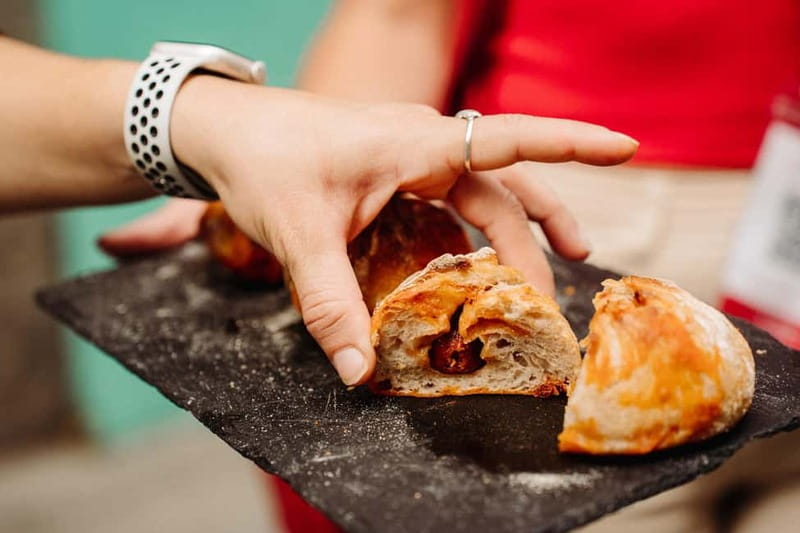
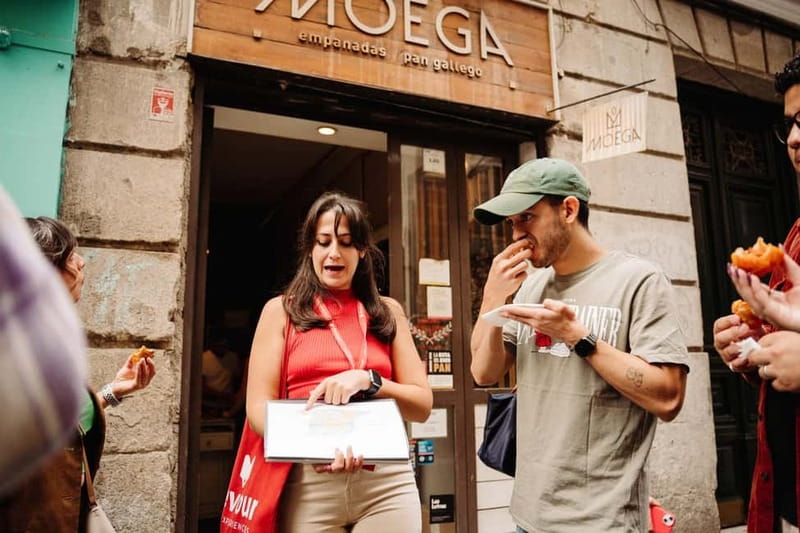
Next comes MOEGA Empanadas y Pan Gallego, a tiny shop run by a young baker from northern Spain. The focus is fresh bread, with a homemade chorizo-stuffed roll as the main taste.
This stop adds an important point to the tour: Spanish food is not only about famous dishes. Bread can be surprisingly hard to find at a high standard in Madrid, and this shop is presented as an exception. The chorizo filling gives you something hearty early in the walk, so you should not arrive expecting only delicate nibbles.
One useful tip comes from a past participant who liked the stuffed buns enough to return the next day. You may want to remember the shop if you are staying nearby and want a quick breakfast or snack later.
Shopping with locals at Mercado de Antón Martín
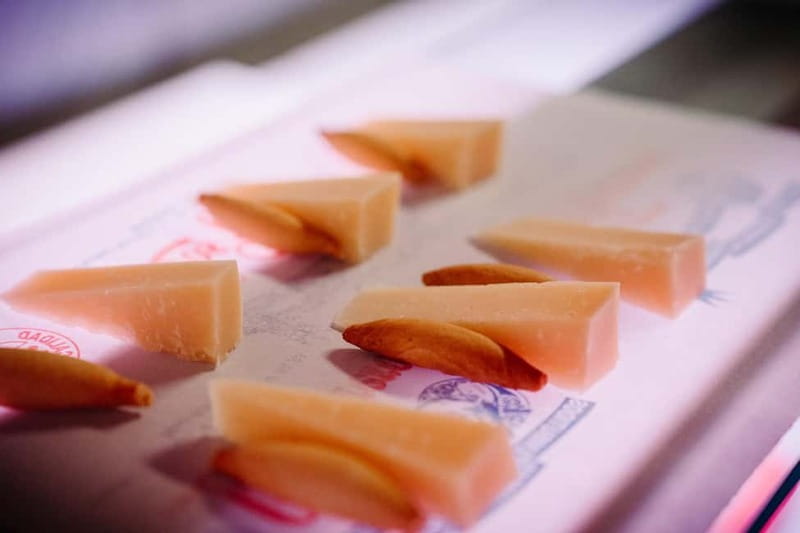
Mercado de Antón Martín is the heart of the route. You spend about 40 minutes exploring a working food market while local shoppers handle everyday errands. It is less about rushing from stall to stall and more about seeing how ingredients enter Madrid kitchens.
The tastings include olives, cured meats, local produce, extra virgin olive oil, and red vermouth. Each item gives your guide a chance to explain what makes it Spanish and how people use it.
The olive tasting can be especially helpful if your reference point is the standard jar found in many supermarkets outside Spain. The tour puts more attention on texture and flavor, not simply on the fact that an olive is an olive.
You also taste Spain’s red vermouth, a drink tied to the aperitif hour. The guide explains when people drink it and why it has a place in local routines. For you, this is practical information: ordering vermouth later will feel like a choice made with some understanding, not a random selection from a menu.
The market is one of the strongest parts of the route because it offers more than a photo opportunity. You see products being sold in a real neighborhood setting, and you get a sense of what people buy for ordinary meals. The tradeoff is that markets can be crowded and noisy, so you need to stay close enough to hear your guide.
More Food and Drink Tours in Madrid:
- Madrid Tapas & Wine Tasting Walking Tour – Small Group Local Bars
★ 5.0 · 3,644 reviews - Madrid Tapas & Taverns Small Group Food & History Tour
★ 5.0 · 2,664 reviews - Madrid: Tapas & Wine Tasting Tour with Local Guide
★ 4.8 · 2,171 reviews - Madrid Ultimate Spanish Cuisine Food Tour
★ 5.0 · 1,010 reviews
Cheese and stories at Casa González
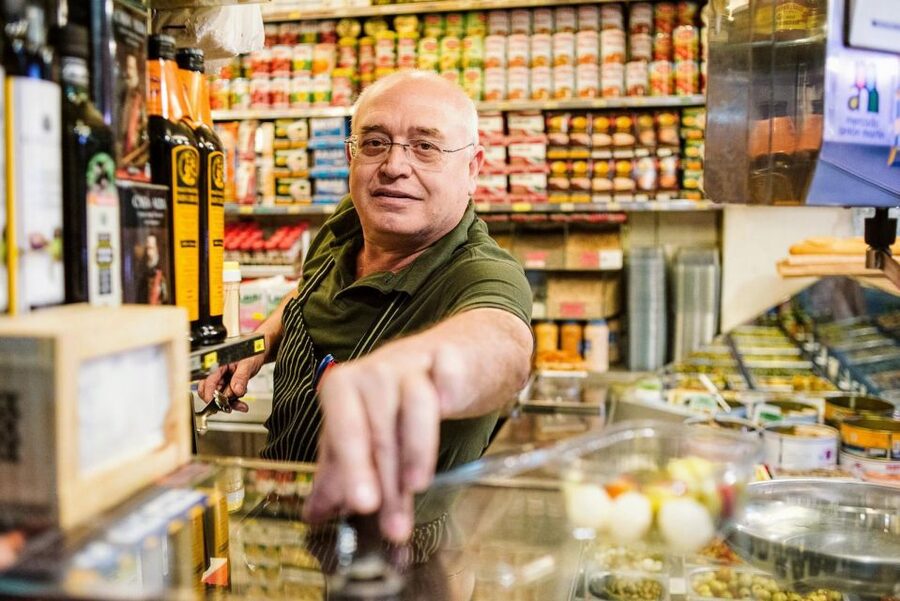
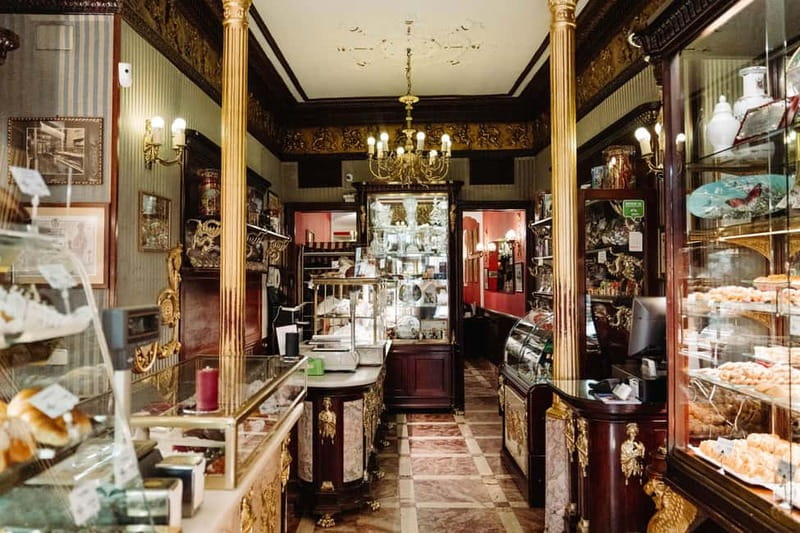
Casa González is an unassuming neighborhood deli with an unusual family story. The shop occupies a space where the owner’s father held secret meetings against Spain’s dictatorship in the 1930s. Today, you sit down for a tasting of cheeses from different parts of Spain.
The setting helps explain why food shops matter in Madrid. A deli can be a place to buy lunch, a meeting point, and a link to the city’s past. The cheese tasting also gives you a pause after the market, which keeps the three-hour route from feeling like one long standing buffet.
If you dislike cheese or olives, this tour may be less satisfying. The route includes both, and one published comment specifically warns that a full enjoyment of the experience depends on liking them. If you enjoy trying regional products, this is one of the more useful stops because you can compare styles rather than taste one anonymous cheese.
The calamari sandwich near Plaza Mayor
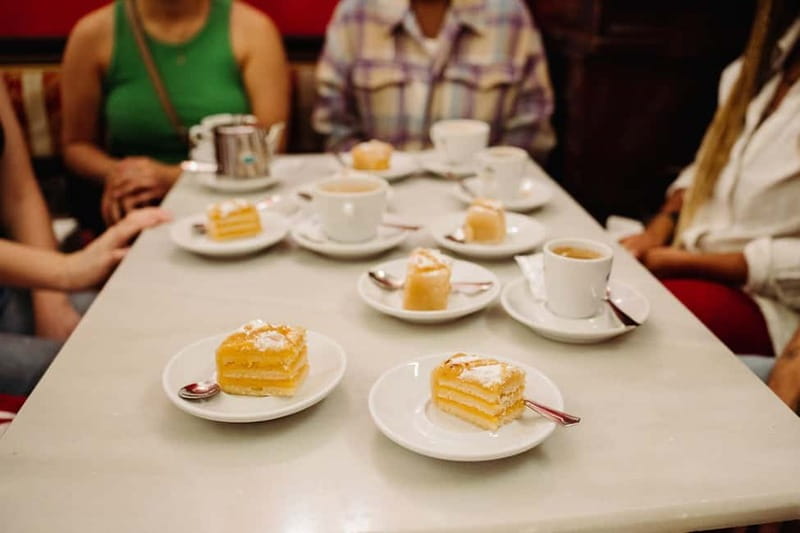
Near the end, you get one of Madrid’s most recognizable quick meals: a calamari sandwich at Bar La Campana. The calamari rings are fried in a light, crunchy batter and served in a bread roll. You eat it standing outside the bar, following the local custom.
This is exactly the kind of food stop that can be easy to dismiss as touristy because it sits close to Plaza Mayor. The tour’s point is that the sandwich itself is a Madrid institution, and the best way to understand it is to try it in the setting where people actually eat it.
The sandwich is also filling. Several participants found the overall amount of food substantial enough to carry them well past the end of the tour. I would not plan a large lunch immediately afterward unless you have an unusually large appetite.
Plaza Mayor gives the route a useful finish
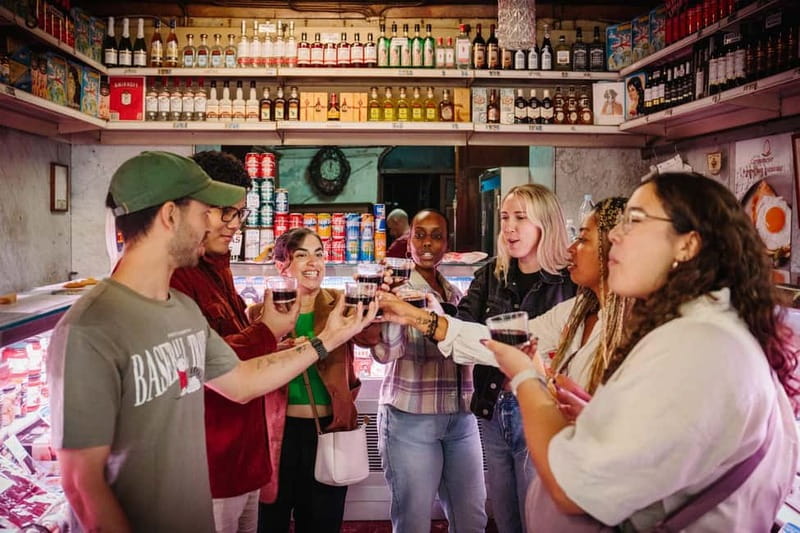
The walk finishes in Plaza Mayor, Madrid’s great central square. You get a short sightseeing walk and some context about the square’s role in major events over the years.
Ending here is convenient. You are already near central sights, shops, and restaurants, and you can continue exploring without figuring out transport back to a distant neighborhood. It also gives the food route a clear sense of place. You begin in the literary and restaurant-filled Plaza Santa Ana area and finish beside one of Madrid’s best-known landmarks.
The square is tourist-heavy, and nearby restaurants may charge more than places on side streets. Use the tour to learn what you like, then ask your guide for suggestions away from the most obvious dining spots. Guides such as Mitzi and Liliana have been praised for offering useful recommendations for the rest of a stay.
How much food do you really get for $93?
At $93 per person, this is not a cheap way to buy a few tapas. It is a guided experience with a walking route, eight stops, 15 or more tastes, one drink, and explanations throughout. The price makes better sense if you treat it as breakfast or lunch plus a city orientation.
The food is spread over three hours, so you are not simply handed a plate at the beginning and left to manage it. You get small portions at multiple businesses, which gives you variety and prevents the tour from depending on one dish.
The value is strongest for a first visit. You learn what to order, how locals use vermouth, where the market fits into city life, and which foods deserve another try. It is also useful if you want a guide to handle ordering and explain dishes that might otherwise pass without context.
The value is weaker if you already know Madrid’s food scene well, dislike walking, or prefer to spend $93 on one long restaurant meal. You also need to remember that the tour does not include hotel pickup or drop-off.
Timing, pace, and practical planning
The activity lasts three hours and is conducted in English. It is a walking tour at a moderate pace, with repeated stops to eat, listen, and move on. Bring water, especially in warm weather. One past participant specifically advised doing so because of the amount of walking.
Wear comfortable shoes. The market, deli, bars, and cafés are not presented as a route designed for wheelchairs, strollers, or people with mobility impairments. If you have trouble walking at a moderate pace, this is not a good fit.
Morning and evening departures offer different food experiences. Choose the morning if churros and chocolate are high on your Madrid list. Choose 5 pm if you prefer tapas and beer and want the route to lead into the evening.
Dietary planning matters. The operator can adapt the experience for vegetarians, pescatarians, people avoiding dairy, people choosing non-alcoholic drinks, and pregnant participants. Gluten-free options may be possible for people who are not celiac, but there may not be a replacement at every stop. Contact the provider in advance with allergies or restrictions.
Who should book this experience?
I would choose this tour for a first or second day in Madrid, when you want a useful introduction rather than a formal cooking class. It suits people who enjoy trying many small portions and who like learning the story behind a dish.
Families can do well here, based on the way guides have included children in tastings. Still, children need to manage three hours of walking and several food stops. The route is not a stroller-friendly option.
This is also a good fit for solo visitors and couples who want an easy way to meet other people while eating. The guide-led format removes the pressure of choosing every dish yourself, and the route gives you ideas for the rest of your trip.
I would skip it if you are vegan, have celiac disease, have serious mobility limits, or want a quiet seated meal. I would also think twice if olives, cheese, bread, cured meats, or fried seafood are not foods you enjoy.
FAQ
Where does the Madrid food tour begin?
It begins at Plaza Santa Ana, at the statue of Calderón de la Barca in front of the large white hotel. Your guide will carry a red Devour Tours tote bag or sign.
Where does the tour finish?
The tour finishes at Plaza Mayor after a sightseeing walk through the square.
How long does the experience last?
The food walk lasts three hours.
How many tastings are included?
You receive 15 or more tastes at eight family-run food stops, along with one drink.
Are churros included on every departure?
No. Churros and chocolate are available only on morning tours. The 5 pm tour replaces that stop with two tapas and a beer at a popular tapas bar.
Can the tour accommodate dietary restrictions?
The experience can adapt to vegetarians, pescatarians, dairy-free diets, non-alcoholic preferences, and pregnant participants. Gluten-free adaptations may be possible for people who are not celiac. Contact the provider in advance, since a replacement is not guaranteed at every stop.
Is the tour suitable for wheelchair users, strollers, or vegans?
No. The tour is not suitable for wheelchair users, people with mobility impairments, strollers, vegans, or people with celiac disease.
Should you book this Madrid food tour?
Book it if you want a generous introduction to Madrid’s everyday food culture, especially early in your visit. The strongest reasons are the range of stops, the market visit, the substantial amount of food, and guides who add useful explanations instead of simply pointing out dishes.
Choose the morning for churros and chocolate, or the 5 pm departure for tapas and beer. Arrive hungry, wear good shoes, and tell the provider about dietary needs before you go. At $93, it is best viewed as a meal, neighborhood walk, and practical food lesson rolled into one.
More Food Tours in Madrid
- Madrid: Food & Wine Tour with 10 Tapas & 4 Drinks Included
★ 4.9 · 984 reviews - Madrid Historic Centre Food Tour with Authentic Tapas & Wines
★ 5.0 · 814 reviews - Madrid Guided Food Tour with Tapas and Spanish Wine
★ 4.9 · 773 reviews - Madrid: Paella & Sangria Classes- Seafood, Chicken & Vegan option
★ 5.0 · 265 reviews
Just added around Madrid
- Madrid Food Tour – Tapas Walking Tour★ 5.0 · 3 reviews
- Traditional Paella & Sangría Workshop & Spanish Meal in Madrid★ 4.0 · 5 reviews
- Private Wine & Gourmet Tapas Tour in Madrid with Sommelier★ 5.0 · 49 reviews
- Culinary tour “Tapas & Wines” in Madrid★ 5.0 · 3 reviews
- Madrid: Private Tapas & Wine Food Walking Tour in La Latina★ 5.0 · 4 reviews
- Tasting of 4 Spanish wines in Puerta del Sol Madrid★ 5.0 · 10 reviews
- Try Madrid Best Churros, Tapas & Market by FLT★ 5.0 · 37 reviews
- Flamenco show & tasting Tapas with panoramic views in Madrid★ 4.5 · 6 reviews
Madrid Tapas Tours, compared.
Madrid Tapas & Wine Tasting Walking Tour – Small Group Local Bars
Read our review →
Madrid Tapas & Taverns Small Group Food & History Tour
Read our review →
Madrid Tapas & Wine Tour with Rooftop Views and Local Guide
Read our review →
Madrid by Night Small Group Tour: Stories, Sights and Tapas Bites
Read our review →
Spanish Cooking Class Paella Tapas and Sangria in Madrid
Read our review →
Paella and Sangria Workshop in the City Center
Read our review →
Browse the lists this tour appears in