
Review · SPAIN TAPAS TOURS
Toledo: Wine, EVOO, and Tapas Tasting
Toledo’s food story comes together neatly in this one-hour tasting: three La Mancha wines, Spanish olive oil, and a plate of Manchegan specialties, all in a downtown wine shop and tasting room. Sommelier Ana Morales leads the session with a practical method, using jars of real aromas such as leather, tobacco, and chocolate to help you identify what you smell in the glass.
I like the clear teaching style and the focus on products from Toledo and nearby La Mancha. I also like that the tasting includes a white wine, two reds, Extra Virgin Olive Oil, three cheeses, ham pâté, and venison chorizo. The main limitation is simple: this is a tasting room, not a restaurant, so you get a carefully chosen sample rather than a full meal or unlimited wine.
Key points to know before booking
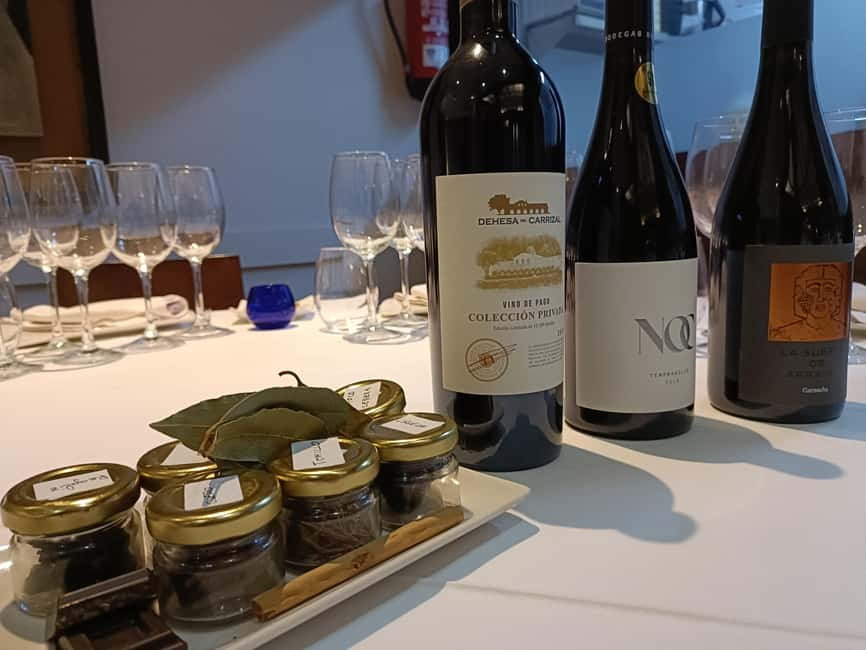
- Ana Morales uses real aroma samples: Jars containing items such as leather, tobacco, and chocolate help you connect wine aromas with familiar smells.
- Three local wines are included: You taste one white and two reds, with an explanation of grape varieties and winemaking methods.
- The food is distinctly Manchegan: Three cheeses, ham pâté, and venison chorizo from the Toledo mountains accompany the wines.
- Olive oil gets its own tasting: You examine a Spanish Extra Virgin Olive Oil in an official tasting glass.
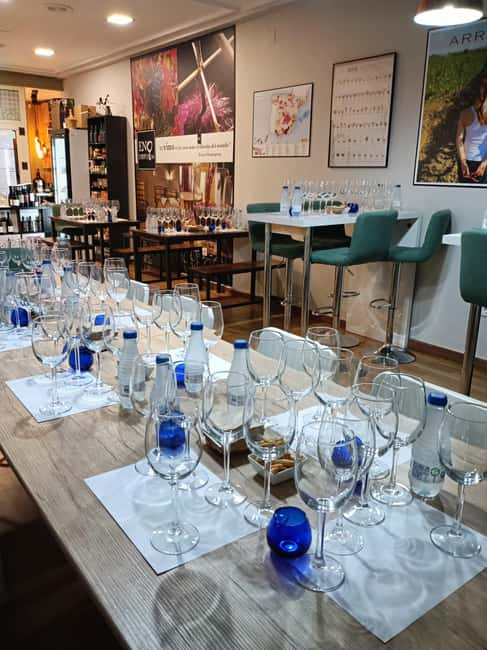
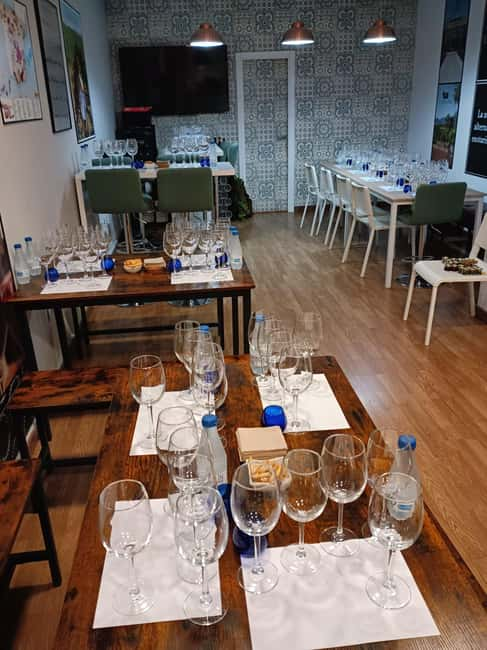
- It takes place downtown: ENODIFUSION is both a wine store and tasting room in central Toledo.
- The session is for adults: Children under 18 are not permitted, and any extra glass costs more if available.
A compact introduction to La Mancha in Toledo
Toledo is often treated as a city of stone streets, church towers, and famous historic sights. Food and drink give you another way to understand the area. This tasting puts La Mancha’s wine, olive oil, cheese, cured products, and country flavors in one room.
La Mancha is one of Spain’s best-known wine regions, and it surrounds Toledo with vineyards and agricultural towns. The experience does not try to cover every Spanish wine style. Instead, it gives you three local examples and shows how differences in grape variety, production, color, aroma, and taste appear in the glass.
That narrow focus is useful. If you are new to wine, a large tasting can become a blur of names and technical terms. Here, you work through one white and two reds, with enough explanation to compare them properly. If you already know wine, the value is in tasting regional bottles together and discussing the details with a specialist in La Mancha wines.
The format also suits a busy Toledo schedule. At one hour, it can fit before dinner, between sightseeing stops, or during a short stay in town. You do not need to give up half a day to get a solid introduction to local food and drink.
More Tapas and Wine Tours in Spain
- Montserrat Half-Day Tour with Tapas and Gourmet Wines
★ 5.0 · 7,359 reviews - Montserrat & Cogwheel Train, Gourmet Wine Tasting & Tapas/Lunch
★ 5.0 · 6,290 reviews - Barcelona Tapas and Wine Experience Small-Group Walking Tour
★ 5.0 · 5,804 reviews
Starting at ENODIFUSION in central Toledo
You meet at ENODIFUSION, a wine store and tasting room in downtown Toledo. The setting matters because you are not being taken to a distant vineyard or a formal restaurant. You are entering a place built around wine education and local bottles.
The supplied information does not give a street address, group size, or a detailed room description, so check the exact meeting instructions when booking. The important practical point is that the tasting is centrally located and accessible by wheelchair.
There is no ticket line to deal with, and no transport is included or needed as part of the activity. Plan to arrive ready for a seated or standing tasting format, though the precise arrangement is not specified. Since the session lasts only an hour, being on time helps you get the full explanation of all three wines and the olive oil.
The tasting is offered in English and Spanish. Some material may appear in its original language, so you may occasionally hear a Spanish wine term or see Spanish labeling. That can be part of the charm, but English-speaking visitors should know that the experience is not presented only in English.
Three wines, three ways to compare La Mancha
The wine portion begins with three local bottles: one white and two reds. These are described as high-quality vintages, with discussion of grape varieties, production methods, and the way aromas develop.
You are not simply handed a glass and asked if you like it. Ana guides you through a tasting method that helps you look, smell, and taste with more attention. You consider how each wine expresses itself differently and compare the notes you find in each glass.
For a beginner, this method takes some pressure off. Many people think wine tasting requires a special vocabulary or a trained palate. It does not. You can start with familiar smells, notice texture and flavor, and then use the instructor’s explanation to sharpen your observations.
The white wine gives you a point of comparison before the two reds arrive. The reds let you notice how color, aroma, body, and finish change from one bottle to another. The supplied details do not name the specific grape varieties or wineries, so you should not expect a bottle-by-bottle vineyard tour. The focus is on learning how to taste and understanding the local style.
This is also where the aroma jars become especially useful. Ana uses actual items to represent smells found in wine, including leather, tobacco, and chocolate. Rather than treating tasting notes as abstract poetry, she gives you something familiar to smell first. That makes the exercise more concrete, particularly if wine descriptions usually leave you cold.
A language difference need not ruin the session. Ana’s primary language is Spanish, but she can explain the wines in English and use the aroma samples to make the ideas clear. Her friendly attitude and passion for wine are an important part of the experience, especially for couples or small groups trying to follow a technical explanation in a second language.
Understanding the tasting method instead of memorizing terms
The strongest educational feature is that you leave with a process you can use later. You learn to pay attention to aromas, compare wines, and notice how different production choices affect the final result.
That matters because the tasting is not only about these three glasses. If you buy a bottle in Spain later, or visit another wine region, you can use the same basic steps. You can ask what grape was used, how the wine was made, what aromas you detect, and how the flavor changes as you taste it.
The explanations are intended to be easy and educational rather than highly technical. You will still hear about grape varieties and elaboration, but the session does not appear designed as an advanced certification class. If you want detailed information about individual vineyards, aging barrels, soil types, or professional wine scoring, this may feel too introductory.
For most people, that is a fair trade. One hour is enough to build confidence without turning a vacation activity into a lecture. You get useful vocabulary, guided comparisons, and a chance to ask questions in a friendly setting.
Same city, a different plate:
- Montserrat with Black Madonna & Medieval Winery with Tapas/Lunch
★ 5.0 · 5,209 reviews - Barcelona: Montserrat and Winery Tour with Tapas or Lunch
★ 4.8 · 4,695 reviews - Barcelona: Tapas Walking Tour with Food, Wine, and History
★ 4.8 · 4,261 reviews - Barcelona: Paella Cooking Experience & Boqueria Market Tour
★ 4.8 · 3,661 reviews
The Extra Virgin Olive Oil tasting
Wine is only half of the experience. You also taste Extra Virgin Olive Oil, examining its characteristics, aromas, and flavor in an official tasting glass.
Olive oil is often treated as a background ingredient, something poured over bread without much thought. This tasting asks you to consider it on its own. You look for the qualities of a well-known Spanish variety and learn how to assess it through smell and taste.
The official glass gives the oil its own tasting format rather than making it an accessory to the wine. Bread sticks and water are included, which help keep the tasting comfortable and provide a simple way to enjoy the products between explanations.
The information does not identify the olive variety by name, so do not book this expecting a detailed comparison of several oils. It is one focused example, paired with instruction about its aromas and flavor. That is still worthwhile for anyone interested in Spanish food, especially if olive oil is something you use often but have never tasted formally.
The oil also broadens the session beyond wine. You get a more complete picture of the region’s food traditions, from vineyards and olive groves to cheese and cured meat.
Manchegan tapas to finish the hour
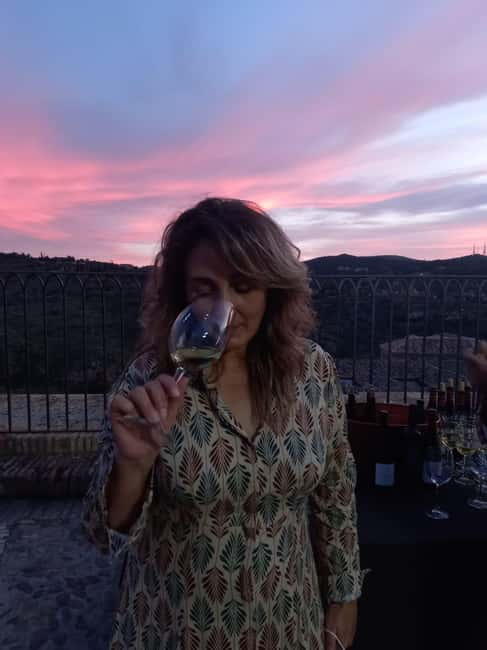
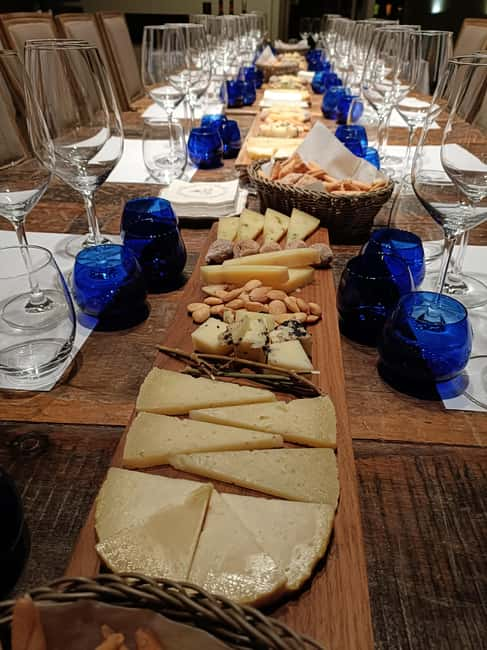
The final part brings the wine and oil together with typical Manchegan tapas. You receive three different cheeses, ham pâté, and venison chorizo from the Toledo mountains, along with bread sticks and water.
This is not a restaurant meal, and the portions are meant for tasting. That distinction is important. If you arrive hungry after a full day of walking, you should plan a separate lunch or dinner. The food adds substance and local character, but it does not replace a proper meal.
The selection does give you a useful taste of regional products. Cheese works well with the wines because it lets you notice how salt, creaminess, and texture affect the drink. Ham pâté offers another savory contrast. Venison chorizo brings a mountain product into the picture and gives the final course a stronger, more rustic character.
The tasting does not list the exact cheese varieties, so you will not know in advance which three styles appear. That may be a minor drawback for anyone with allergies or strict dietary needs. The available information does not specify vegetarian, vegan, or allergen accommodations, so ask before booking if that is important to you.
Is $29 a fair price for one hour?
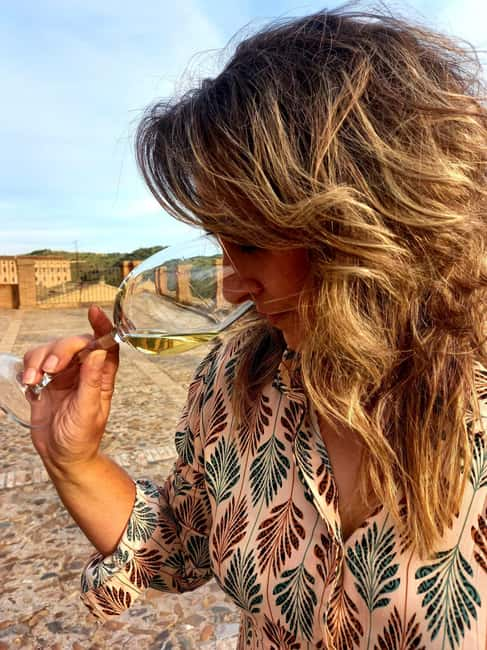
At $29 per person, the value depends on what you want from a food activity. You receive three wines, an olive oil tasting, water, bread sticks, several tapas, and guided instruction from a sommelier. In a central Toledo location, that makes the price reasonable for a structured introduction rather than simply a flight of wine.
You are also paying for interpretation. The aroma jars, tasting technique, and explanation of grape varieties turn a few small pours into a lesson you can use later. If you only want the cheapest possible glass of wine, you can spend less elsewhere. If you want to understand what you are tasting, the instruction adds real value.
The one-hour length keeps the cost and time commitment modest. It also means the experience moves at a brisk pace. You will not taste a long list of bottles or linger over a large meal. Think of it as a focused pre-dinner activity, not a winery day.
A second glass is not included. If you want one, you must pay separately, and it depends on room availability. Since the session already includes three wines, this is unlikely to matter unless you want to continue sampling after the formal tasting.
Who will enjoy this Toledo tasting most?
I would recommend it first to adults who want a local food experience but do not have time for a full wine-region excursion. It suits couples, solo visitors, and small groups interested in Spanish wine, olive oil, and traditional foods.
It is particularly helpful if you are new to wine tasting. The natural aroma samples give you a practical way to identify scents, and the comparison of one white with two reds makes the lesson easy to follow.
It also works for wine drinkers who want a regional angle. The bottles come from Toledo and nearby La Mancha, rather than offering a generic international tasting. Ana’s specialty in La Mancha wines keeps the session tied to the area you are visiting.
You should think twice if you need a full lunch, unlimited pours, a vineyard visit, or a detailed list of named wineries and grape varieties in advance. The experience is educational and compact, not an all-day countryside outing.
Children under 18 are not allowed. The session is available in English and Spanish, and wheelchair access is provided. If you have food allergies or dietary restrictions, confirm the tapas details before reserving because the listed foods include dairy, ham pâté, and venison chorizo.
A good choice before dinner in Toledo
The best use of this tasting is as a one-hour stop that gives you context before you continue exploring Toledo’s restaurants and food shops. You can taste local products, learn a simple wine method, and leave with a better sense of what makes La Mancha different from other Spanish regions.
I especially like the combination of practical instruction and regional food. Ana’s use of real aroma samples makes the lesson easier to follow across language barriers, while the cheeses, pâté, and venison chorizo keep the experience connected to place.
The main caution is to set your expectations correctly. This is not dinner, a vineyard tour, or an advanced sommelier course. It is a short tasting in a downtown wine room, with a carefully chosen selection and a clear teaching purpose.
Book it if you want three local wines, one olive oil, and Manchegan tapas explained in an approachable way. Skip it if you are looking for a large meal or a full day outside Toledo. For an adult visitor with one free hour and an interest in Spanish food, $29 is a sensible price for a focused introduction.
FAQ
Where does the Toledo wine tasting take place?
The activity takes place at ENODIFUSION, a wine store and tasting room in downtown Toledo.
How long does the experience last?
The tasting lasts one hour. Starting times vary, so check availability when booking.
Which wines are included?
You taste three local wines: one white wine and two red wines.
Is olive oil included?
Yes. The experience includes an Extra Virgin Olive Oil tasting, with discussion of its characteristics, aromas, and flavor.
What food is served with the tasting?
The included food consists of bread sticks, three different cheeses, ham pâté, and venison chorizo from the Toledo mountains.
Is the tasting available in English?
Yes. The instructor offers the experience in English and Spanish. Some content may be shown in its original language.
Can children attend?
No. The experience is not suitable for children under 18.
More Food and Drink Tours in Spain
- Madrid Tapas & Wine Tasting Walking Tour – Small Group Local Bars
★ 5.0 · 3,644 reviews - Sevilla Food Tour: Tapas, Wine, History & Traditions
★ 5.0 · 3,468 reviews - Madrid Tapas & Taverns Small Group Food & History Tour
★ 5.0 · 2,664 reviews - Barcelona: Food Walking Tour with Tapas and Wine
★ 4.9 · 2,180 reviews
Just added around Spain
- Zaragoza: Midday Market and Tapas Tour★ 5.0 · 8 reviews
- Winery Visit and Tasting in Elche with wines and tapas from Alicante in Van★ 5.0 · 9 reviews
- Zaragoza: Wine Tasting and Tapas★ 5.0 · 15 reviews
- Wine Tasting and local tapas delight in Cordoba★ 4.9 · 3 reviews
- Valencia: City Tour with Tapas Shore Excursion★ 5.0 · 9 reviews
- Valencia: Tapas and Sightseeing guided tour★ 4.9 · 9 reviews
- Valencia: Wine Tasting and Tapas Experience★ 4.5 · 38 reviews
- Valencia Old Town flavour walk: tapas & drinks by local★ 5.0 · 11 reviews
Spain Tapas Tours, compared.

Montserrat Half-Day Tour with Tapas and Gourmet Wines
Read our review →
Montserrat & Cogwheel Train, Gourmet Wine Tasting & Tapas/Lunch
Read our review →
Barcelona Tapas and Wine Experience Small-Group Walking Tour
Read our review →
Montserrat with Black Madonna & Medieval Winery with Tapas/Lunch
Read our review →
Montserrat and Winery Tour with Tapas or Lunch
Read our review →
Tapas Walking Tour with Food, Wine, and History
Read our review →
Paella Cooking Experience & Boqueria Market Tour
Read our review →
Madrid Tapas & Wine Tasting Walking Tour – Small Group Local Bars
Read our review →Browse the lists this tour appears in