
Review · GRAN CANARIA TAPAS TOURS
Canarian farmhouse in Mogan, mango farm and vermouth factory
The most unusual part of this Mogán farm visit is the mix of old house, working fruit plantation, and local vermouth production. In about two hours, you move from Canarian architecture to cactus garden, mango trees, and a tasting table with Gran Canaria’s first Lolito vermouth.
I like the calm setting, only about 10 minutes from Puerto de Mogán, and the personal feel of a visit led by the owner. I also like that the tasting has a clear local link: white and red vermouth, water, and a cold mango and yogurt dessert made with produce from the farm. The main drawback is practical: the path down to the mango plantation is not suitable for baby carriages or people with disabilities.
Key points at a glance
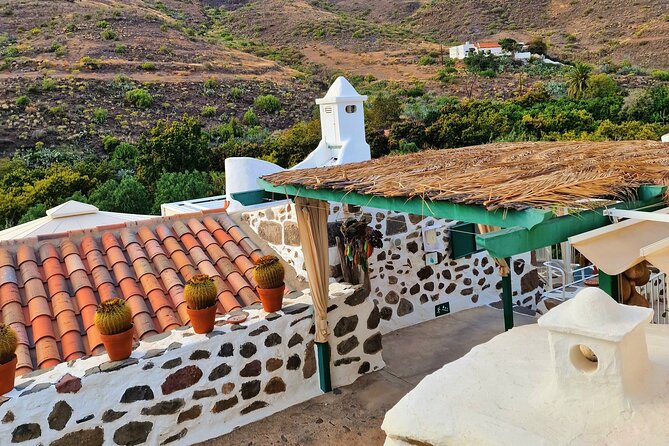
- A 200-year-old farmhouse: See a restored complex built in the traditional style of the Canary Islands.
- A working fruit garden: Learn how mangoes, avocados, soursops, and tunera cacti grow and how they appear in local food.
- Gran Canaria vermouth: Taste Lolito red and white, made on the property as the island’s first vermouth.
- A peaceful setting near Puerto de Mogán: This is a quiet countryside break rather than a large commercial attraction.
- A small group experience: The maximum group size is 15 people, which suits visitors who prefer conversation over a crowd.
- A sweet finish: The optional tasting includes mango gazpachuelo, described as a cold mango and yogurt soup with chocolate cubes.
Why this Mogán farm visit feels different
Gran Canaria is often sold through beaches, resort pools, and dramatic mountain roads. This experience gives you a smaller, more domestic view of the island. You enter an old Canarian home, see how its gardens are used today, and taste products made on the property.
That change of pace is the main appeal. You are not simply looking at a historic building or sitting down for a drink. The visit connects the house, garden, fruit trees, and vermouth in one short outing. I like that connection because it gives the tasting some context instead of treating it as a stand-alone snack.
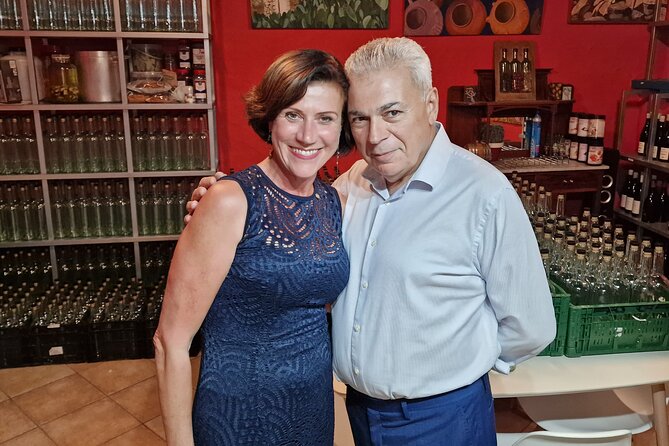
The owner runs the restaurant, farm, and vermouth operation, so the visit has a personal character. The available information does not provide the owner’s name, but you can expect the host to explain the property and its produce directly in English. A small maximum of 15 people should make it easier to ask questions and chat rather than follow a guide at a distance.
This is a good choice if you want a gentle cultural activity near Puerto de Mogán. It is less suitable if you want a long farm walk, a full meal, or a major museum-style attraction.
More Vermouth and Tapas Tours in Spain
- Barcelona Old Town Tapas Tour: Vermouth, Bites & Hidden Gems
★ 5.0 · 627 reviews - Barcelona Old Town Tapas Night: Hidden Bars, Cava & Vermut
★ 4.9 · 454 reviews - Seville Food Tour: Vermut, Churros & 10+ Tasty Local Dishes
★ 5.0 · 420 reviews
Starting at the old Canarian farmhouse
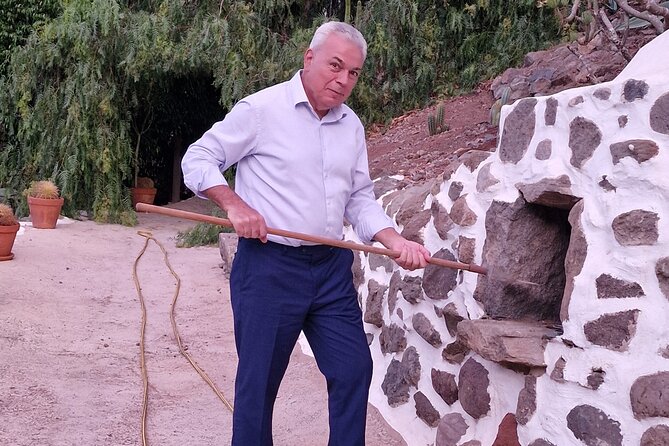
The meeting point is Los Pasitos, 2, in Mogán, and the experience ends at the same place. The property is an old Canarian farmhouse dating back about 200 years. It has been restored according to traditional Canarian architectural styles, with a group of buildings rather than a single isolated house.
That matters because the setting is part of the experience. You are seeing a working property with local character, not just a modern tasting room decorated with old tools. The restoration gives you a sense of how a rural Canarian home can be adapted for visitors while keeping its original identity.
The tour begins around the Pueblo de Mogán area where the property sits. This helps place the farm in its surroundings before you focus on the house and garden. The visit is short, so do not expect an extended architectural study. Instead, think of it as a close look at one carefully restored rural property.
I would take a moment here to notice the layout and details before rushing toward the food. The farmhouse is one of the experience’s strongest features, especially if you have already seen plenty of resort architecture during your stay.
Cactus gardens and Canarian food plants
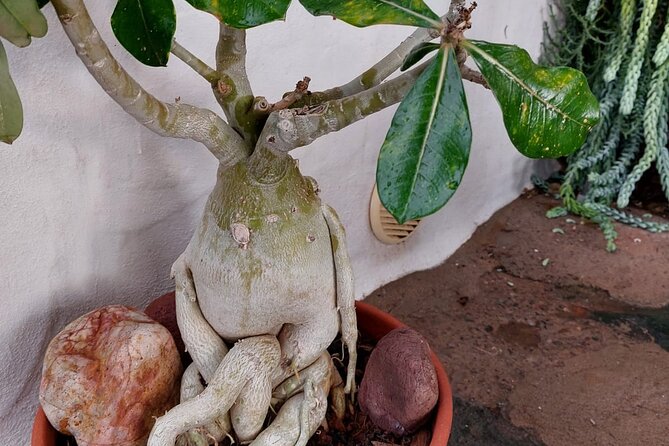
After the house, you visit the cactus garden and the fruit-growing areas. The plants include mangoes, avocados, and soursops, along with tunera cacti. The host explains how these fruits and cacti are used in Canarian cuisine.
This is where the visit becomes more useful than a simple garden walk. You learn what grows on the property and how those ingredients reach the table. Mango is the clearest example, since it returns later in the dessert. The fruit is not just something to point at in the garden. It becomes part of the tasting.
The cactus element is also distinctive. Tunera, or prickly pear cactus, has a place in local food traditions, and seeing it beside the fruit trees gives you a better sense of the range of plants used in island cooking. The information provided does not promise a full lesson in cultivation, harvest dates, or irrigation, so keep your expectations measured. This is an introduction, not a farming course.
You should also expect a walk down to the mango plantation. The route is specifically noted as unsuitable for baby carriages and people with disabilities. Wear sensible shoes and consider this point before booking. The tour can still be a pleasant choice for most participants, but the access note is important for anyone with limited mobility.
Mangoes, avocados, and soursops in the kitchen
The farm visit gives you a practical reason to care about the plants. You are told how mangoes, avocados, soursops, and tunera are used in Canarian cuisine, then you get a chance to taste one of those ideas in finished form.
Mango receives the most attention because it is used in the dessert. The sample menu calls it mango gazpachuelo, described as a cold mango and yogurt soup with chocolate cubes. That may sound unusual if you expect a standard fruit dessert. The cold, spoonable format makes it lighter than a pastry, while the chocolate adds a richer note.
The menu also lists red and white Lolito vermouth as the starter. This creates a simple progression: local drinks first, then a fruit-based dessert. Water is included as well, which is useful during a warm afternoon in the Mogán area.
The dessert is available if that option is selected, so check the booking choice carefully. Do not assume every reservation includes the same food component. The supplied details describe the tasting as an option, while water and bathroom facilities are included.
More Vermouth and Tapas Tours in Gran Canaria:
- Barcelona: Sailing Tour with Vermouth and Drinks
★ 4.7 · 184 reviews - Vermut & Sailing Experience Barcelona with Drinks and Snacks
★ 4.5 · 181 reviews - Madrid Food Walking Tour with Tapas and Vermouth
★ 5.0 · 167 reviews - Maison Noilly Prat VIP tour, wine and vermouth tastings
★ 4.5 · 134 reviews
Tasting Lolito, the first vermouth made in Gran Canaria
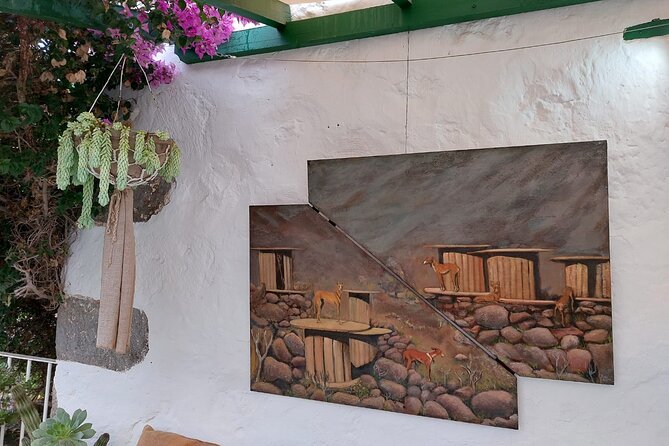
The vermouth factory is the visit’s most distinctive stop. On the farm, the team makes Lolito, described as the first vermouth in Gran Canaria. You taste both the white and red versions.
This is a modest production story rather than a large winery tour. The value comes from trying a product tied directly to the place you are standing in. You can compare the two styles and ask about the farm’s approach, although the available details do not specify the recipes, ingredients, alcohol levels, or production equipment.
I like the fact that the tasting does not try to overwhelm you with a long list of drinks. Two vermouths are enough to give the stop a clear focus. If you enjoy local products and small-scale food projects, this should be more interesting than a generic bar tasting.
The vermouth also gives the visit an adult appeal. Families may enjoy the garden and farmhouse, but the tasting is clearly aimed at adults. Since the tour is offered in English, you can follow the explanations without needing to rely on a translation app.
A quiet afternoon instead of a full restaurant meal
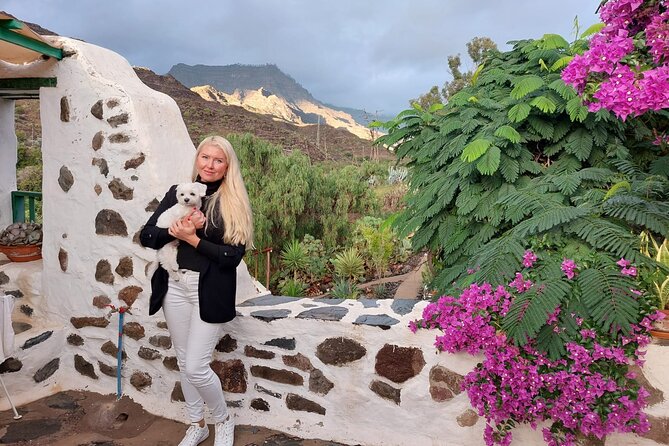
The experience lasts about two hours. That makes it easy to fit into a day around Puerto de Mogán, especially if you want an activity that does not consume an entire afternoon.
The pace appears designed for looking, talking, and tasting rather than constant movement. You see the house and gardens, walk to the mango plantation, hear about the produce, and finish with vermouth and dessert. One description of the visit emphasizes its peaceful feel and the chance to chat with the owner. That is useful guidance: book this for a relaxed outing, not for an action-packed excursion.
You can also reserve a table at the Valle de Mogán restaurant before or after the experience. Dinner is not included and costs about €30 to €50 per person. This gives you two different ways to use the visit. You can book only the short farm and tasting experience, or turn it into a longer food-focused stop by adding a meal.
I would not add dinner automatically. At $69.79 per person, the two-hour visit already needs to appeal to you for its setting, access, and tasting. Add the restaurant only if you specifically want to explore the property’s wider cuisine and have enough time in your schedule.
Is $69.79 a fair price?

The price is $69.79 per person. That is not a cheap garden visit, so the value depends on what you want from the afternoon.
You are paying for a small-group experience, the host’s time, access to a historic farmhouse, the garden walk, information about several local plants, and tasting portions of two vermouths. The mango dessert, when selected, adds another food element. For someone interested in local agriculture, architecture, and drinks, those parts work together.
The price will feel less convincing if you are mainly looking for a large meal. Dinner costs extra, and the included food is a tasting rather than a full lunch or dinner. You should also remember that the experience lasts around two hours. Its value comes from the personal setting and local focus, not from a long schedule packed with many stops.
Compared with a standard sightseeing tour, this offers a more intimate subject. Compared with a winery tour, it gives you more variety but less information about one single drink. I would call it a fair splurge for visitors who want a quiet, food-centered activity near Puerto de Mogán.
Who will enjoy this most?
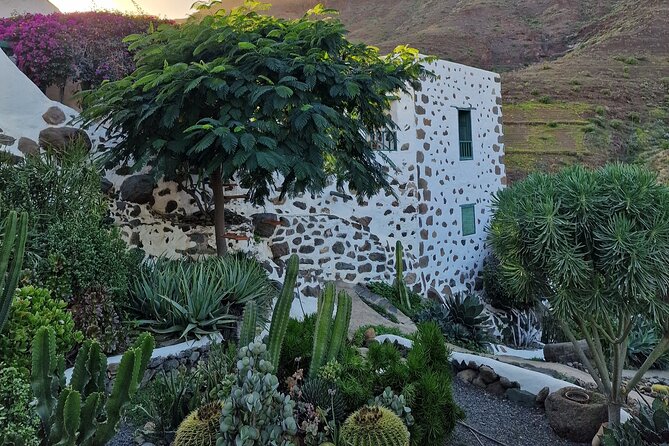
I would recommend this experience to you if you like small farms, traditional buildings, local food, and conversations with the people who run a place. It should also suit couples, small groups, and solo visitors who prefer a calm stop with a limited number of participants.
It is a particularly good fit if you are staying near Puerto de Mogán and want something beyond the usual resort routine. The short distance from the port, roughly 10 minutes, makes it practical to combine with other plans in the area.
You may want to choose another activity if you need step-free access, are bringing a baby carriage, or want a substantial meal included in the ticket. The walk down to the mango plantation is the main physical limitation, and the dinner option is separate.
The visit can also suit families, but the vermouth tasting is central to the experience. Adults are likely to get more from the full program, while children may be most interested in the farmhouse, cactus garden, and fruit trees.
Practical details before you book
The experience is offered in English, and you receive a mobile ticket. Confirmation is provided when you book. The meeting point is Los Pasitos, 2, 35140 Mogán, Las Palmas, Spain, and you return to that same location at the end.
Service animals are allowed, and the property is near public transportation. Most people can participate, but the route down to the mango plantation is not suitable for baby carriages or people with disabilities. Ask yourself how comfortable you are with that walk before paying.
The group is capped at 15 people. That limit is useful here because the farmhouse and tasting work better with room for conversation. It also means the experience may feel more personal than a large coach excursion.
You can cancel for a full refund up to 24 hours before the local start time. Changes or cancellations made less than 24 hours before the start are not accepted for a refund. Keep that deadline in mind if your Gran Canaria plans may shift.
Should you book this Mogán experience?
Book it if you want a small, local food experience with a historic farmhouse, working fruit garden, and two vermouth tastings. The peaceful setting, owner-led feel, and mango dessert give it a clear personality, and the short duration makes it easy to fit into a Puerto de Mogán day.
Skip it if you want a full meal, extensive sightseeing, or completely accessible paths. At $69.79, it is best viewed as a focused cultural tasting rather than a bargain attraction. For the right visitor, it offers a pleasant look at rural Gran Canaria and a drink you are unlikely to encounter in an ordinary resort bar.
FAQ
Where does the experience begin and end?
It begins at Los Pasitos, 2, 35140 Mogán, Las Palmas, Spain, and ends back at the same meeting point.
How long does the experience last?
The experience lasts approximately two hours.
What language is the experience offered in?
It is offered in English.
What can I see at the property?
You can see a restored Canarian farmhouse about 200 years old, a cactus garden, and plantation areas with mangoes, avocados, and soursops. You also learn about the use of these plants and tunera cacti in Canarian cuisine.
What drinks and food are included?
The tasting includes Lolito red and white vermouth, described as the first vermouth made in Gran Canaria. Water is included. The mango gazpachuelo dessert, made with cold mango and yogurt with chocolate cubes, is included if that option is selected.
Is the experience suitable for people with limited mobility or baby carriages?
The route down to the mango plantation is not suitable for baby carriages or people with disabilities. Most participants can take part, and service animals are allowed.
Can I add dinner to the experience?
Dinner is not included. You can reserve a table at the Valle de Mogán restaurant before or after the visit, with dinner priced at about €30 to €50 per person.
More Farms in Gran Canaria
- Chefcooking Paella from our Andalusian Grandmother at a Family Farm
★ 5.0 · 49 reviews - Sleigh Ride w/ Tapas Meal – Experience Arctic Farm Life
★ 5.0 · 30 reviews - La Rioja Biosphere Organic Pig Farm and Ham and Wine Tasting
★ 5.0 · 4 reviews - La Rioja: Jamon Iberico Farm Tour and Tasting with Wine
★ 4.0 · 3 reviews
Just added around Gran Canaria
- Electric Bike Panoramic South Coast Tour Optional Fishing Tapas★ 4.5 · 5 reviews
- Gran Canaria highlights & hidden gems with local guide Sky Rebels★ 5.0 · 32 reviews
- Gourmet Tapas and Wine Tour in the Old Town of Las Palmas★ 4.5 · 12 reviews
- e-Bike Mountain Tour inside a Natural Park+option Tapas in a Cave★ 5.0 · 26 reviews
- Camel Ride in Fataga with Tapas and drinks★ 4.5 · 22 reviews
- Puerto Rico: Sailing excursion with swim, drinks and tapas.★ 4.8 · 6 reviews
- Maspalomas: Southern Coast E-Bike Tour Option Tapas Tasting★ 4.8 · 14 reviews
- Las Palmas: 100% Local Tapas & Beach views★ 4.5 · 29 reviews
Gran Canaria Tapas Tours, compared.
Gran Canaria 7 Highlights Small Group Tour with Tapas Picnic
Read our review →
Puerto Rico, Gran Canaria: Boat Tour with Tapas and Drinks
Read our review →
Las Palmas: Private Old City Guided Walking Tour with Tapas
Read our review →Gran Canaria 7 Highlights Small Group Tour with Tapas Picnic
Read our review →
Las Palmas: Tapas and Drinks in the Beauty of the Old City
Read our review →
E-Bike Mountain Tour in Natural Park +Option Tapas in a Cave
Read our review →
Gran Canaria highlights & hidden gems with local guide Sky Rebels
Read our review →
Browse the lists this tour appears in